Is Akershus Fortress Free?
Akershus Fortress grounds are free to walk, but the Castle and the Resistance Museum inside them are paid. Here is exactly what costs nothing and what does not.
Is Akershus Fortress Free?
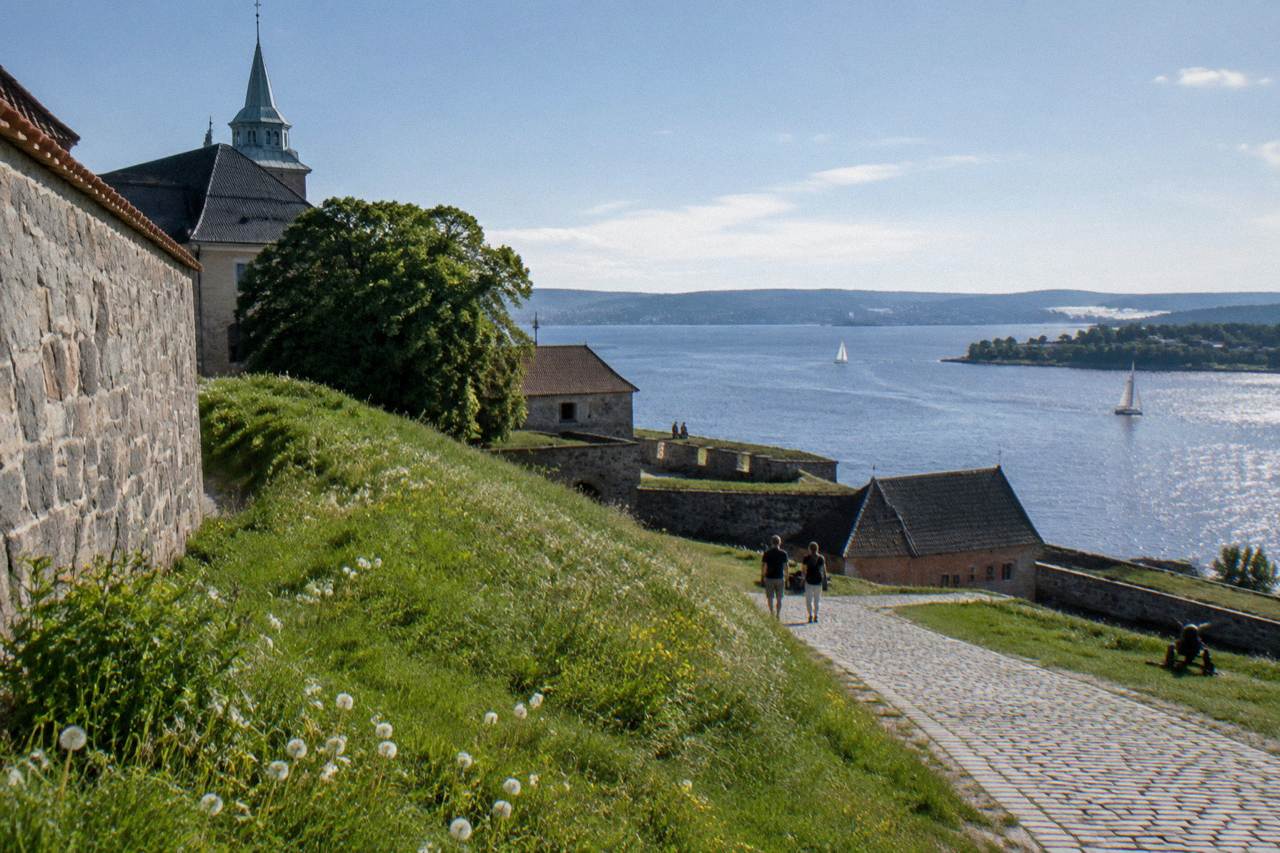
Partly. The fortress grounds, walls, lawns and fjord views cost nothing to enter and need no ticket, at any hour the site is open. The two attractions inside those grounds, Akershus Castle and the Norwegian Resistance Museum, are both paid, at roughly 160 NOK each. So the honest answer is that the fortress is free to walk around but not free in full.
That split is the single most misunderstood thing about the site, and it trips up visitors who read "free fortress" in one place and a ticket booth in another. Both readings are correct, they just describe different halves of the same peninsula. The grounds are public space managed by Forsvarsbygg, the Norwegian defence estate agency, and you can wander them freely. The castle interior and the Resistance Museum are separate institutions with their own admission, staff and opening seasons.
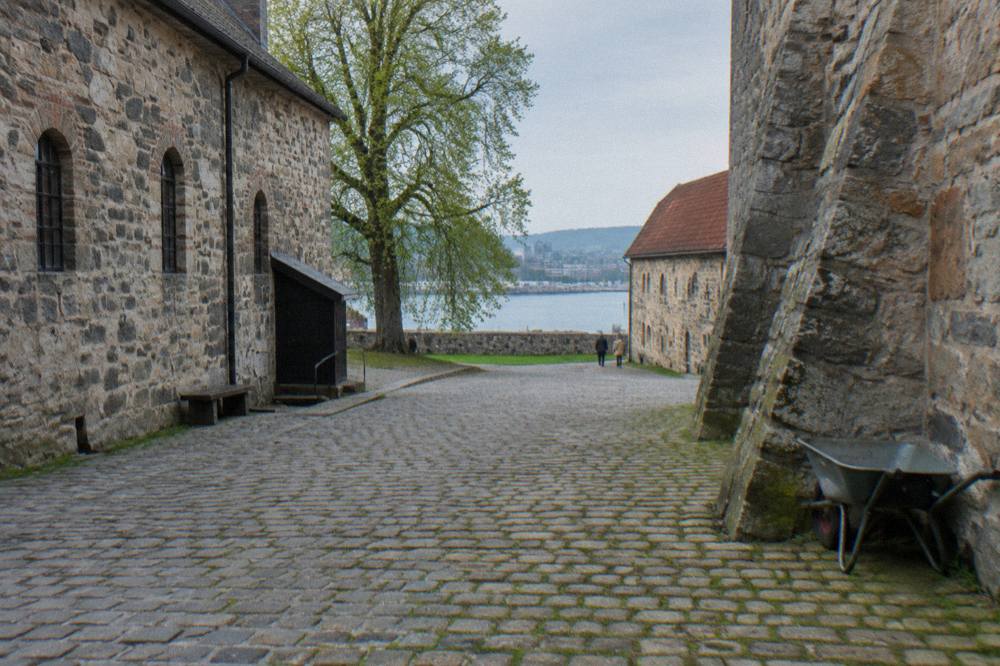
It helps to picture the site in layers. The outer layer is the rampart itself, the grassy earthworks, the stone walls and the gates, plus the viewpoints out over the fjord and back toward the city hall. All of that is free. The middle layer is the cobbled courtyard and the buildings around it, still free to walk through. The inner layer is the castle rooms and the museum galleries, and that is where the tickets start.
Here is the full breakdown in one place:
| Part of the fortress | Cost | What you get |
|---|---|---|
| Grounds, walls, ramparts | Free | Walking access, viewpoints, photo spots, no ticket needed |
| Akershus Castle interior | Paid, roughly 160 NOK | Guided access to the castle rooms, seasonal opening |
| Norwegian Resistance Museum | Paid, roughly 160 NOK | Indoor galleries on the WWII occupation years |
| Fjord views from the ramparts | Free | Panorama across the harbour and the islands |
Because the grounds are the bigger, more photogenic half, plenty of visitors spend a full hour here and never buy a thing. Others come specifically for the Resistance Museum, which is one of the more affecting museums in the city, and treat the free ramparts as a bonus. Both are reasonable ways to do it.
If you would rather have a local guide frame the history while you walk, the free, pay what you want tours below cover central Oslo and the areas around the fortress:
What Can You See At Akershus Fortress Without Paying?
More than most people expect. The free portion includes the ramparts, the gates, the outer courtyards, the lawns where locals picnic in summer, and the seaward views over the fjord and the harbour. You can walk the walls, photograph the harbour from the cannon positions and leave without spending a krone. Only the two indoor attractions sit behind a ticket.
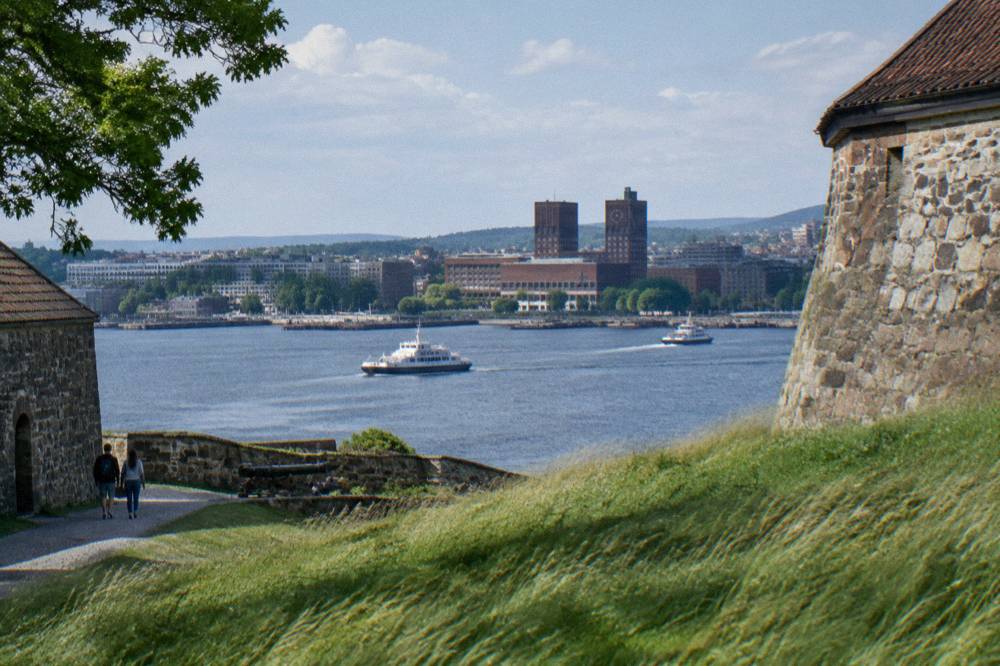
The rampart walk is the main event. The fortress sits on a headland that juts into the fjord, and the seaward side gives you the classic Oslo view: the harbour ferries crossing below, the Opera House roof glinting across the water at Bjorvika, and on clear days the islands out toward the fjord mouth. Photographers tend to come in the evening, when the low sun lights the stone and the harbour turns gold. None of this costs anything and none of it is fenced off.
The landward side looks back at the city, with the twin towers of Oslo City Hall framed by the fortress walls. The contrast is part of the appeal. This was a royal residence, a fortress and later a prison, and the free grounds carry all of that history in the stonework even before a guide or a museum label explains it. Information boards at several points around the site give the outline in English, which is enough context for a self-guided wander.
The free half also rewards slow wandering rather than a fixed route. The gates, the courtyards and the lawns connect into a loop you can take at whatever pace suits, and in summer the grass banks fill with locals who treat the place as a park first and a monument second. There is no bag check, no queue and no closing ceremony for the outdoor areas, because there is nothing to close. That also makes it one of the few Oslo sights where an unplanned stop costs you nothing but time, and where bad weather can be waited out under a gateway arch rather than in a ticket hall.
A guided walk is the alternative to reading those boards alone, and the city's free walking tours are a natural fit here. The most established is Free Walking Tour Oslo by Nordic Freedom Tours, rated 4.76 out of 5 across 2,192 GuruWalk reviews, a two-hour pay what you want walk in English and Norwegian that meets outside Jernbanetorget metro station, at the bronze Tiger sculpture. From that starting point in the city centre, the fortress grounds are within easy walking distance of the route's central Oslo ground, and the guides cover the city's history in the same sweep.
One practical note on timing: the grounds stay walkable year-round, and winter snow on the ramparts is its own kind of view. The castle, as covered below, does not. If you visit between late autumn and early spring, the free half may be the only half open at all, which makes the free/paid split easier to live with.
How Much Do Akershus Castle And The Resistance Museum Cost?
Each charges roughly 160 NOK for adult admission, and neither inherits the free status of the grounds around it. The castle is a seasonal, guided visit, while the Resistance Museum is an indoor gallery on the German occupation of Norway. There is no confirmed recurring free day for adults at either one, so budget for both if you want the full interior.
The castle is the older of the two paid experiences. It served as a royal residence, a fortress and later a prison, and the interior visit takes you through halls, the castle church and the crypt of the kings. Because much of it is a guided arrangement through historic rooms, it opens on a seasonal schedule, and outside that season the interior is simply closed even while the grounds remain free and open. Check the operator's own page before you plan a visit around it.
The Resistance Museum, housed in a building within the same grounds, covers Norway during the Second World War, from the invasion through the occupation years to liberation. It is a dense, sober museum and most visitors spend an hour or more inside. The two attractions are separate institutions, so there is no combined ticket that covers both, and the roughly 160 NOK figure applies to each on its own.
Planning around the two tickets is straightforward if you treat them as optional add-ons rather than the main event. Since the grounds between them are free, you can walk the whole site first, decide how much appetite you have for interiors, and then buy one ticket, both, or neither without having wasted the trip. Visitors travelling with children should check each attraction's own terms before arriving, because concession rules are set by the institutions themselves and are not part of the fortress's free/paid split. And because no recurring free-admission day for adults was confirmed at either site, waiting for one is not a strategy.
If the budget is tight, the choice is easy. The free grounds give you the fortress's atmosphere, its views and its military architecture, while the paid interiors give you depth. A visitor with a full Oslo Pass should still check what the pass currently covers at each attraction before assuming it applies here, since pass terms are set by each operator and change; VisitOSLO's official pass pages are the place to verify that.
When Is The Best Time To Walk The Grounds?
Any season works, because the grounds are public space and never require a ticket. Summer brings long daylight and locals picnicking on the lawns; winter dresses the ramparts in snow and shrinks the crowds to a handful. The main timing constraint is not weather but the castle interior, which opens seasonally, so check that before promising anyone the full fortress.
Light matters more than calendar here. The seaward rampart faces west, which is why photographers cluster in the evening, when the low sun comes across the fjord and lights both the stone and the water. Mornings are quieter and cooler, better for anyone who wants the viewpoints more or less to themselves, and the grounds are wide enough that even a busy summer day does not feel packed once you move away from the main gate.
The season changes the character of the visit rather than its availability. In summer the lawns are green, the ferry traffic on the water below is constant, and the long northern daylight lets you walk the walls late into the evening without rushing. In winter the snow does most of the work: the ramparts go quiet, the harbour takes on a harder light, and you will share the site with a fraction of the warm-weather crowd. Dress for the cold and the payoff is real, and the free half of the fortress is the one half of Oslo sightseeing that never closes for the season.
Which Free Walking Tours Cover The Area Around The Fortress?
Several of the city's free, pay what you want walks start close enough to reach the fortress on foot. The Nordic Freedom Tours walk meets at Jernbanetorget, the short English-only walk meets at the tiger statue in front of Oslo Central Station, and the Contrasts Walk meets at the Opera House facade across the water from the fortress. All are tip-based, so none adds a fixed cost to the day.
The variety is worth understanding before you pick. The Short Walk, English Only, listed on freetour.com and rated 9.7 out of 10 across 332 reviews, runs about an hour and a half from the tiger statue in front of Oslo Central Station, which keeps it tight and central. The Perfect Introduction walk, also on freetour.com and rated 9.1 out of 10 across 191 reviews, is the longest of the three at 2 hours 15 minutes, and meets near the Royal Palace at the statue of the glove, where the guide carries a white umbrella. The Contrasts Walk by LOCAL Walking Tours, on GuruWalk at 4.67 out of 5 across 311 reviews, meets at the main facade of the Opera House, which sits directly across the harbour from the fortress ramparts.
The mechanics of joining are the same whichever walk you choose. You reserve a spot through the walk's listing, turn up at the stated meeting point, and the walk itself is free to join; at the end you tip the guide what you thought the experience was worth. The meeting points are deliberately unmistakable, a bronze Tiger sculpture, a tiger statue, a statue of a glove with a white umbrella, because there is no ticket office and no desk to find. Languages differ between walks, so match the walk to the language you need: two run in Spanish and one in Norwegian alongside English, and English alone is guaranteed on every one of the five.
For a walk that pairs well with a fortress visit, the City Walk by Hola Oslo is a strong candidate. It is a two-hour GuruWalk listing, rated 4.69 out of 5 across 42 reviews, offered in English and Spanish, and it meets at the main entrance of the National Theatre, near the top of Karl Johan. That puts its ground squarely in the Sentrum and Karl Johan area, the same central stretch the fortress belongs to, and its hook is a local secrets guide that participants keep after the walk ends.
Whichever you choose, the model is why a guided introduction to Oslo costs nothing up front, and it is covered in more detail in are free walking tours worth it.
What Else Is Free Near Akershus Fortress?
A lot, because the fortress sits between two of Oslo's most generous free zones. The Opera House roof and foyer are free to enter and climb, Oslo City Hall's interior is free, and the Royal Palace park is free year-round. The harbour promenade linking them all is public space. A loop past all four costs nothing but shoe leather.
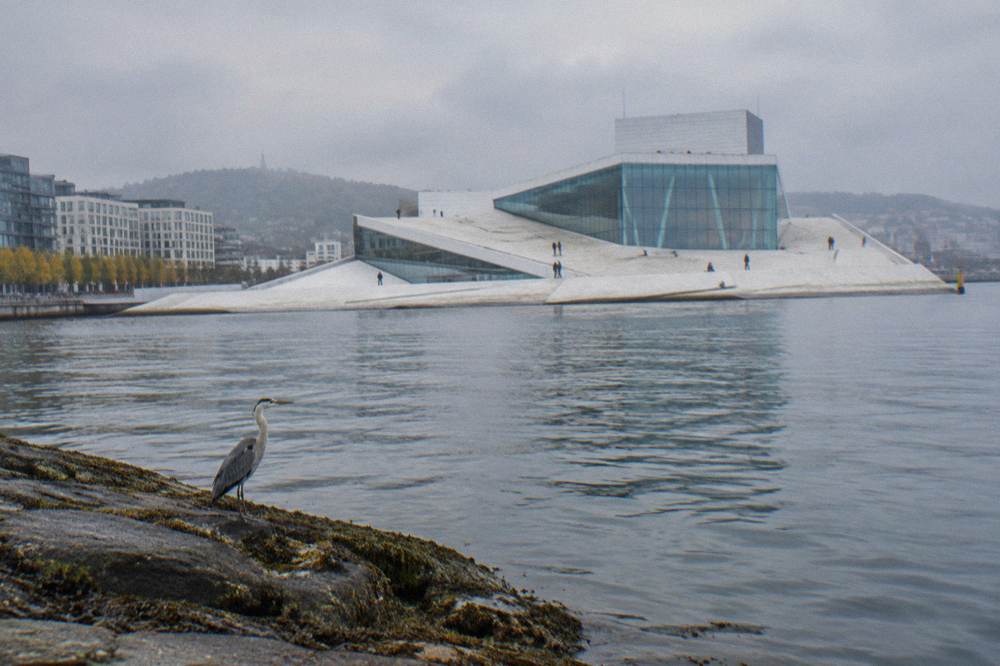
The Opera House is the obvious companion stop. It sits directly across the water from the fortress, and its sloping marble roof is built to be walked on, free, with no ticket and no queue. The foyer is also open to the public. A performance inside is a different matter, with tickets running from roughly 150 to 990 NOK, but the building itself, like the fortress grounds, gives away its best feature. The contrast between the medieval stone of Akershus and the white marble of the Operaen is one of the better free double-acts in the city, and the walk between them along the harbour takes you past the ferries and the new waterfront districts.
City Hall is the other near neighbour. Its interior, with the huge murals of the ceremonial hall where the Nobel Peace Prize is handed out, is free to visit, and free guided tours run in summer on a drop-in basis. The Royal Palace park, a little further up the main street, is free year-round, though the indoor palace tour is paid, seasonal and requires advance booking, a split that mirrors the fortress's own free grounds and paid interior. For a fuller treatment of that pattern, see what is free at the Royal Palace.
The promenade itself keeps giving past those headline stops. Walk the waterfront south from the fortress and you pass Aker Brygge's promenade and the Tjuvholmen district, all public space, before the boardwalk curves around to Sørenga, where the seawater pool and its sunning decks are free to use. Looking the other way, the fjord islands sit just offshore, and the islands themselves are free public land, though the Ruter ferry out to them is a standard paid transit fare, never a free ride. The fortress is simply the strongest link in a chain of free waterfront that runs for most of the harbour.
| Free sight near the fortress | What is free | What is not |
|---|---|---|
| Oslo Opera House | Roof walk and public foyer | Performance tickets, roughly 150-990 NOK |
| Oslo City Hall | Interior, plus summer drop-in guided tours | Nothing, the building is free to visit |
| Royal Palace park | Park and grounds, year-round | Indoor guided tour, paid, seasonal, booked ahead |
| Harbour promenade | The full walk from the fortress to Aker Brygge | Nothing, it is public space |
| Sørenga seawater pool | The pool and its decks | Nothing at the site itself |
| Fjord islands | The islands, as public land | The Ruter ferry crossing, standard transit fare |
The pattern across all of these is the one Forsvarsbygg, the defence estate agency, and the other operators keep repeating: outdoor ground is public, indoor programming is ticketed. Once you internalise that rule, Oslo's sightseeing budget becomes very easy to plan. The fortress is not an exception to it, it is the clearest example of it, which is why this exact question gets asked so often.
If you are building a whole day around free sights rather than just one fortress, the free walking tours remain the cheapest way to have the city explained while you move between them:
For a deeper page on the same site, the full guide to what is free at Akershus Fortress walks the grounds building by building. And if this page helped you see the split clearly, Free Things To Do In Oslo has the same honest treatment for every free claim in the city.
Common Questions About Akershus Fortress
Is Akershus Fortress Free?
Partly. The grounds, walls, ramparts and fjord views are free to everyone with no ticket. Akershus Castle and the Norwegian Resistance Museum inside the grounds are paid, at roughly 160 NOK each, and do not inherit the free status of the grounds.
Can You Visit Akershus Castle For Free?
No, the castle interior is a paid attraction at roughly 160 NOK, and it opens seasonally. The free part of the site is the outdoor grounds around it. The full breakdown is in can you visit Akershus Castle for free.
Is The Resistance Museum Included In The Castle Ticket?
No. The castle and the Resistance Museum are separate institutions with separate admissions of roughly 160 NOK each. There is no combined ticket covering both.
How Long Should You Spend At The Fortress Grounds?
About an hour covers the rampart walk, the viewpoints and the courtyards at a relaxed pace. Add an hour or more for each paid interior you visit, and more again if you linger for photographs at the seaward views.
Are The Fortress Grounds Open In Winter?
Yes, the outdoor grounds are public space and remain walkable year-round. The castle interior is seasonal and may be closed outside the main season, so the free half of the site can be the only half open in winter.
Which Half Of The Fortress Should You See First?
Walk the free grounds first. The rampart views give you the layout of the headland and the harbour, and once you have seen the outdoor half you can decide with your own eyes whether the castle or the Resistance Museum is worth the ticket to you.