How Much Should I Tip For A Free Walking Tour?
How the pay-what-you-want model works on Oslo's free walking tours, what shapes the amount people give, and how to hand it over on the street.
How Much Should I Tip For A Free Walking Tour?
There is no fixed amount, because the whole model is pay what you want: the walk is free to join, and at the end you give whatever the two hours felt worth to you. No official body in Norway sets a standard, and no Oslo guide publishes a suggested figure. The honest answer is that the tip is the price, set by you, after you have taken the tour rather than before.
That answer feels like a dodge, so it helps to understand what the money actually is. A "free" walking tour is not a gift from a guide's employer. The guide running it is typically an independent local who pays the platform a commission per booking and keeps whatever guests hand over at the end. In Oslo, five of the seven free walks listed on this site run on GuruWalk and two run on freetour.com, and in every case the guide's income from that walk is the tips, nothing else.
This is why the question matters more than it first appears. If nobody tips, the walk does not happen again. The model survives because most people give something, and the ones who give nothing are balanced by the ones who give generously. You are not being shaken down at the end of two hours; you are paying a bill that was always coming, at a price you set yourself.
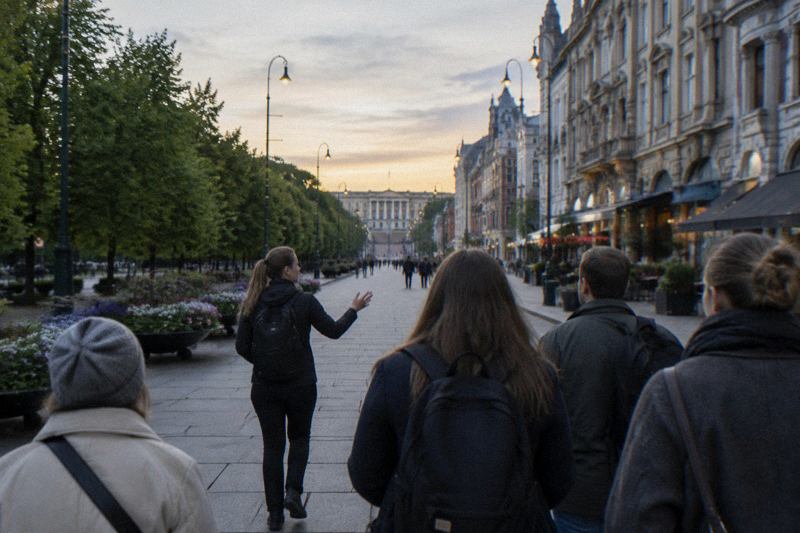
For context on how these walks sit in the city, is there a free walking tour in Oslo covers the full roster, and the short version is that the walks split between the Sentrum and Karl Johan corridor and the Bjorvika and Opera district. The three below are the most-booked starting points.
How Does Pay What You Want Actually Work?
You book a spot or simply show up, walk for the stated duration, and at the end the guide makes a short, open statement that the tour runs on tips and you pay what you think it was worth. Nothing is requested per person, no minimum is named, and there is no card machine passed down the line. You hand over cash or send it digitally, the guide thanks the group, and that is the entire transaction.
The mechanics are worth knowing because they remove most of the awkwardness people fear. The guide's pitch at the end is a formula, delivered to the whole group at once, so nobody is singled out. You can give a lot, a little, or nothing, and the guide has no way of knowing which unless you make it obvious. People who feel anxious about the moment usually discover it lasts about a minute and involves no eye contact at all.
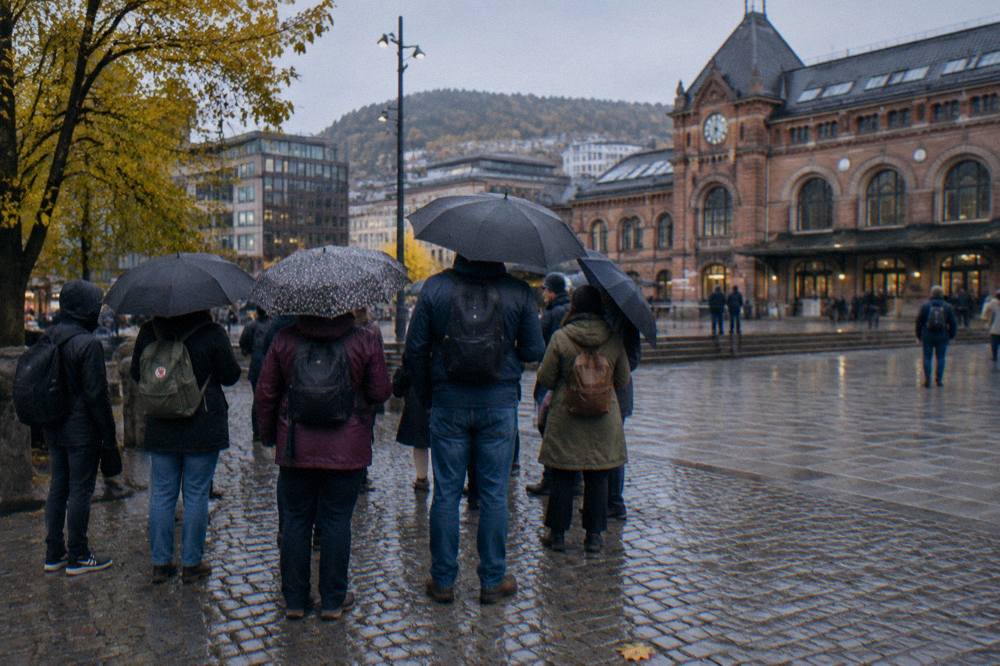
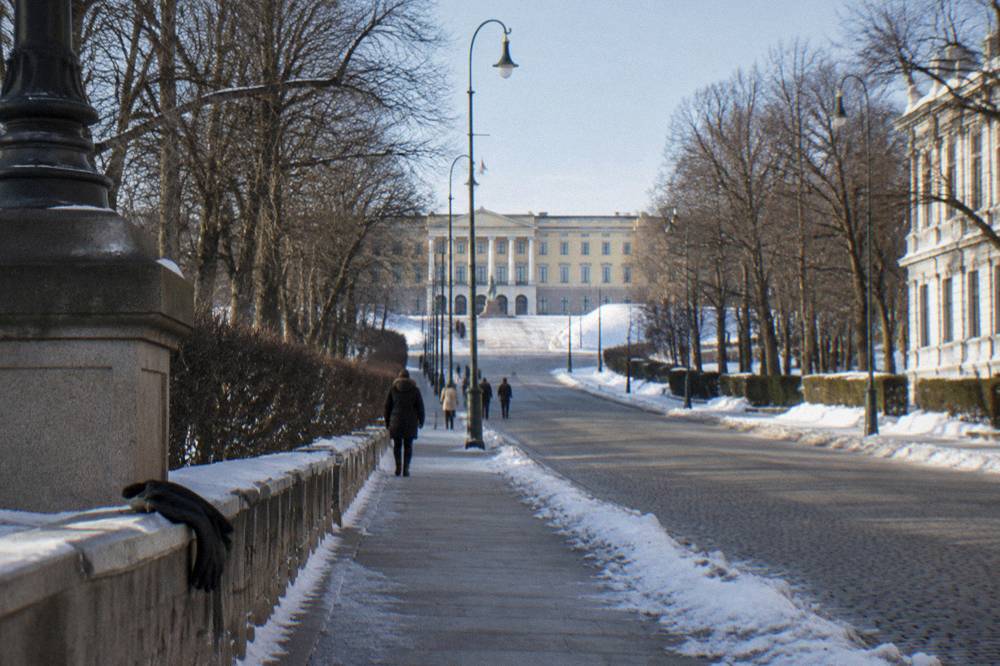
What the guide is doing during those two hours is the other half of the equation. The routes are built around stories: the bronze Tiger sculpture at Jernbanetorget, the Karl Johan parade street, the Opera House roof in Bjorvika. A guide who fills that ground with history you would never have found on a plaque has done real work, and the pay-what-you-want model is designed to let you pay for exactly that work, at exactly the value you received. The debate over whether the model is fair to travellers and guides alike is covered in are free walking tours worth it, and the short answer there is the same as here: the value question is answered by the tip itself.
What Shapes The Amount People Give?
Four things move the number: the length of the walk, the size of the group, how much the guide personally added beyond what a guidebook holds, and what a comparable paid tour in the same city would charge. A short walk and a long one are not the same product, and a flat hour is not tipped like a walk that carried you the whole way. Your own budget counts as a fifth factor, and it is a legitimate one.
Length is the easiest starting point. Oslo's featured walks run from 1 hour 30 minutes to 2 hours 15 minutes, and a longer walk means more of the guide's afternoon, more ground covered, and more stories delivered. Group size cuts the other way: in a group of thirty, small contributions add up, while a guide walking five people through Sentrum is giving a near-private tour for tip money. Neither factor is yours to calculate precisely, but both explain why two people can give different amounts for the same walk and both be right.
The comparison anchor is the paid tour. Oslo has paid guided walks, paid museum tours, and paid fjord sightseeing, and the free-walk model asks you to benchmark against them: what would this exact two hours have cost if it carried a sticker price? You do not need to match a commercial rate, but the anchor keeps a tip from being a stray coin. The factors below are the ones worth weighing in the last ten minutes of any walk.
| Factor | Why it changes the amount | How to weigh it |
|---|---|---|
| Walk length | The 2-hour-15-minute walks ask more of the guide than the shorter ones | Give a longer walk more, roughly in proportion |
| Group size | Small groups get near-private attention | Reward it if you had room to ask questions |
| Guide quality | Stories, route choices and answers beyond the guidebook are the product | The single biggest factor for most people |
| Your budget | The model exists partly for travellers watching costs | A smaller honest amount beats an awkward nothing |
One more thing belongs in this section because it is the part people forget: the tip is also feedback. Guides adjust routes, pacing and material based on what walks earn. A walk that ends in silence tells a guide something; a walk that ends with genuine engagement tells them something else. The money is a review you pay for.
Cash Or Card: How Do You Hand Over A Tip In Oslo?
Cash is the cleanest method, and Norwegian kroner given directly at the end of the walk is still how most tips move, but Norway is a low-cash country and every Oslo walk guide handles digital tips too. The guide will say at the end, or on their listing page, how they accept money, typically cash plus a payment app or a printed code you scan. Plan for one of the two before the walk starts.
The low-cash point matters for visitors. Many travellers arrive in Oslo without any NOK at all, spend three days tapping a card for everything, and then face a hat they cannot contribute to. The fix is simple: withdraw a small amount of Norwegian kroner the day before, or check the walk's listing for a digital option before you set out. Neither approach is unusual, and no guide will be surprised by either.
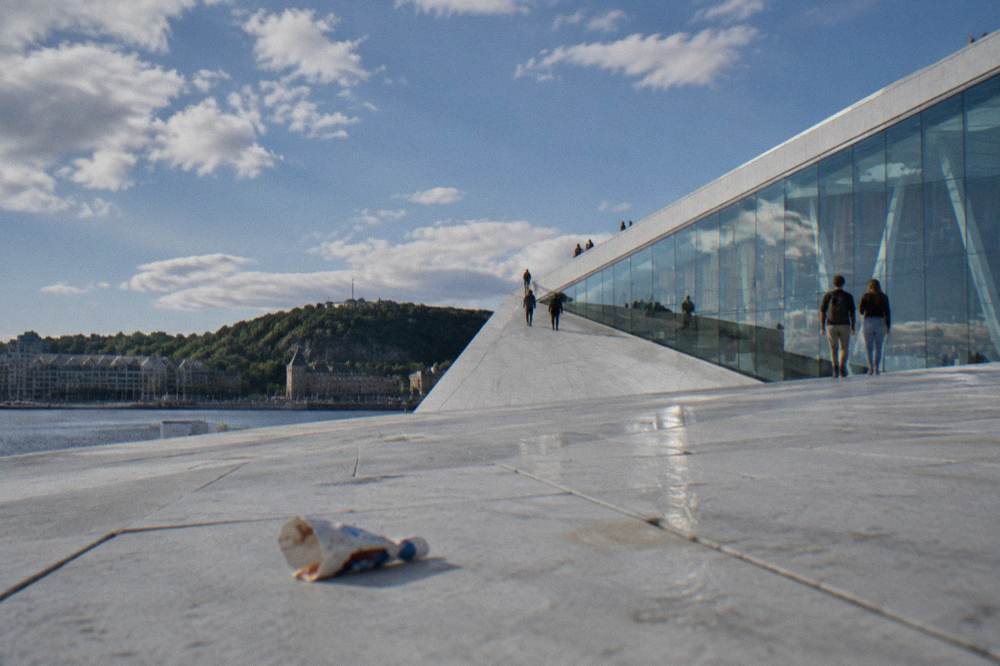
Timing is the other practical question. Give at the end, when the guide announces the tour is finishing, not mid-walk and not by chasing them down the street afterwards. If you have to leave early, hand something to the guide before you go and say why; that is a normal move and guides deal with it every week. And if the walk genuinely delivered nothing, giving nothing is within the rules of the model, though a word to the guide about why is fairer than silence.
Which Free Walks Run In Oslo And Where Do They Meet?
Oslo's featured free walks run on two platforms, GuruWalk and freetour.com, and they meet at fixed landmarks in two areas: the Sentrum and Karl Johan corridor around the Central Station and the National Theatre, and the Bjorvika waterfront at the Opera House. Five walks are featured on this site, and the two page-only walks, with review pools under twenty, are listed in the directory but not carded.
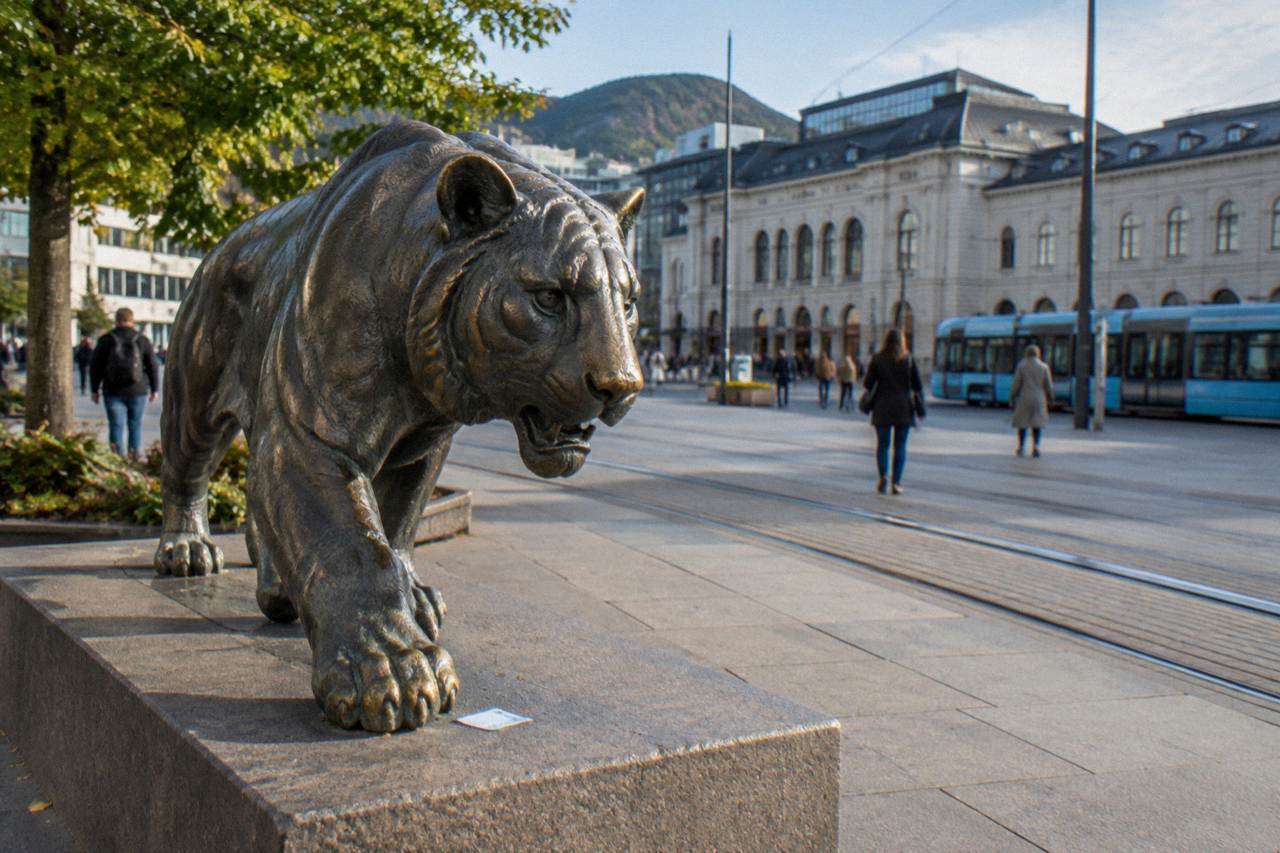
The biggest walk in the city is the Nordic Freedom Tours, 2-Hour Walk, rated 4.76 out of 5 across 2,192 GuruWalk reviews, running in English and Norwegian from outside Jernbanetorget metro station, at the bronze Tiger sculpture. That meeting point puts you at the eastern end of Karl Johan within a minute of the station exit, and the walk covers the central ground most first-time visitors want: the parade street, the Storting, and the waterfront edge of Sentrum. For a longer discussion of that corridor's sights, see what to see in Oslo in one day.
The same corridor hosts a shorter option and a Spanish-friendly one. The Short Walk, English Only runs 1 hour 30 minutes from the Tiger Statue in front of Oslo Central Station, rated 9.7 out of 10 across 332 freetour.com reviews, and the Perfect Introduction, Longest Walk runs 2 hours 15 minutes from near the Royal Palace, at the statue of the glove with the white umbrella, rated 9.1 out of 10 across 191 freetour.com reviews. The City Walk, Secrets Guide Included meets at the main entrance of the National Theatre and adds a local secrets guide to take away, rated 4.69 out of 5 across 42 GuruWalk reviews in English and Spanish. That theatre entrance sits at the top of Karl Johan, which makes it the natural pairing with a Royal Palace park wander before the walk starts.
Across the water in Bjorvika, the Contrasts Walk, Opera District runs 2 hours from the main facade of the Opera House, rated 4.67 out of 5 across 311 GuruWalk reviews in English and Spanish. It is the featured walk for the Opera and Barcode district, and the free-to-climb Opera roof is the meeting landmark, so arrive early and walk up the marble slope while you wait.
| Walk | Platform | Rating and scale | Duration | Meets at |
|---|---|---|---|---|
| Nordic Freedom Tours, 2-Hour Walk | GuruWalk | 4.76 out of 5, 2,192 reviews | 2 hours | Outside Jernbanetorget station, at the bronze Tiger sculpture |
| Short Walk, English Only | freetour.com | 9.7 out of 10, 332 reviews | 1 hour 30 minutes | Tiger Statue, Oslo Central Station |
| Perfect Introduction, Longest Walk | freetour.com | 9.1 out of 10, 191 reviews | 2 hours 15 minutes | Near the Royal Palace, statue of the glove with white umbrella |
| City Walk, Secrets Guide Included | GuruWalk | 4.69 out of 5, 42 reviews | 2 hours | Main entrance of the National Theatre |
| Contrasts Walk, Opera District | GuruWalk | 4.67 out of 5, 311 reviews | 2 hours | Main facade of the Opera House |
Is Tipping Expected In Norway At All?
Norway is not a tipping culture in the American sense: restaurant bills, taxis and bar tabs do not carry an expected percentage, and service workers are paid properly by law. The free walking tour is the one clear exception, because the tip is not a top-up there, it is the entire price. Tipping a walk guide in Oslo is expected in a way tipping a waiter is not, and the distinction confuses a lot of visitors.
This is the trap the model sets for Nordic travellers. Locals and visitors from non-tipping countries arrive primed by the national norm, hear "free", and take it literally. The guide's closing pitch exists precisely because of that ambiguity, and it is why every listing on GuruWalk and freetour.com describes the walk as free to join with tips expected. The phrase "pay what you want" is doing honest work: it names the transaction without fixing a number.
The practical reading is simple. In a Norwegian restaurant you can round up the bill and have done your duty. At the end of a free walk, the equivalent move is a real contribution, sized against the four factors above. The country's norms do not exempt you here, because the walk was never operating inside those norms in the first place. For a wider look at what the city costs, how much does a typical day in Oslo cost breaks down the rest of the budget, and VisitOSLO, the official tourism authority at visitoslo.com, is the primary source for anything about the city's paid side.
Common Questions About Tipping On A Free Walking Tour
How Much Should I Tip For A Free Walking Tour?
There is no fixed amount, because the tour is pay what you want: free to join, and you give at the end whatever the walk was worth to you. No official body sets a standard and no Oslo guide publishes a suggested figure. The tip is the price, and you set it after the walk, weighed against its length, the group size, the guide's quality and your own budget.
Do I Have To Tip If The Walk Was Free?
Nothing is enforced, but the model only works because most people give. The guide is typically an independent local whose income from the walk is the tips, so a contribution is the expected close of the transaction. If the walk genuinely delivered nothing, giving nothing is within the rules, though telling the guide why is fairer than silence.
Can I Tip With A Card Instead Of Cash?
Usually yes. Norway is a low-cash country and Oslo guides handle digital tips, commonly through a payment app or a scannable code, with cash also accepted. Check the walk's listing page before you set out, or withdraw a small amount of Norwegian kroner the day before so you have both options.
Is Tipping Normal In Norway Outside These Tours?
Not in the same way. Restaurant bills, taxis and bars do not carry an expected percentage, and service staff are paid properly by law. The free walking tour is the clear exception, because the tip is the entire price of the product rather than a top-up, so the national norm does not transfer in either direction.
When Should I Hand The Tip Over?
At the end, when the guide announces the tour is finishing. Do not tip mid-walk and do not chase the guide down the street afterwards. If you have to leave early, hand something to the guide before you go and say why; guides deal with early departures every week and it is a normal move.
Do The Guides On This Site Work For It?
No. This site, Free Things To Do In Oslo, operates no walk, employs no guide and takes no booking. Every walk listed here is run by an independent local guide on GuruWalk or freetour.com, and the site simply points to their listings so you can check the meeting point, language and rating before you go.