How Much Does A Typical Day In Oslo Cost?
A realistic breakdown of what a day in Oslo costs, which headline attractions are genuinely free, which ones charge, and how the free walking tours fit into a budget day.
How Much Does A Typical Day In Oslo Cost?
A typical day in Oslo can cost almost nothing beyond food and transport, because the city's signature sights are free: Vigeland Park, the Akershus Fortress grounds, the Opera House roof, the Royal Palace park and the Botanical Garden all charge nothing. Add a pay-what-you-want walking tour and the only fixed costs left are a transit ticket and lunch. A day built around paid museums instead can easily run into several hundred kroner.
That range is the honest answer, and it is wider than most budget guides admit. Oslo splits cleanly into two cities: an outdoor city of parks, waterfront promenades, beaches and forest that is free to anyone who walks into it, and an indoor city of state and foundation-run museums that mostly charge admission. Which day you get depends almost entirely on which of those two cities you spend your time in.
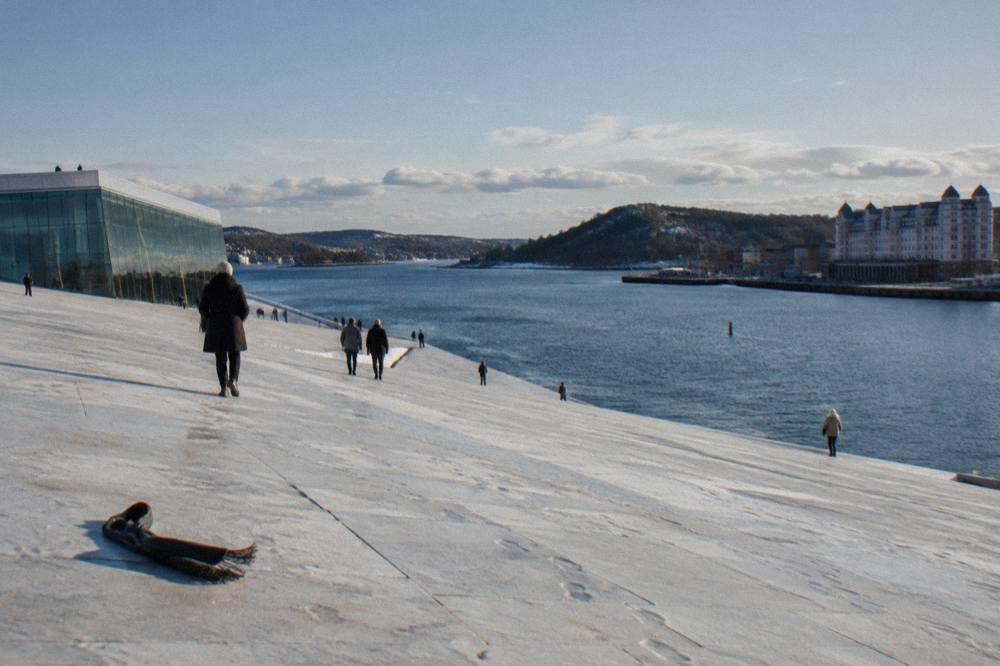
The outdoor city is genuinely generous. The sculpture park at Vigeland is free and always open, the grounds of Akershus Fortress are a public space you can wander without a ticket, and the Oslo Opera House is designed to be climbed: its marble roof and public foyer cost nothing, as the opera's own site confirms. The Royal Palace park is free year-round. None of these require booking, and several of them sit within a short walk of each other.
The indoor city is where the money goes. The National Museum charges adults, as does the Munch Museum outside its free Wednesday-evening window, and the castle interior inside Akershus Fortress costs around 160 NOK, with the Resistance Museum in the same grounds at roughly the same figure. A visitor who spends the day museum-hopping can easily spend more on tickets than on food.
The middle path, and the one most first-time visitors land on, is a free walking tour in the morning followed by one or two paid entries in the afternoon. The walks below are all pay-what-you-want, so the morning's cost is whatever you decide to hand the guide at the end.
What Can You Do In Oslo Completely Free?
Plenty: Vigeland Park's sculptures, the Akershus Fortress grounds, the Opera House roof and foyer, the Royal Palace park, the Botanical Garden at Tøyen, the Parliament on a free summer tour, Oslo City Hall's interior, the Aker Brygge and Sørenga waterfronts, the Ekebergparken sculpture forest and the Marka trails are all free. Even the fjord islands are free land once you pay the ordinary ferry fare.
The free list is long enough to fill several days, and it is not a list of second-tier sights. Vigeland Park is one of the most photographed places in Norway. The Opera House roof is an architectural landmark that the builders intended the public to walk on. The Botanical Garden, run by the University of Oslo, charges nothing for a landscape of greenhouses, rock gardens and old trees in the middle of the capital.
Two civic buildings deserve a special note. Oslo City Hall is free to enter, and it runs free guided tours in summer on a drop-in basis, no booking needed. The Norwegian Parliament also offers free summer tours, again drop-in only, with no advance booking. Both are working government buildings that simply open their doors to visitors during the warmer months, which is unusual for a capital city.
The waterfront costs nothing either. The promenade from Aker Brygge to Tjuvholmen is a public walk, the Sørenga seawater pool is free, and the sea views across the Bjørvika bay come with the Opera House roof for free. For a fuller rundown of the free list, the guide to free places to visit in Oslo covers the whole set, and the piece on seeing Oslo on a budget builds a full low-spend itinerary around them.
There is one structural trap to keep in mind, and it catches visitors constantly: several of Oslo's famous names are two attractions in one place, one free and one paid. The next section untangles them.
Which Oslo Attractions Charge, And How Much?
The main paid attractions are the National Museum, the Munch Museum, the Vigeland Museum at about 120 NOK, Akershus Castle and the Resistance Museum at roughly 160 NOK each, the Holmenkollen Ski Jump Tower and Ski Museum at 200 NOK combined, and the Royal Palace's indoor tour at roughly 175 to 230 NOK. Under-18s go free at most of these, and the Oslo Pass covers many of them.
The pattern to understand is the split site. Vigeland Park, the outdoor sculpture park, is free and always open. The Vigeland Museum beside it is a separate institution with its own ticket. Akershus Fortress grounds are free public space; the castle interior and the Resistance Museum inside those grounds are each paid. The Royal Palace park is free year-round while the indoor guided tour runs in summer only and requires advance booking. Holmenkollen's hillside and forest are free, while the tower and ski museum share one 200 NOK combined ticket, priced on the official ski association site.
| Attraction | Free part | Paid part | Paid price |
|---|---|---|---|
| Vigeland Park | Outdoor sculpture park, always open | Vigeland Museum (indoor) | about 120 NOK |
| Akershus Fortress | Grounds and ramparts | Castle interior, Resistance Museum | about 160 NOK each |
| Royal Palace | Park, year-round | Indoor guided tour, summer only | about 175-230 NOK |
| Oslo Opera House | Roof and public foyer | Performance tickets | roughly 150-990 NOK |
| Holmenkollen | Hillside and forest trails | Ski Jump Tower + Ski Museum | 200 NOK combined |
| Botanical Garden, Tøyen | The garden itself | Natural History Museum exhibitions | price on the museum's page |
Two softeners apply. Nearly every charging museum in the city lets under-18s in free, and the Munch Museum adds a recurring free window for adults: first Wednesday evening of the month, 18:00 to 21:00, except in July, August and September, as MUNCH's own pages set out. There is no confirmed recurring free day for adults at the state National Museum, so plan around the under-18 rule and the Oslo Pass rather than hoping for one. The Oslo Pass, detailed on the official tourism site, bundles many paid attractions with transit and is worth comparing against your actual museum list before buying.
One more paid item that is easy to overlook: the ferry to the fjord islands such as Hovedøya is an ordinary Ruter transit fare, never a free ride, even though the islands themselves are free public land. The guide to the fjord islands and the Oslo ferries explains exactly how that works.
Where Does A Free Walking Tour Fit Into The Budget?
A free walking tour costs nothing up front: every walking tour in Oslo runs on a pay-what-you-want basis, so the price is entirely the tip you hand the guide at the end. That makes the morning's sightseeing the most flexible line in any Oslo budget, and the walks cover the exact central ground, Sentrum, Karl Johan and the Opera district, that a first-time visitor would otherwise pay to see on a paid excursion.
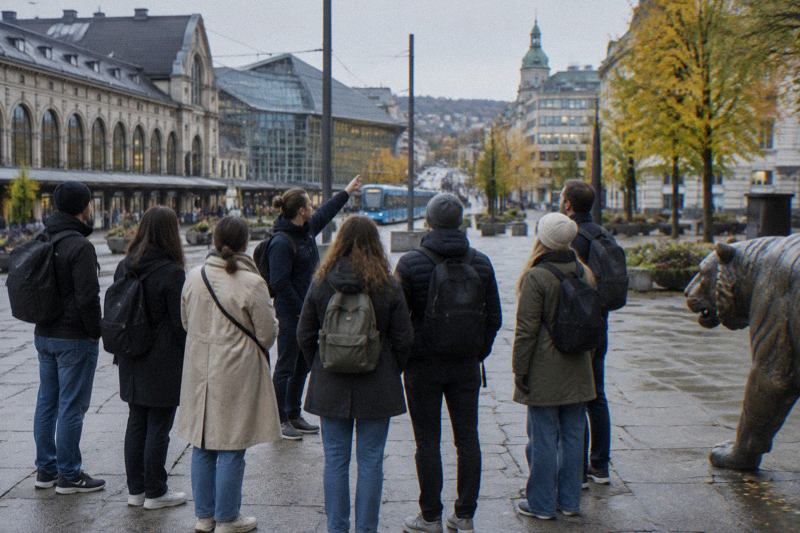
The heaviest-weighted option is the Nordic Freedom Tours 2-hour walk, rated 4.76 out of 5 across 2,192 GuruWalk reviews, meeting outside Jernbanetorget metro station at the bronze Tiger sculpture. It runs in English and Norwegian and sweeps the Sentrum and Karl Johan corridor, the Parliament, the main street and the historic core. For a cost question, its appeal is simple: two hours of guided central sightseeing whose price is decided afterwards, by you. The full index of guides sits on Free Things To Do In Oslo.
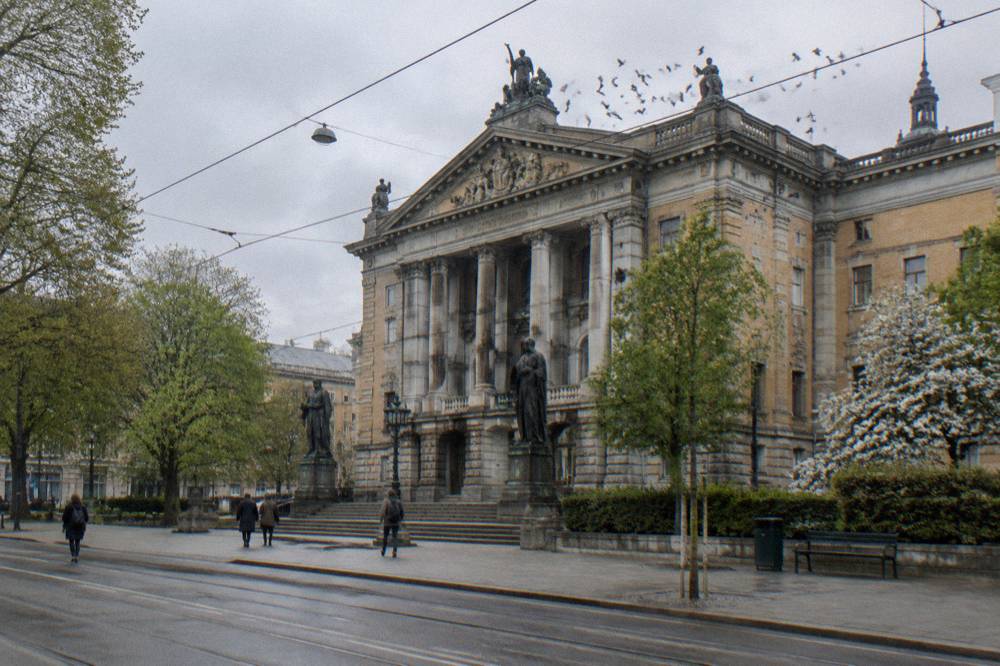
A different flavour of the same ground is the City Walk with the local secrets guide, rated 4.69 out of 5 across 42 GuruWalk reviews, meeting at the main entrance of the National Theatre. It also runs two hours in English and Spanish, and it includes a local secrets guide, which extends the value past the walk itself: you leave with a reference document for the rest of your day rather than just a route.
The Opera district has its own walk. The Contrasts Walk, rated 4.67 out of 5 across 311 GuruWalk reviews, starts at the main facade of the Opera House and spends two hours on the Bjørvika side of the city, the new waterfront architecture that sits opposite the free-to-climb opera roof. If your day is weighted toward the eastern bay, that is the walk that matches it.
Tipping norms matter to the budget line, and they are covered properly in how much to tip for a free walking tour. The short version: pay-what-you-want is the real price, but a zero tip on a walk you enjoyed is a poor answer in one of Europe's most expensive capitals.
Is Oslo Expensive Compared To Other Nordic Cities?
Yes, by most measures Oslo sits at or near the top of the Nordic price table alongside Copenhagen, with Stockholm usually a step behind and Helsinki behind that. But the gap narrows sharply for a visitor who uses Oslo's free sights, because no other Nordic capital hands out quite as much headline architecture, parkland and waterfront at zero cost. The expense is real; the exposure to it is optional.
The comparison is worth making honestly rather than defensively. Food, drink and accommodation in Oslo are priced the way the reputation suggests, and a day of restaurants and paid museums will feel it. The full Nordic price comparison works through the numbers city by city for anyone weighing Oslo against Stockholm or Copenhagen.
What tilts the value argument back toward Oslo is the free tier. A visitor in Oslo can spend a morning on a pay-what-you-want walk through the historic core, climb the Opera House roof at noon, walk the Akershus grounds in the afternoon and finish on the Aker Brygge promenade at sunset, having spent nothing on sights at all. That exact day is not available in most capitals at any price.
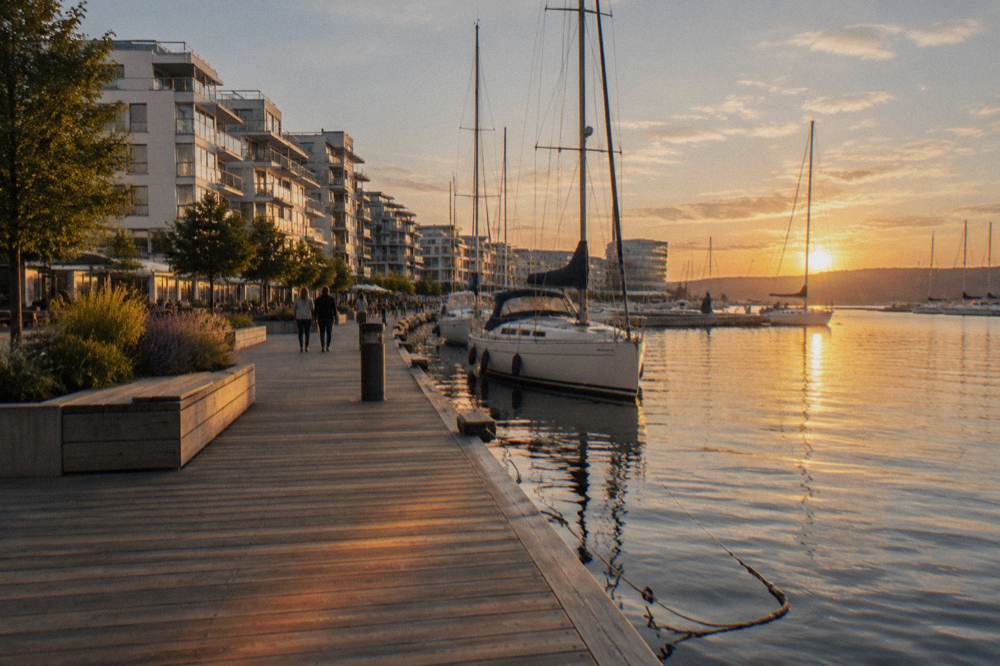
The practical takeaway for a budget is to spend money where the city is genuinely strong and skip it where the free alternative is nearly as good. The paid museums are excellent and worth one or two picks. The outdoor city needs no picks at all, and it is the larger half of what makes Oslo worth visiting.
How Do You Build A Cheap Day That Still Feels Complete?
Start with a pay-what-you-want walking tour through Sentrum and Karl Johan in the morning, climb the Opera House roof afterwards, walk the Akershus Fortress grounds in the afternoon and finish along the Aker Brygge waterfront. That day costs the tour tip, a transit ticket and food, and nothing else. Add one paid museum only if the weather or your interests push you indoors.
The order matters less than the principle: front-load the free architecture and parkland, keep paid entries to a deliberate one or two, and let the walking tour carry the orientation work so you are not paying for transport between sights you could have walked between. The central cluster is compact, and the one-day Oslo itinerary maps it out stop by stop.
For anyone stretching the plan across several days, the free list scales: Ekebergparken's sculpture forest, the Sognsvann lake trails, the Botanical Garden and the fjord islands each fill a half-day at zero admission. The winter version of the free itinerary shows the same trick works when the days shorten.
Common Questions About The Cost Of A Day In Oslo
How Much Does A Typical Day In Oslo Cost?
It depends on which Oslo you spend the day in. A day built around the free sights, a pay-what-you-want walking tour, the Opera House roof, the Akershus grounds and the waterfront, costs only your tour tip, transit and food. A museum day can add several hundred kroner in tickets, at roughly 120 NOK for the Vigeland Museum, about 160 NOK each for the castle and Resistance Museum, and 200 NOK combined at Holmenkollen.
Are The Free Walking Tours In Oslo Really Free?
Yes, in the sense that there is no fixed price. Every walk in the city's roster runs on a pay-what-you-want basis: you join without paying, and you hand the guide whatever you think the walk was worth at the end. Five walks are featured on this site, five of the seven listed run on GuruWalk and two on freetour.com, and all seven operate the same pay-what-you-want model.
What Is The Cheapest Way To See Oslo's Main Sights?
Walk. The central cluster, Sentrum, Karl Johans gate, the Opera House, the Akershus grounds and the Aker Brygge promenade, is compact enough to cover on foot in a day, and every one of those sights is free. A pay-what-you-want walking tour in the morning handles the orientation, and the rest of the day costs nothing beyond food and any transit you use.
Do Any Oslo Museums Have Free Entry For Adults?
One recurring window is confirmed: the Munch Museum is free on first Wednesday evenings from 18:00 to 21:00, except in July, August and September. No recurring free day for adults was found at the state National Museum. Under-18s go free at most charging museums, and the Oslo Pass covers many paid attractions for holders.
Is The Oslo Pass Worth It For One Day?
It depends entirely on how many paid attractions you plan to stack. A day spent mostly on the free outdoor sights does not need the pass at all. A day with three or more paid museums, the Holmenkollen combined ticket or the Royal Palace tour can make the pass cheaper than individual tickets, so price your actual list against it before buying.