What Should I Not Miss In Oslo?
The unmissable free sights of Oslo, from the Opera House roof to Vigeland Park, with the free walking tours that tie them together.
What Should I Not Miss In Oslo?
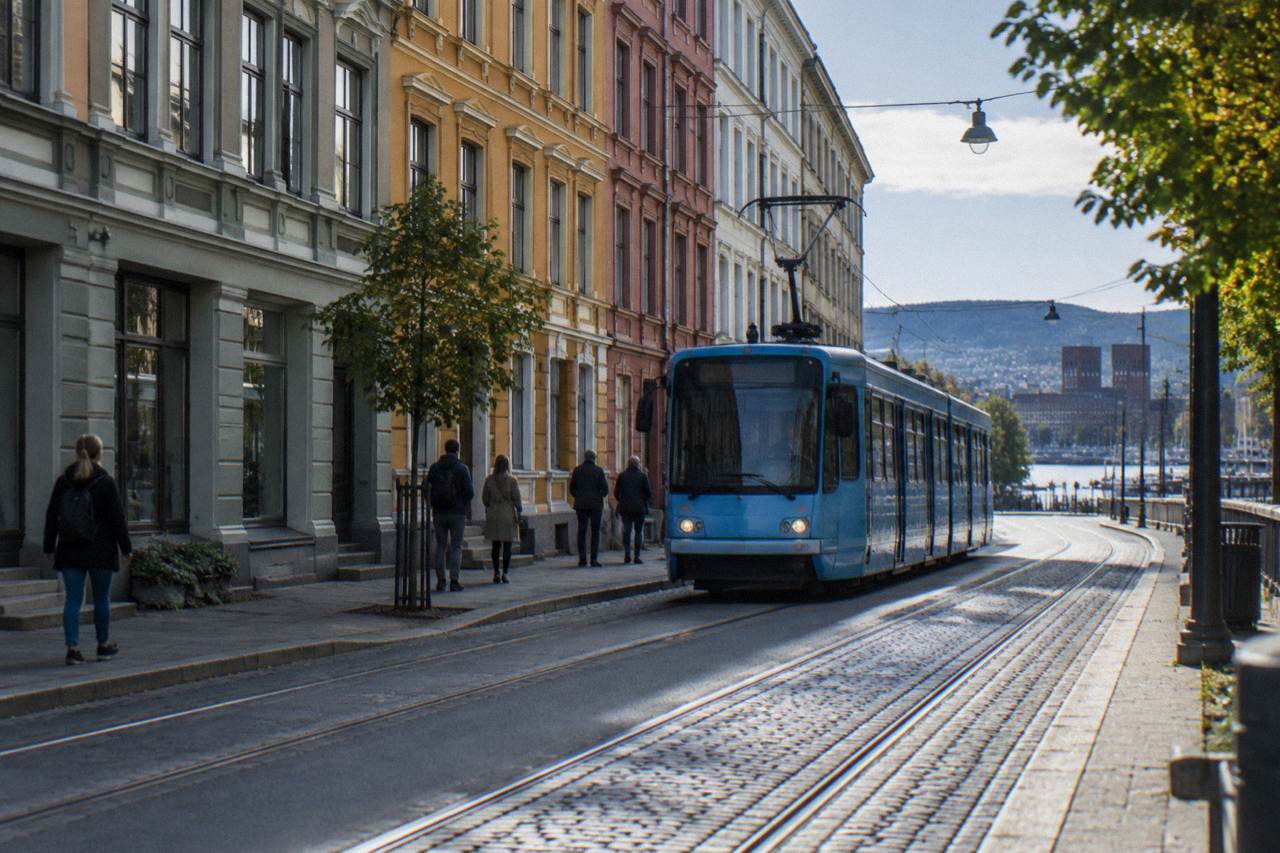
The five sights a first-time visitor should not miss are the Opera House roof, Karl Johans gate and the Royal Palace park, the Akershus Fortress grounds, Vigeland Park, and the Aker Brygge waterfront promenade. All five are free to enter or walk through. A free walking tour ties the city-centre sights together, and the rest sit within a short transit ride of Sentrum.
Oslo is unusual among European capitals in how much of its signature architecture is simply open to walk on, through and around. The Opera House roof is a public plaza. The Royal Palace park is a public park. The fortress grounds are public ground. The city's most photographed sculpture park charges nothing at the gate, because there is no gate. A visitor with comfortable shoes and a transit ticket can see the whole shortlist in two days without paying a single krone of admission.
The order matters less than the geography. Sentrum and Karl Johans gate form one walkable spine from the central station to the Palace. Bjorvika and the Opera sit at the water's end of that spine, and Aker Brygge and Akershus continue along the harbour. Vigeland Park is the one outlier, a short metro ride west, and it deserves the trip.
| Sight | Area | Cost to see |
|---|---|---|
| Opera House roof and foyer | Bjorvika | Free |
| Karl Johans gate and Royal Palace park | Sentrum | Free |
| Akershus Fortress grounds | Harbour | Free grounds; castle and Resistance Museum paid |
| Vigeland Park | Frogner | Free |
| Aker Brygge promenade | Harbour | Free |
For the city-centre half of that list, a pay-what-you-want walk does the routing for you. The three most established options below run daily in season and cover Sentrum, Karl Johan and the Opera district between them.
Karl Johans Gate And The Sentrum Spine
Karl Johans gate is Oslo's ceremonial main street, running roughly 1.2 kilometres from Oslo Central Station up to the Royal Palace, and every metre of it is free public street. The Parliament building sits beside it, the National Theatre sits at its upper end, and the Royal Palace park opens behind the Palace itself. A first visitor who walks only this street and its side lanes has seen the core of the city. A free walk covers this ground: Nordic Freedom Tours, 2-Hour Walk.
The street gathers almost every national institution in one line. The Storting, the Norwegian Parliament, faces it near the midpoint; the building offers free guided tours in summer on a drop-in basis, with no advance booking. The National Theatre anchors the western stretch, and the University of Oslo's historic buildings flank the avenue near the Palace end. None of this requires a ticket to look at, and the Palace park behind the royal residence is open year-round at no charge. The indoor Palace tour is a separate, paid, summer-only product; the park itself never is.
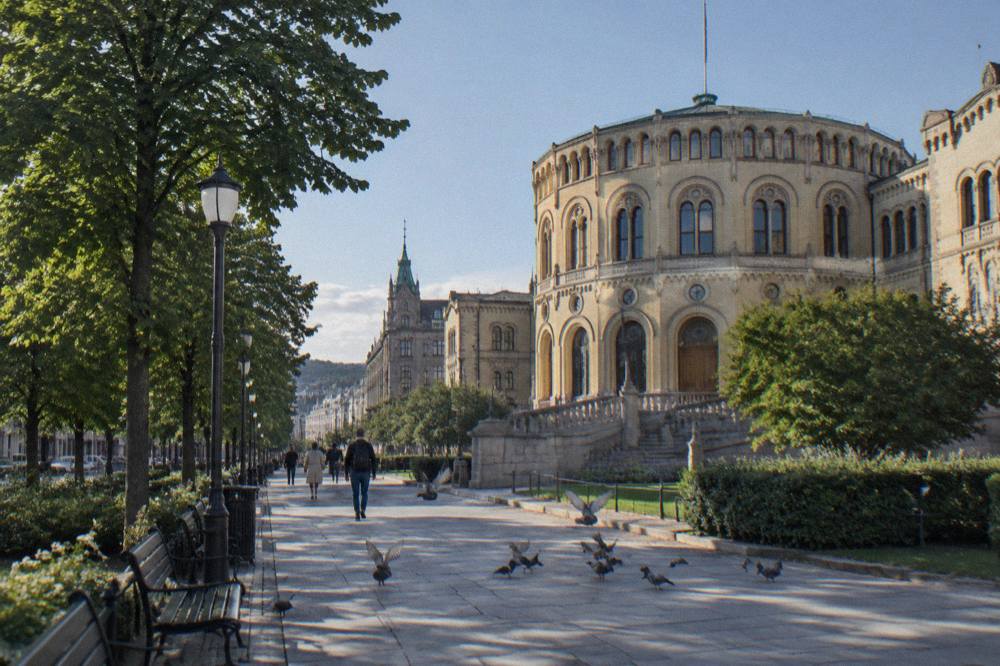
The most efficient way to absorb this stretch is with the longest-running free walk in the city. Nordic Freedom Tours' 2-hour walk, rated 4.76 across 2,192 GuruWalk reviews, meets outside Jernbanetorget metro station at the bronze Tiger sculpture and covers the central spine with commentary in English and Norwegian. It is pay-what-you-want, so the price is genuinely whatever you decide at the end. For a shorter orientation, the freetour.com Short Walk, rated 9.7 out of 10 across 332 freetour.com reviews, runs 1 hour 30 minutes in English from the tiger statue in front of Oslo Central Station.
If you would rather walk Sentrum with a guide who spends the whole time on the city's less obvious corners, there is a second option worth knowing about, covered in the next section. Either way, this stretch is the one part of Oslo where a guide adds real value, because the buildings are close together and the stories behind them are not signed.
The National Theatre And Sentrum's Quieter Side
The National Theatre and the streets immediately around it hold Sentrum's most overlooked free sights, including the Studenterlunden park strips along Karl Johans gate and the small squares where the city's oldest wooden houses survive. A 2-hour GuruWalk called City Walk, Secrets Guide Included, rated 4.69 across 42 GuruWalk reviews, meets at the theatre's main entrance and is built around exactly these corners. It runs in English and Spanish.
Not every unmissable thing in Oslo is a monument. The stretch between the Storting and the Palace rewards slow walking: the tree-lined Studenterlunden strips, the statues that most visitors pass without a second glance, and the lanes dropping east toward the old town. The City Walk from Hola Oslo leans into that layer of the city, and it comes with a local secrets guide included, which is a genuine differentiator among the free walks. Meeting is at the main entrance of the National Theatre, next to the tram stops, an easy landmark to find.
For planning the rest of a first visit beyond this neighbourhood, the guide to what to see in Oslo in one day covers the sequencing question in detail, and the broader roundup of free places to visit in Oslo goes deeper on individual attractions than this shortlist can.
The Opera House Roof And The Bjorvika Waterfront
The Oslo Opera House roof is free to walk on, with no ticket and no barrier, and it is the single most distinctive thing a visitor can do in the city. The sloping marble roof rises straight out of the fjord and can be climbed to the top for a view across Bjorvika. The public foyer inside is equally free; only a performance ticket costs money, roughly 150 to 990 NOK.
There is nothing else quite like it in Scandinavia. The building was designed to be walked on, and the architects' own institution confirms the roof and foyer are open to the public; the Opera's official site at operaen.no describes the building as a public space first. Walk up the western or northern slopes, follow the stream of locals doing the same, and the city reveals itself: the fjord islands to the south, the Munch museum and the new library to the east, the Barcode towers behind.
The district around it has become the city's modern showcase. Deichman Bjørvika, the main public library, is free to enter and worth an hour on its own; the Munch museum beside it is paid for adults, free for under-18s, with a free entry window on first-Wednesday evenings. A short walk along the water connects the Opera to Sørenga and its seawater lido, free in summer.
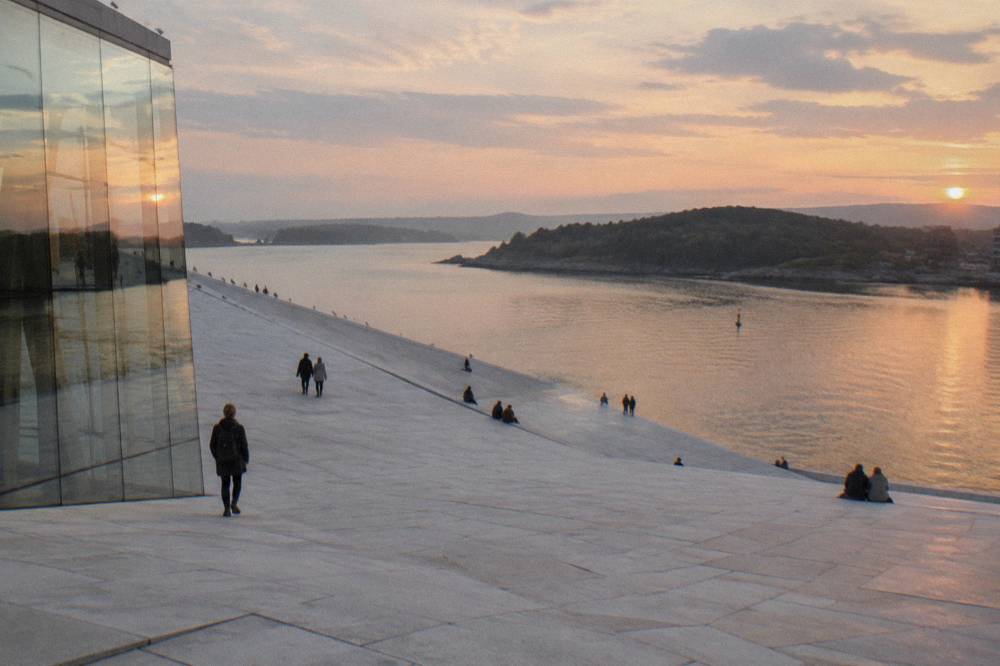
The Contrasts Walk from LOCAL Walking Tours, rated 4.67 across 311 GuruWalk reviews, meets at the Opera House's main facade and spends 2 hours on this district and the shifts between old and new Oslo, in English and Spanish. For the background on the building itself, the post on whether the Oslo Opera House is free separates the free roof from the paid performance hall in full.
Akershus Fortress And The Harbour Edge
Akershus Fortress grounds are free to walk, and they should not be missed: the medieval fortress walls sit directly on the harbour between Aker Brygge and the Opera, with fjord views from the ramparts. The distinction matters, though. The castle interior and the Resistance Museum inside the same grounds are each paid, at roughly 160 NOK, so the free part is the outdoor ground, not the buildings within it.
The fortress is Oslo's most instructive example of the city's free-versus-paid pattern, and getting it right is the difference between a free hour and an unexpected bill for two paid admissions. The grounds, walls and viewpoints cost nothing and are open to the public under the management of the national defence estate agency, whose official pages at forsvarsbygg.no describe the site. The castle and the Norway's Resistance Museum are separate paid attractions inside those walls, and each charges its own admission, so a family that wanders in expecting a free castle can end up paying twice.
From the fortress it is a short walk along the harbour promenade to Aker Brygge, the former shipyard turned waterfront district whose boardwalk is pure public space. Tjuvholmen continues it west, past the Astrup Fearnley museum, which is paid for adults but free for under-20s. The promenade itself, the water, and the ferry traffic to the fjord islands are the free show; the museums along it are the paid options. The full breakdown of what the fortress charges for, and what it does not, is in the guide to Akershus Fortress, what's free and what's not.
Vigeland Park And The Frogner Detour
Vigeland Park is the one unmissable sight that does not sit in the city centre, and it is free, open around the clock, and a short ride from Sentrum. The outdoor sculpture park holds more than 200 bronze and granite works by Gustav Vigeland, arranged along a monumental axis that ends at the Monolith, a 14-metre column carved from a single block of stone.
The park is the most-visited attraction in Norway by some measures, and it costs nothing, because the outdoor park is public land maintained by the city. The condition to remember is the one that trips up many visitors: the Vigeland Museum, the indoor building beside the park, is a separate institution with paid admission, roughly 120 NOK, free only for children under 18 and Oslo Pass holders. The park and the museum share a name and a founder, and nothing else.
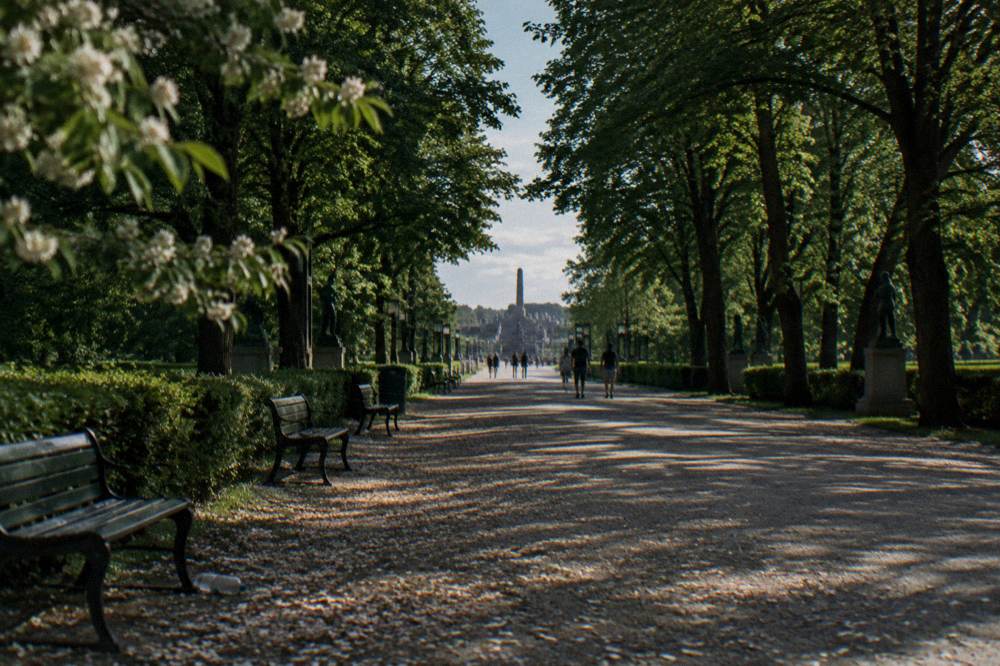
Budget an unhurried couple of hours. The walk from the main gate to the Monolith and back takes in the bridge of sculptures, the fountain and the wheel-of-life figures that make the park famous, and the surrounding Frogner Park adds lawns that locals use year-round. VisitOSLO's official site at visitoslo.com carries current transit directions and opening details for the whole Frogner area.
How To Fit The Unmissables Into One Day
All five unmissables fit into one long day if you walk Sentrum and the harbour and give Vigeland its own transit slot: the Opera roof takes half an hour, Karl Johan and the Palace park an hour, the fortress grounds the better part of an hour, Aker Brygge half an hour, and Vigeland Park two hours including travel. Two comfortable days is the better pace, and the free walks slot into the morning of either.
The sequencing trick is that Sentrum, Bjorvika, the fortress and Aker Brygge form one continuous walking route along the water and the main street. Start at the central station, walk Karl Johan to the Palace and back, cut down to the National Theatre and the harbour, cross to Akershus, then follow the promenade to Aker Brygge and Tjuvholmen, and finish at the Opera roof for the late light. That is a full day on foot with no transit at all.
| Time | Stop | Cost |
|---|---|---|
| Morning | Free walking tour from Jernbanetorget or the tiger statue | Pay what you want |
| Midday | Karl Johans gate, Parliament, Royal Palace park | Free |
| Early afternoon | Akershus Fortress grounds | Free grounds |
| Afternoon | Aker Brygge and Tjuvholmen promenade | Free |
| Late afternoon | Opera House roof and foyer | Free |
| Any spare slot | Vigeland Park by metro from Sentrum | Free |
Vigeland is the only item that needs a deliberate trip, and it pairs well with a second morning. If the day is tight, the Perfect Introduction walk from Artista Tours, rated 9.1 out of 10 across 191 freetour.com reviews, runs 2 hours 15 minutes from near the Royal Palace, at the statue of the glove with the white umbrella, and covers the central ground at a slower pace. For a fuller answer to the same question with more depth on each stop, the companion post on what to see in Oslo in a day walks the route stop by stop.
Whichever pace suits, this site, Free Things To Do In Oslo, exists because the city's best sights genuinely cost nothing, and the walks that introduce them cost whatever you decide they were worth.
A few of the free windows above slot neatly into the one-day plan. The Parliament's summer tours need no booking, so if you are travelling in summer you can simply drop in when the midday stretch of the route brings you past the building on Karl Johans gate. Oslo City Hall sits right on the waterfront between the fortress and Aker Brygge, so a free interior visit fits naturally into the afternoon promenade leg, though the guided tours only run in summer.
The Munch museum is the one free window that does not fit the walking day, since its free evenings run from 18:00 to 21:00 on the first Wednesday of the month and are skipped entirely in July, August and September. If your visit happens to land on the right first Wednesday outside those months, you can finish the Opera roof in the late light and use the free evening galleries afterwards, as the museum sits in Bjorvika near the Opera. That combination alone makes checking the calendar before you lock in dates worthwhile.
Common Questions About What Not To Miss In Oslo
What Should I Not Miss In Oslo?
The Opera House roof, Karl Johans gate and the Royal Palace park, the Akershus Fortress grounds, Vigeland Park, and the Aker Brygge promenade. All five are free to see, and the first four sit within one continuous walking route from the central station to the harbour.
Is The Opera House Roof Really Free?
Yes. The roof and the public foyer are free to walk, with no ticket needed. Only a performance ticket costs money, roughly 150 to 990 NOK depending on the seat and the show.
Is Akershus Fortress Free To Enter?
The fortress grounds are free. The castle interior and the Resistance Museum inside the grounds are each paid, at roughly 160 NOK, so a visit to the walls and viewpoints costs nothing while the buildings do not.
Do I Need To Book The Free Walking Tours In Advance?
The walks listed here are pay-what-you-want tours that run on set schedules and meet at fixed landmarks, such as the bronze Tiger sculpture outside Jernbanetorget or the tiger statue at the central station. Check each walk's own page for its current schedule before you go.
How Many Days Do I Need In Oslo?
Two days covers every unmissable on this list at a comfortable pace: one day for Sentrum, the harbour, the fortress and the Opera roof on foot, and one for Vigeland Park plus whatever slower corners of the centre you missed.