What To See In Oslo In One Day?
A realistic one-day Oslo route: Karl Johan, the Royal Palace park, Akershus Fortress grounds, the Opera House roof and a late-afternoon choice between Vigeland Park and the fjord islands, with what is free and what is not.
What To See In Oslo In One Day?
In one day, see Karl Johan street and the Royal Palace park in the morning, walk the free Akershus Fortress grounds and the Aker Brygge promenade at midday, climb the Opera House roof in Bjorvika in the afternoon, then finish at either Vigeland Park or a fjord island such as Hovedøya. Everything on that spine is free to enter, with the fjord ferry as the only compulsory ticket, roughly a 15-minute ride from the centre.
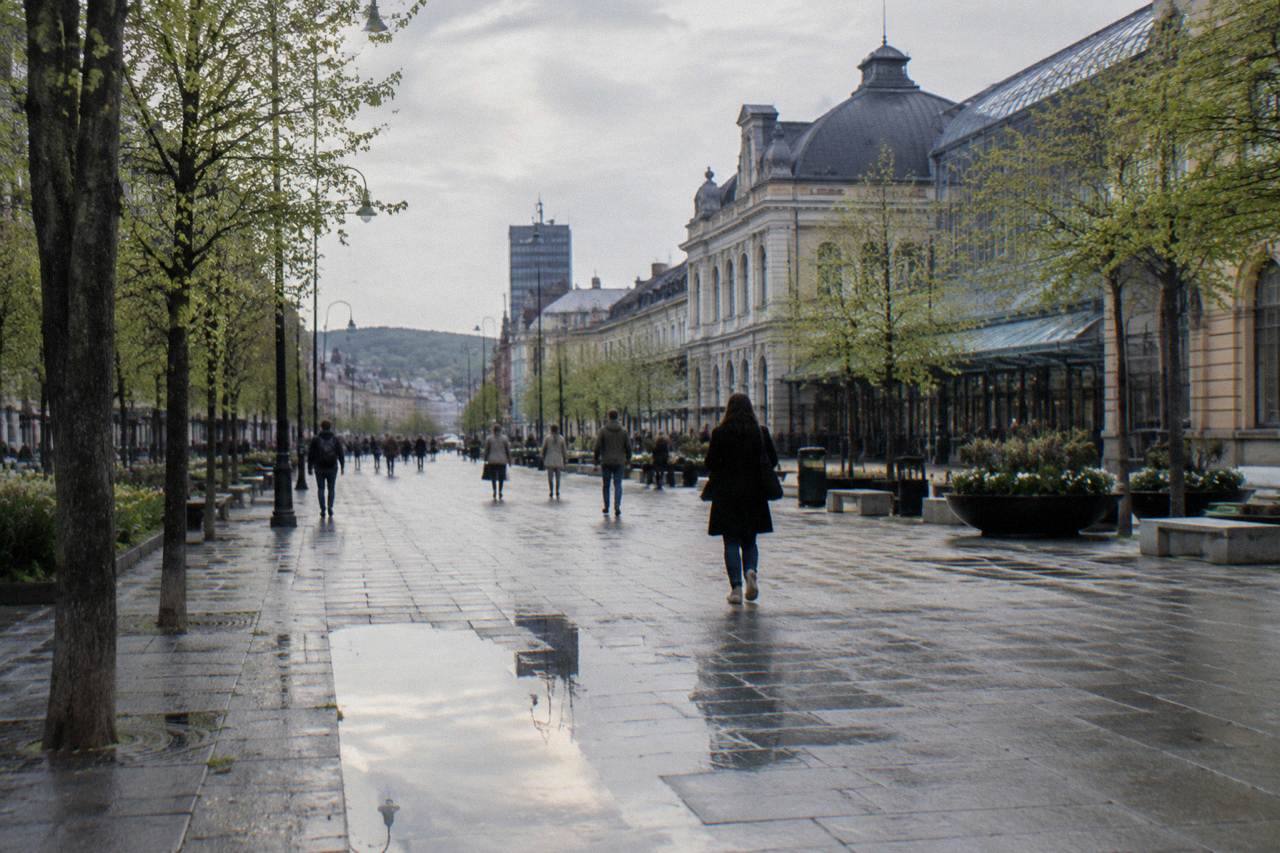
That route works because Oslo's free sights sit on a single north-to-south line. The city centre, Sentrum, runs from the Royal Palace down Karl Johan street to the Parliament and Oslo Central Station. From there the harbour is a few minutes on foot, and the fortress grounds, the Aker Brygge promenade and the Opera House all sit within a walkable band along the water. A visitor who follows that line spends the day moving forward instead of doubling back.
The one genuine fork in the day comes late afternoon. Vigeland Park, the outdoor sculpture park, is free and always open, but it sits west of the centre and pulls the route away from the water. The fjord islands, by contrast, are free public land reached by a paid Ruter ferry from the harbour, so they extend the coastal line instead of breaking it. Both options are covered in full further down, so the choice can be made on the day depending on weather and energy.
A free walking tour is the most efficient way to anchor the morning, because it bundles the Sentum and Karl Johan sights into a guided two hours. This site's directory pages list the walks in detail: the free walking tour options in Oslo compare all of them side by side, and the question of whether there is a free walking tour in Oslo has a short, direct answer.
The three walks above are the strongest starting choices on this site's roster. Nordic Freedom Tours covers the Sentrum ground this itinerary walks, the Short Walk is an English-only 1 hour 30 minute option from the Tiger Statue, and the Perfect Introduction walk is the longest at 2 hours 15 minutes, meeting near the Royal Palace. All three are pay what you want.
Morning In Sentrum: Karl Johan, The Palace Park And City Hall
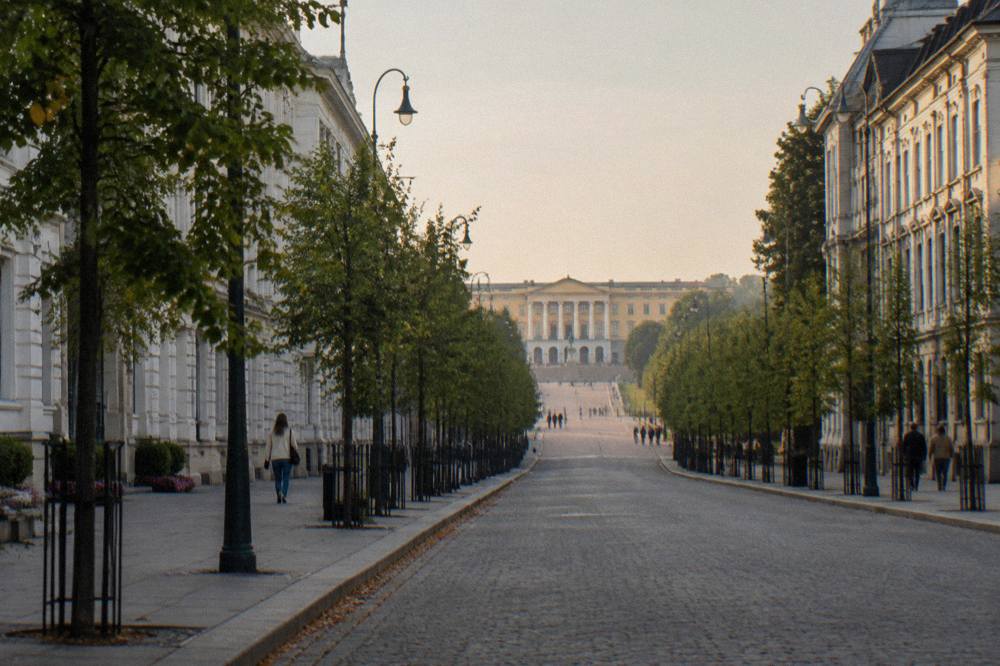
Start at the Royal Palace park, which is free year-round, then walk Karl Johan downhill through the National Theatre and Parliament to Oslo City Hall, whose interior is also free to enter. The whole stretch is about 1.2 kilometres and takes 20 to 30 minutes at sightseeing pace, with the indoor Palace tour the only paid item, and it runs in summer only. One of the free walking routes passes through here: Nordic Freedom Tours, 2-Hour Walk.
The Royal Palace park opens to everyone at no charge, and it is the calmest large green space within walking distance of the centre. The palace building itself is a different matter: the indoor guided tour is paid, seasonal, summer-only and requires advance booking, at roughly 175 to 230 NOK. The park needs none of that. Visitors walk the grounds freely year-round, and the changing of the guard, which happens outside on the square, costs nothing to watch.
Karl Johan, the avenue running from the Palace down to the Parliament, is Oslo's main ceremonial street, and it carries most of the city's parade-ground identity: the University, the National Theatre and the Storting building all front onto it. The Norwegian Parliament offers free summer tours on a drop-in basis, with no advance booking, which makes it one of the few indoor sights on the morning route that costs nothing in season.
A guided walk makes this stretch considerably richer than a self-guided one, because the stories sit in the buildings rather than on plaques. Nordic Freedom Tours, the 2-Hour Walk, is the strongest option here: rated 4.76 out of 5 across 2,192 GuruWalk reviews, meeting outside Jernbanetorget metro station at the bronze Tiger sculpture, running in English and Norwegian, and covering exactly this Sentrum and Karl Johan ground. It is free, pay what you want at the end.
A second option covers the same neighbourhood with a different angle. The City Walk, Secrets Guide Included, run by Hola Oslo, is rated 4.69 out of 5 across 42 GuruWalk reviews, runs 2 hours in English and Spanish, and meets at the main entrance of the National Theatre. Its distinguishing feature is in the name: walkers receive a local secrets guide, which is useful for the rest of the day, since the afternoon and evening are self-guided by necessity.
City Hall closes the morning. The interior is free to enter, and the building holds the murals and the hall where the Nobel Peace Prize is awarded. Free guided tours run in summer only, on a drop-in basis. Outside, the building faces the harbour directly, which is where the route turns next.
Midday: The Harbour, Akershus Fortress Grounds And Aker Brygge
Walk south from City Hall to the Aker Brygge promenade, a free public waterfront, then east along the water to Akershus Fortress, whose grounds are free to enter and open to walk. The castle interior and the Resistance Museum inside the same grounds are both paid, at roughly 160 NOK each, so the free visit is an outdoor one.
The Aker Brygge promenade is public space with no admission mechanism at all, and it is the best free harbour view in the centre: ferries, the fjord and the island of Hovedøya all sit in one frame. The strip is also where Oslo's restaurant concentration peaks, which makes it the natural lunch stop, though eating here is one of the more expensive ways to lunch in the city.
Akershus Fortress is the midday highlight and the site of one of Oslo's cleanest free/paid splits. The grounds, ramparts and outer fortifications are free and open to walk, and they deliver the harbour-and-city views that most visitors assume require a ticket. The castle interior and Norway's Resistance Museum, both inside those grounds, are separate paid attractions at roughly 160 NOK each. A visitor with one day and a free budget walks the grounds and skips both interiors without losing the essential experience. The full breakdown of what is free at the fortress is covered in the guide to what is free at Akershus Fortress.
The fortress grounds to Opera House stretch is a flat 15-minute walk east along the water, and it is the connective tissue of the whole day. Nothing on it needs a ticket, and it passes the Sørenga seawater bathing area, which is free, in case the weather invites a pause.
Afternoon In Bjorvika: The Opera House Roof And The Munch Quarter
Climb the Opera House roof, which is free and requires no ticket, then step into the public foyer, also free. An actual performance ticket is a separate paid item, roughly 150 to 990 NOK, and the Munch museum beside it is paid too, except on first-Wednesday evenings when entry is free from 18:00 to 21:00, excluding July, August and September.
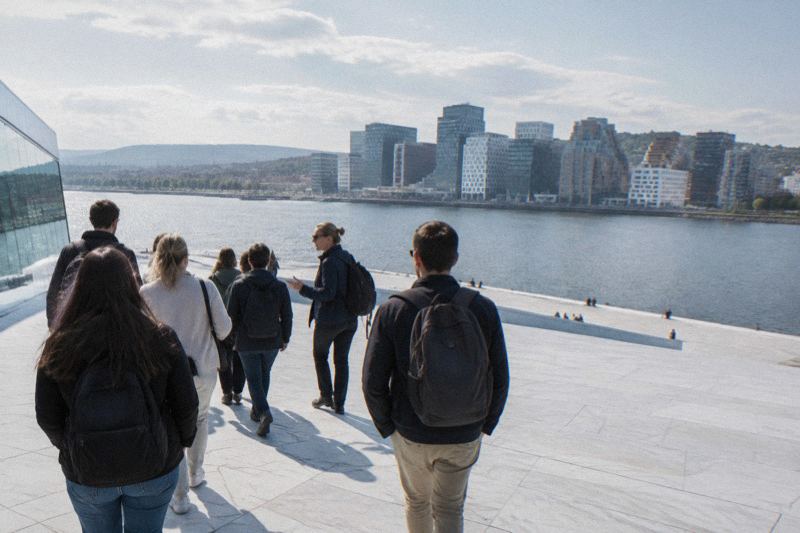
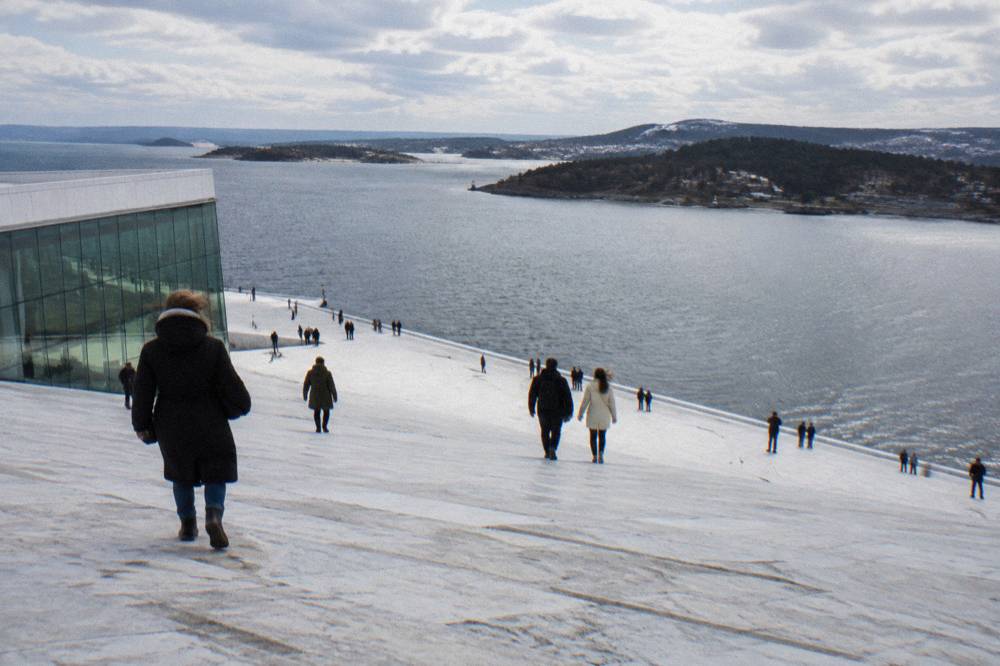
The Opera House is the single best free sight in Oslo, and it earns that title through architecture alone. The building is designed to be walked on: the marble roof slopes from the plaza straight up to a highpoint overlooking the fjord, and the whole surface is public. No ticket, no queue, no opening hours in any meaningful sense. The foyer inside is equally free to enter. The only paid layer is a performance seat, which runs roughly 150 to 990 NOK depending on the production. The details sit on the operator's own page at operaen.no, and the question is the Oslo Opera House free gets a full answer elsewhere on this site.
The Opera House is also the meeting point for the one free walking tour that covers this district: the Contrasts Walk, Opera District, run by LOCAL Walking Tours, rated 4.67 out of 5 across 311 GuruWalk reviews, 2 hours in English and Spanish, meeting at the main facade. For a one-day visitor it is an alternative shape of day: start at the Opera instead of the Palace, and let the tour carry the Bjorvika and harbour ground. Everything else covered here is indexed on Free Things To Do In Oslo.
Next door, the Deichman Bjørvika public library is free to use, and its top-floor reading room gives one of the better interior views over the fjord at no cost. The Munch museum sits in the same block and is paid, with free entry for under-18s, but its one recurring free window matters to a one-day visitor: first-Wednesday evenings, 18:00 to 21:00, excluding July, August and September, per the museum's own page at munch.no. On the right Wednesday, the afternoon route ends with free modern art.
Late Afternoon: Vigeland Park Or The Fjord Islands
Vigeland Park, the outdoor sculpture park, is free and always open, while the indoor Vigeland Museum beside it is paid at roughly 120 NOK. The fjord islands such as Hovedøya are free public land, but the Ruter ferry to reach them is a paid standard transit fare. Both options cost almost nothing; the choice is between sculpture and swimming.
Vigeland Park holds more than 200 sculptures across a vast free park, with the Monolith plateau as the centrepiece. It is open around the clock, charges nothing, and sits at the end of a short tram ride west of the centre. The trap sits next door: the Vigeland Museum, the indoor building a short walk away, is a separate paid institution at roughly 120 NOK, free only for visitors aged 0 to 17 and Oslo Pass holders. The park and the museum share a name and a visitor page but not an operator, which is why the distinction is spelled out in the site's guide to Vigeland Park and what is free there.
The fjord islands are the other branch. Hovedøya, the closest, is free public land with beaches, ruins and forest trails, reached by a paid Ruter ferry from the harbour, a ride of roughly 15 minutes. The ferry is never described as free transport: it is a standard transit fare. But the island itself costs nothing once the boat lands, and on a warm day it is the better half of the fork. The full island picture, including the ferry mechanics, is in the guide to the free fjord islands and Oslo ferries.
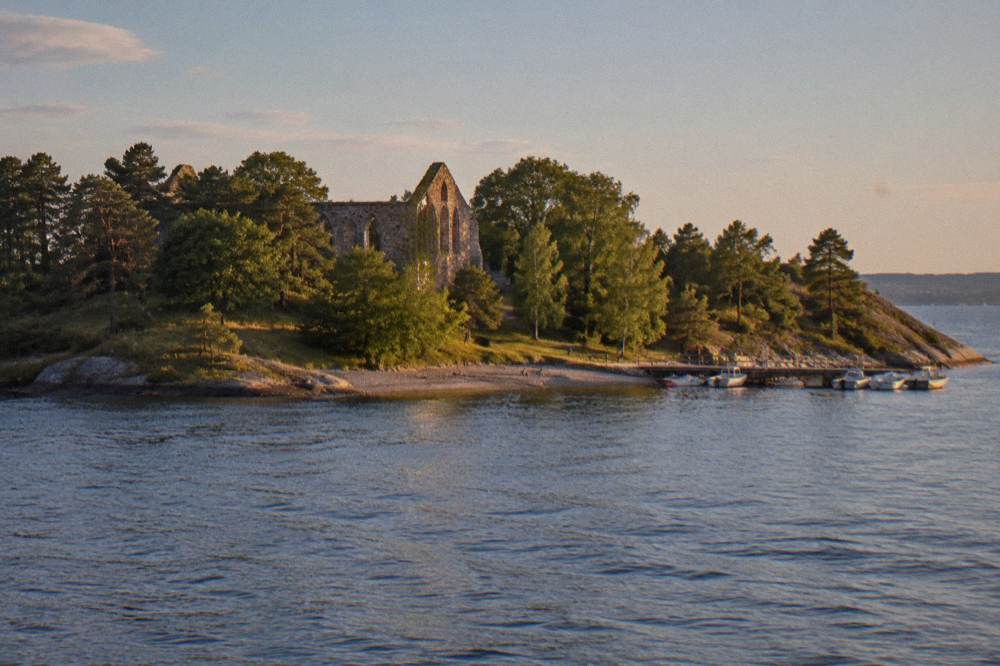
For a one-day visitor the deciding factors are simple. Vigeland Park costs a tram ride and delivers Oslo's signature art in an open landscape. The islands cost a ferry ticket and deliver the fjord itself, swimming included. Rain points to Vigeland, since the park's granite reads well wet and the museum next door offers a paid indoor fallback. Sun points to the water.
A Realistic One-Day Itinerary With Times
The itinerary below strings the free spine of Oslo into a single walking day: palace park, Karl Johan, City Hall, harbour promenade, fortress grounds, Opera House roof, then the afternoon fork. Total walking distance is roughly 6 to 8 kilometres before the fork, and every item except the optional ferry is free.
Times assume a summer visit, when the light runs long and the drop-in tours at the Parliament and City Hall are running. In winter the same route compresses comfortably into the shorter day, and the site's guide to Oslo in winter for free covers the seasonal differences.
| Time | Stop | Cost | Notes |
|---|---|---|---|
| 09:00 | Royal Palace park | Free | Park open year-round; indoor tour is paid, summer only |
| 10:00 | Karl Johan walk to Parliament | Free | Free summer tours, drop-in, no booking |
| 11:00 | Oslo City Hall | Free | Interior free; free guided tours summer only |
| 12:00 | Aker Brygge promenade and lunch | Free entry | Public waterfront; food is paid |
| 13:00 | Akershus Fortress grounds | Free | Castle and Resistance Museum paid, about 160 NOK each |
| 14:30 | Opera House roof and foyer | Free | Performance tickets paid, roughly 150-990 NOK |
| 15:30 | Deichman Bjørvika library | Free | Public library, fjord views from the top floor |
| 16:30 | Vigeland Park or Hovedøya island | Free / ferry paid | Tram west, or Ruter ferry from the harbour |
The one structural warning about that table: the fortress row is the most commonly misread. "Akershus Fortress, free" is true of the grounds and false of the castle, and a day plan that assumes the whole fortress is open gratis will hit a ticket desk at the castle door.
What A Day In Oslo Actually Costs
A one-day Oslo visit built on this itinerary can cost almost nothing beyond food and transit: every stop on the spine is free, the only compulsory ticket is the fjord ferry if the island branch is chosen, and the paid items, the castle, the museums, the palace tour, are all optional layers. The realistic floor is a transit fare plus meals.
| Item | Free version | Paid version |
|---|---|---|
| Walking tour | Pay what you want, GuruWalk or freetour.com | Tip at the end |
| Royal Palace | Park, free year-round | Indoor tour, about 175-230 NOK, summer only |
| Akershus | Grounds free | Castle or Resistance Museum, about 160 NOK each |
| Opera House | Roof and foyer free | Performance, roughly 150-990 NOK |
| Munch museum | First-Wednesday evenings, 18:00-21:00, except Jul/Aug/Sep | Standard adult ticket at other times |
| Vigeland | Outdoor park free, always open | Vigeland Museum, about 120 NOK |
| Fjord islands | Hovedøya itself, free public land | Ruter ferry, standard transit fare |
The pattern across that table is consistent: in Oslo the outdoor half of an attraction is usually free and the indoor half is usually paid. A visitor who plans around that split, and checks the current conditions on the official pages at visitoslo.com before setting out, gets a full day of the city at close to zero admission cost.
For anyone stretching the plan beyond a single day, the site's longer route through what to see in Oslo in one day, expanded adds the second-tier free sights, and the guide to free places to visit in Oslo lists the full inventory.
Whichever fork the afternoon takes, the morning walk is the part worth locking in before arrival: the three tours above are the highest-reviewed free walks on this site's roster, all pay what you want, and the Sentrum ground they cover is the ground this itinerary starts on.
Common Questions About Seeing Oslo In One Day
What To See In Oslo In One Day?
Karl Johan and the Royal Palace park in the morning, City Hall and the harbour at midday, the free Akershus Fortress grounds after lunch, the Opera House roof in the afternoon, then Vigeland Park or a fjord island such as Hovedøya. Everything on that route is free except the optional ferry and the optional paid interiors.
Is One Day Enough To See Oslo?
One day covers the free spine of the city comfortably: the centre, the harbour, the fortress grounds and the Opera House, plus one of the two big afternoon destinations. It does not cover the Bygdøy museum peninsula, where the museums are paid, or a second island.
Is The Oslo Opera House Free To Visit?
Yes, the roof and the public foyer are free and need no ticket. Only a performance seat is paid, roughly 150 to 990 NOK depending on the production.
Can You Walk Everywhere In Oslo In One Day?
The core route is roughly 6 to 8 kilometres of flat walking before the afternoon fork, which is manageable on foot. Vigeland Park needs a short tram ride west, and the fjord islands need the Ruter ferry from the harbour.
What Is The Best Free Thing To Do In Oslo In One Day?
The Opera House roof is the standout free sight, and the Akershus Fortress grounds run it close. Both are outdoor, both need no ticket, and both sit on the same harbour walk, so a one-day visitor gets both without detouring.
Do You Need A Tour Guide For One Day In Oslo?
No, the route is walkable self-guided. A free pay-what-you-want walking tour in the morning adds context to the Sentrum and Karl Johan stretch, and the rest of the day is straightforward on foot. This site, Free Things To Do In Oslo, lists the walks and the free sights side by side.