Do You Need The Oslo Pass If You're On A Budget?
An honest breakdown of when the Oslo Pass pays off, which top sights are free without it, and how to build a cheap Oslo day around free walking tours and open-access landmarks.
Do You Need The Oslo Pass If You're On A Budget?
No, most budget visitors do not need the Oslo Pass, because Oslo's headline sights are largely free without it: Vigeland Park, the Opera House roof, the Akershus Fortress grounds, the Royal Palace park, the Botanical Garden and the fjord islands' land itself all cost nothing. The pass mainly buys entry to paid museums and transit, so it only earns its price on museum-heavy days. A pay-what-you-want walking tour plus free landmarks beats it on most itineraries.
The honest answer depends on what kind of trip you are building. The Oslo Pass, sold through the official tourism authority VisitOSLO, covers entry to a long list of museums plus public transport within the city's zones. That is a real product with real value, and for a visitor planning two or three museum-heavy days it can pay for itself. The catch is that the Oslo itinerary most people actually want, the Opera House, the harbour, the sculpture park, the fortress grounds, the palace park, is mostly free to begin with.
So the question is not really "is the pass good value" in the abstract. It is whether your specific plan stacks enough paid entries into a short window to clear the pass price, which you should check on the operator's own page before buying, since pricing tiers change. What this article can do is show you exactly which sights cost nothing, which ones charge, and where the free alternatives sit, so the arithmetic becomes yours instead of a sales pitch.
One structural point first: this site, Free Things To Do In Oslo, exists because the free layer of this city is unusually deep. That free layer is what makes the pass a maybe rather than a must.
What The Oslo Pass Actually Covers, And What It Does Not
The Oslo Pass covers admission to most of the city's paid museums, from the National Museum and MUNCH to the Akershus Castle interior, plus unlimited rides on the Ruter transit network including the ferries. It does not cover the many sights that are already free: the outdoor sculpture park, the Opera House roof, the fortress grounds and the palace park need no ticket at all, with or without a pass.
The pass is best understood as a museum-and-transit bundle. Its strength is the Bygdøy peninsula cluster and the big state institutions. Its weakness, from a budget traveller's point of view, is that the free half of Oslo is not for sale to begin with, so the pass cannot add value there.
| Sight | Standard entry | Free route without the pass |
|---|---|---|
| MUNCH | Paid | Free on first-Wednesday evenings, 18:00 to 21:00, except July, August and September |
| National Museum | Paid | Free for under-18s only; no recurring adult free day exists |
| Vigeland Museum | Around 120 NOK | Free for ages 0 to 17 and Oslo Pass holders; the outdoor park beside it is always free |
| Nobel Peace Center | Paid | Free for under-18s and Oslo Pass holders |
| Akershus Castle and Resistance Museum | Around 160 NOK each | The fortress grounds themselves are free, always |
| Holmenkollen Ski Jump Tower and Ski Museum | 200 NOK combined | The surrounding hillside and forest trails are free public land |
Notice the pattern in that table: nearly every paid item has a free sibling on the same site or a short walk away. The castle charges, the grounds do not. The ski museum charges, the forest does not. The indoor Vigeland Museum charges, the sculpture park does not. A budget visitor who understands these pairings can stand in almost every iconic Oslo location without buying a single ticket.
The MUNCH detail deserves its own sentence, because it is the one confirmed recurring free window in the whole city: the museum opens its doors free of charge on first-Wednesday evenings between 18:00 and 21:00, excluding July, August and September, as stated on its own site. If contemporary art is on your list, that evening slot is worth planning around before any pass purchase.
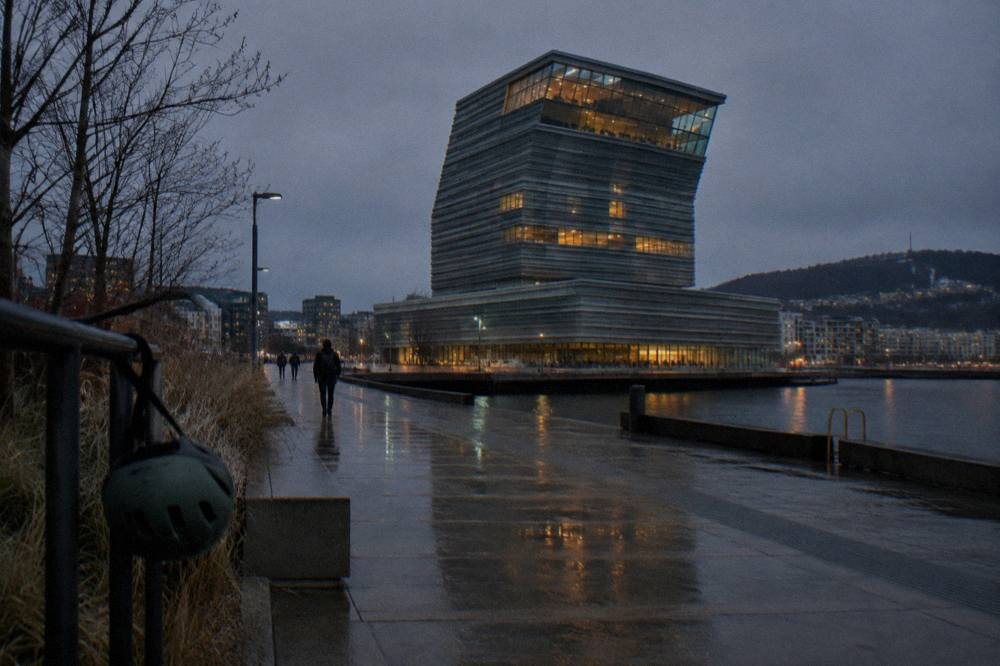
The Opera House is the clearest case of all. Its sloping marble roof, one of the most photographed surfaces in Norway, is a public space you walk up on foot with no ticket, no queue and no opening hours beyond the building's own. Only an actual performance costs money, roughly 150 to 990 NOK depending on the seat and the show, and that is a purchase the pass does not make for you. Details on access are on the opera house's own page.
This is where the pass conversation meets the walking-tour question. The most established free walk in the city, the Nordic Freedom Tours 2-hour walk, rated 4.76 out of 5 across 2,192 GuruWalk reviews, covers the central stretch from Jernbanetorget up through the Sentrum and Karl Johan axis on a pay-what-you-want basis. It meets outside Jernbanetorget metro station at the bronze Tiger sculpture, runs in English and Norwegian, and costs nothing up front. No pass covers a guided walk; this one simply does not need covering.
For a budget traveller, that last point reframes the whole purchase decision. A pass is a bet that you will spend enough on covered items to beat its price, but a walk that costs nothing up front removes the bet entirely from the biggest line of a first day in Oslo: getting oriented. Once the centre has been walked and explained, whatever money remains can go to the one or two interiors that genuinely interest you, priced individually, rather than to a bundle that assumes you want them all.
The Free Sights That Make The Pass Optional
Vigeland Park, the Akershus Fortress grounds, the Royal Palace park, the Botanical Garden at Tøyen, the Opera House roof and foyer, Oslo City Hall's interior and the fjord islands' public land are all free without any pass. That is a full multi-day itinerary of Oslo's most famous locations, and the pass adds nothing to any of them.
Start with the sculpture park, because it is the single biggest free draw in the city. The outdoor park at Frogner, with Gustav Vigeland's monolith and its surrounding figures, is always open and always free. The indoor Vigeland Museum beside it is a separate institution with its own ticket, around 120 NOK, free for children and pass holders. Visitors routinely conflate the two because they share a name and a visitor page; legally and financially they do not, and only the museum half ever charges.
The fortress works the same way. The Akershus Fortress grounds, with their walls, harbour views and ceremonial guard, are free public space. Inside those grounds sit two paid attractions, the Castle interior and Norway's Resistance Museum, at around 160 NOK each. A budget visitor can spend a full afternoon on the ramparts and skip both interiors without feeling shortchanged, though the Resistance Museum in particular is worth the ticket if the budget stretches.
The Royal Palace follows the same split: the park and grounds are free year-round, while the indoor guided tour is paid, summer-only and requires advance booking. The Botanical Garden at Tøyen is free for everyone; the Natural History Museum inside it is paid, and its exact current adult price is not published here because it could not be pinned to a verified primary source. The pattern repeats so consistently that it becomes a planning rule: in Oslo, the outdoor half of an institution is usually free and the indoor half usually is not.
Even the civic buildings play along. Oslo City Hall's interior, the one with the Nobel ceremony hall and the giant murals, is free to enter, and free guided tours run in summer on a drop-in basis. The Norwegian Parliament runs free summer tours, also drop-in only, with no advance booking. Neither appears on any pass's value list, because there is nothing to discount.
The fjord islands are the one place where the free claim needs its condition stated plainly. The islands themselves, Hovedøya and its neighbours, are free public land with ruins, beaches and forest paths. The Ruter ferry out to them is a standard paid transit fare, and the pass does cover Ruter services, so this is a genuine pass consideration: an island-hopping day is one of the few free-sight days where transit actually costs money. The fuller island picture, including what each island offers, is in the guide to the free fjord islands and Oslo ferries.
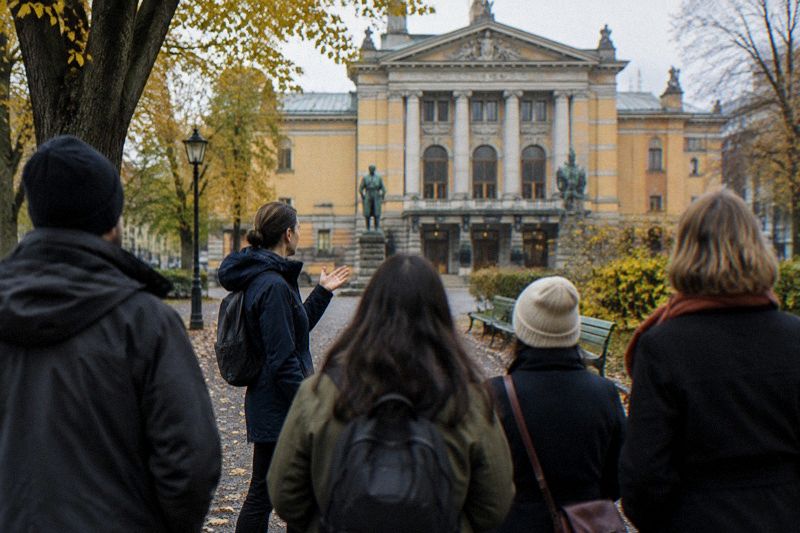
For the central stretch, a second free walk covers different ground. The City Walk with the local secrets guide, rated 4.69 out of 5 across 42 GuruWalk reviews, runs two hours in English and Spanish and meets at the main entrance of the National Theatre, on the Karl Johan axis. Like every walk on this site it is pay what you want, and its GuruWalk listing includes a local secrets guide as part of the package. Between the two walks you get the Sentrum story told twice, from Jernbanetorget and from Nationaltheatret, for whatever you choose to tip.
When The Oslo Pass Genuinely Makes Sense
The pass makes sense on a museum-stacking itinerary: two or three dense museum days, especially if they include the Bygdøy peninsula cluster, the Munch Museum, the National Museum and a Holmenkollen tower visit, plus the island ferries. If your plan is one museum per day with parks and waterfront between, the pass will usually lose to a pay-what-you-want approach.
Be concrete about the museum-stacking case. The Bygdøy peninsula holds the Folkemuseum, the Maritime Museum, the Kon-Tiki Museum, the Fram Museum and the Viking Ship Museum site, run by five separate operators, all paid. A visitor set on doing four of those in two days, plus MUNCH and the National Museum, is buying a lot of tickets in a short window, and that is exactly the load the pass was designed for. The one wrinkle is that the Viking Ship Museum is currently closed for rebuilding, with a new Museum of the Viking Age expected around 2027, so price it as absent from any current plan.
Transit is the second half of the case. The pass includes Ruter travel, which matters if you are staying far from the centre, riding out to Holmenkollen, or taking the island ferries repeatedly. A visitor based in Sentrum who walks everywhere, which is entirely realistic given how compact the core is, gets very little from the transit component.
| Trip style | Pass verdict | Why |
|---|---|---|
| Two or three museum-dense days, Bygdøy included | Usually worth checking | Stacked paid entries plus transit clear the pass price fastest |
| One museum per day, mostly outdoors | Usually not worth it | Free parks, grounds and waterfront carry the itinerary |
| Families with under-18s | Check per museum | Many museums are already free for children, shrinking the pass's advantage |
| Art-focused trip, flexible timing | Often not worth it | The MUNCH free evening plus free galleries and outdoor art cover a lot |
| Island-hopping and Holmenkollen day | Borderline | Ferries and the tower are paid; the land itself is free |
The under-18 point is easy to miss. The National Museum, MUNCH, the Nobel Peace Center, the Vigeland Museum and the Ibsen Museum are all free for under-18s regardless of any pass, and Astrup Fearnley is free for under-20s. A family doing the math should subtract those free child entries from the pass's coverage before comparing totals.
A Budget Day In Oslo Without The Pass
A full pass-free day runs like this: a pay-what-you-want walking tour of Sentrum in the morning, the Opera House roof and harbour promenade at midday, the Akershus grounds in the afternoon, and Vigeland Park or the palace park in the evening, all free except the tour tip and any food. Add a MUNCH free evening if your visit lands on a first Wednesday outside summer.
The morning walk is the anchor. The 2-hour Nordic Freedom Tours walk starts at the bronze Tiger sculpture outside Jernbanetorget and threads the Karl Johan axis, so the palace, the Parliament and the main street arrive with context attached. If you prefer a shorter English-only introduction, the Short Walk, rated 9.7 out of 10 across 332 freetour.com reviews, runs 1 hour 30 minutes from the Tiger Statue in front of Oslo Central Station. For a longer one, the Perfect Introduction walk, rated 9.1 out of 10 across 191 freetour.com reviews, runs 2 hours 15 minutes from near the Royal Palace, meeting by the statue of the glove with a white umbrella. All three are pay what you want, on their respective platforms, and the tip is the only mandatory spend of the day.
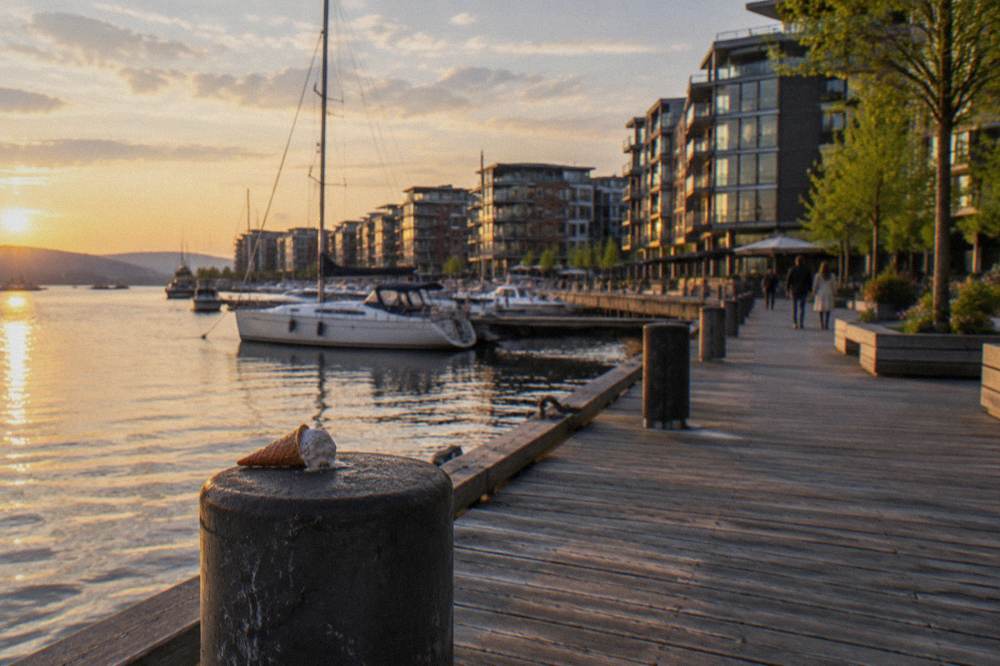
Midday is the waterfront. Walk the Aker Brygge promenade, cross to the Opera House and climb its roof, then follow the harbour edge toward the fortress. None of it costs anything, and the Sørenga seawater pool and Huk beach extend the same free coastline further out if the weather cooperates. The Tjuvholmen stretch, with its sculpture park and beach, continues the theme.
Afternoon options split by interest. History takes you into the Akershus grounds, free, with the Resistance Museum as the optional paid upgrade. Art takes you to Ekebergparken, the forested sculpture park on the hill above the fjord, which is free to enter and pairs a forest walk with an international sculpture collection. The evening rounds out at Vigeland Park, which stays open and costs nothing, or at the palace park if you are staying in the west of the centre.
For a fuller version of this plan, the guide to what to see in Oslo in one day sequences the whole loop, and the deeper budget picture, including where the city's costs actually bite, sits in the Oslo on a budget guide.
The Verdict: Buy The Pass Only After The Free Layer Is Full
Buy the Oslo Pass only when your itinerary stacks several paid museums into a short stay, or when transit costs, ferries included, are high enough to matter. Fill your days with the free layer first, the walks, the parks, the grounds, the roof, and let the pass justify itself against whatever paid entries remain, not the other way round. Most budget travellers find nothing remains.
The pass is a good product badly matched to the classic budget Oslo day. The classic day is already free, and no discount card improves on zero. The walks that introduce the city cost whatever you decide to tip, on GuruWalk or freetour.com depending on the walk, and the landmarks they pass are open to everyone. The pass only enters the conversation when you start buying interiors, and Oslo's interiors, castle, museums, ski tower, are optional upgrades to a free city rather than its substance.
If your heart is set on the Munch Museum, the National Museum and a Bygdøy sweep, price the pass against those tickets on the official tourism site before you travel, and remember the free evening at MUNCH as a possible shortcut. If your heart is set on Oslo itself, the harbour, the hills, the sculpture park, the islands, spend the pass money on a longer stay instead.
Common Questions About The Oslo Pass On A Budget
Do You Need The Oslo Pass If You're On A Budget?
Usually not. Oslo's headline sights, including Vigeland Park, the Opera House roof, the Akershus Fortress grounds, the Royal Palace park and the Botanical Garden, are free without any pass. The pass only pays off when you stack several paid museums into a short stay or rely heavily on paid transit.
Does The Oslo Pass Cover The Free Walking Tours?
No. The pay-what-you-want walks listed on this site, on GuruWalk and freetour.com, are not museum products and are not part of any pass. They cost nothing up front regardless, so the pass adds nothing to them.
Is Vigeland Park Free With The Oslo Pass?
Vigeland Park is free for everyone, pass or no pass, and it is always open. The paid item nearby is the separate indoor Vigeland Museum, at around 120 NOK, which the pass does cover and which is also free for ages 0 to 17.
Can You See The Akershus Fortress For Free?
Yes, the fortress grounds are free public space. The paid items inside are the Castle interior and the Resistance Museum, at around 160 NOK each, and those are the parts a pass would cover.
Are Any Oslo Museums Free For Adults?
The City Hall interior and the Parliament's summer tours are free for everyone. Among the art museums, MUNCH runs a free first-Wednesday evening, 18:00 to 21:00, excluding July, August and September. No recurring adult free day exists at the National Museum.
Does The Oslo Pass Include The Ferry To The Islands?
Yes, the pass covers Ruter transit, including the ferries to the fjord islands. The islands themselves are free public land either way; the ferry is the only paid part, so island-hopping is one case where the pass's transit coverage genuinely helps.