Oslo Budget Accommodation Near Free Attractions
Oslo punishes visitors who sleep in the wrong part of town. The city's free sights cluster in a few walkable pockets, and a bed near them saves both money and transit time.
Short answer
The best-value beds sit in Sentrum around Karl Johans gate, in Bjorvika by the Opera House, and in Grünerløkka. From those three districts you can reach Vigeland Park, Akershus Fortress grounds, the Opera roof and the Botanical Garden on foot or one short transit ride, and every pay-what-you-want walking tour in the city starts within a fifteen minute walk.
Oslo is not a cheap city to sleep in, but it is a compact one. The Royal Palace park, the Opera House roof, Akershus Fortress grounds, the Botanical Garden and the Vigeland sculpture park are all free, and most of them sit within a thirty minute walk of a handful of central districts. A visitor who books a bed in the wrong part of the city ends up paying for transit twice a day and losing an hour of sightseeing to it. A visitor who books well barely touches a ticket machine.
The city's pay-what-you-want walking tours make the geography matter even more. All five featured walks start in a tight band between Oslo Central Station and the Royal Palace, so a bed anywhere in Sentrum puts a free guided introduction to the city within a short walk of your hotel door. This guide maps the districts where budget beds and free sights overlap, and it names the walks and attractions each neighbourhood connects to. For the wider money picture, see the companion piece on spending a low-cost day in Oslo.
Where Should You Stay In Oslo On A Budget?
The three districts that pair cheap beds with free sights are Sentrum around Karl Johans gate, Bjorvika along the waterfront, and Grünerløkka east of the river. Sentrum is the transport and tour hub, Bjorvika puts the Opera House and the Deichman library at your door, and Grünerløkka trades a longer walk for lower rates and the Akerselva river path. All three put a featured walk start within twenty minutes on foot.
Oslo's centre is small enough that "central" is a genuinely useful filter here, unlike in Stockholm or Copenhagen. The distance from Oslo Central Station to the Royal Palace is roughly two kilometres along Karl Johans gate, and that single street, with the National Theatre, the Storting and the University of Oslo campus around it, is where most of the city's free architecture and civic sights live. Sleeping inside that rectangle means the majority of the free list needs no transit at all.
The trade-off between the three districts is mostly about evenings and atmosphere rather than access. Sentrum is quiet on weekends and full of office workers on weekdays. Bjorvika is newer, glassier, and closest to the fjord. Grünerløkka is where the cafes, vintage shops and street art are, which matters if your day ends late rather than early. A visitor who plans around the free sights should weigh which of those evening personalities suits them, then book accordingly.
| District | Free sights within walking distance | Walk tour start points nearby | Character |
|---|---|---|---|
| Sentrum / Karl Johans gate | Royal Palace park, Oslo Cathedral, Storting exterior, City Hall, Akershus grounds | Four of five featured walks | Central, practical, weekday-busy |
| Bjorvika / Opera district | Opera House roof and foyer, Deichman Bjørvika library, Sørenga seawater pool | Contrasts Walk start at the Opera facade | Modern, waterfront, quieter at night |
| Grünerløkka | Akerselva river path, street art, Mathallen food hall exterior | None, 15-25 minute walk to Sentrum starts | Young, cafe-heavy, best value beds |
Is Sentrum The Best Base For The Free Sights?
Yes, for most travellers Sentrum is the strongest base, because it is the only district that puts the Royal Palace park, the cathedral, the Storting, City Hall and the Akershus Fortress grounds within a single walk, while also hosting the meeting points of four of the city's five featured free walking tours. The trade-off is that room rates run higher than Grünerløkka and the streets empty out on Sunday evenings. This stop sits on a free walking route, Nordic Freedom Tours, 2-Hour Walk.
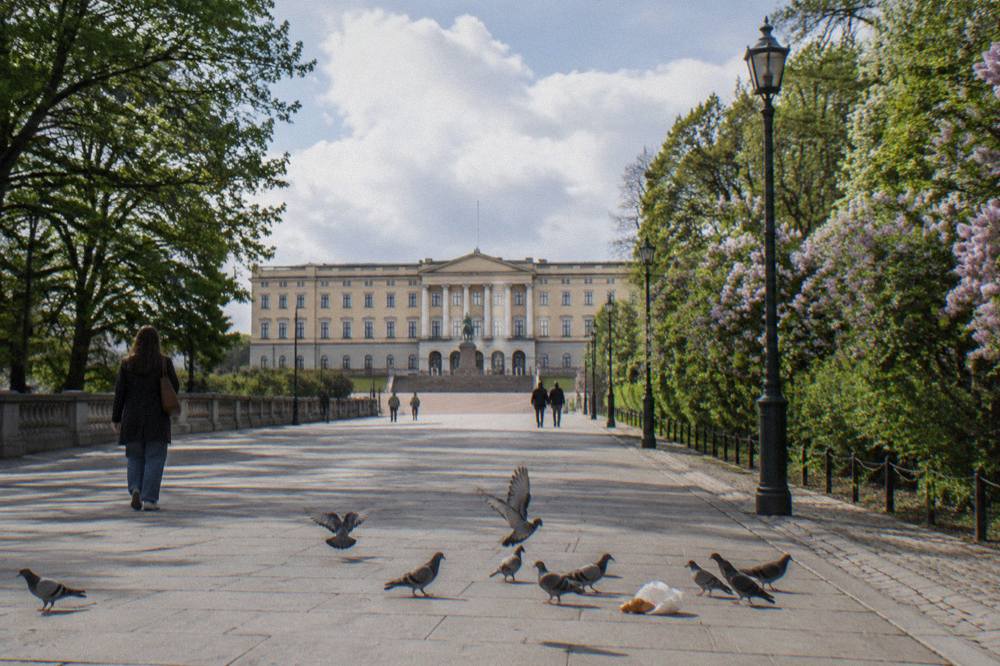
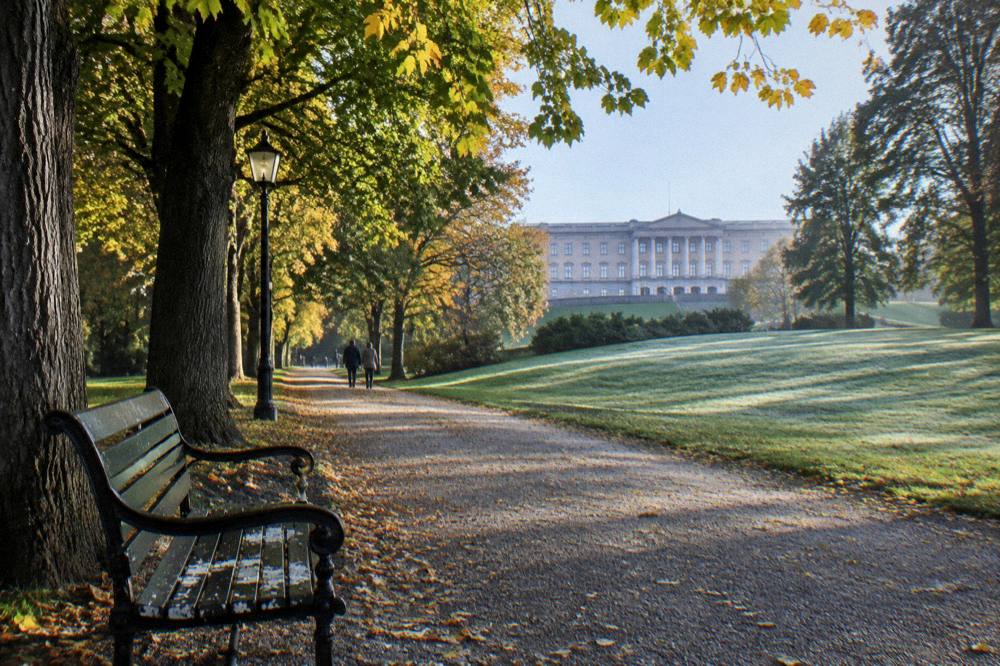
The spine of the district is Karl Johans gate itself, the parade street running from Oslo Central Station uphill to the Royal Palace. The palace park at the top of it is free year-round, and the palace's indoor guided tour is a separate paid, summer-only product, a distinction worth holding on to when a hotel advertises "opposite the Royal Palace" as if the building itself were the free attraction. The park, not the throne room, is what costs nothing.
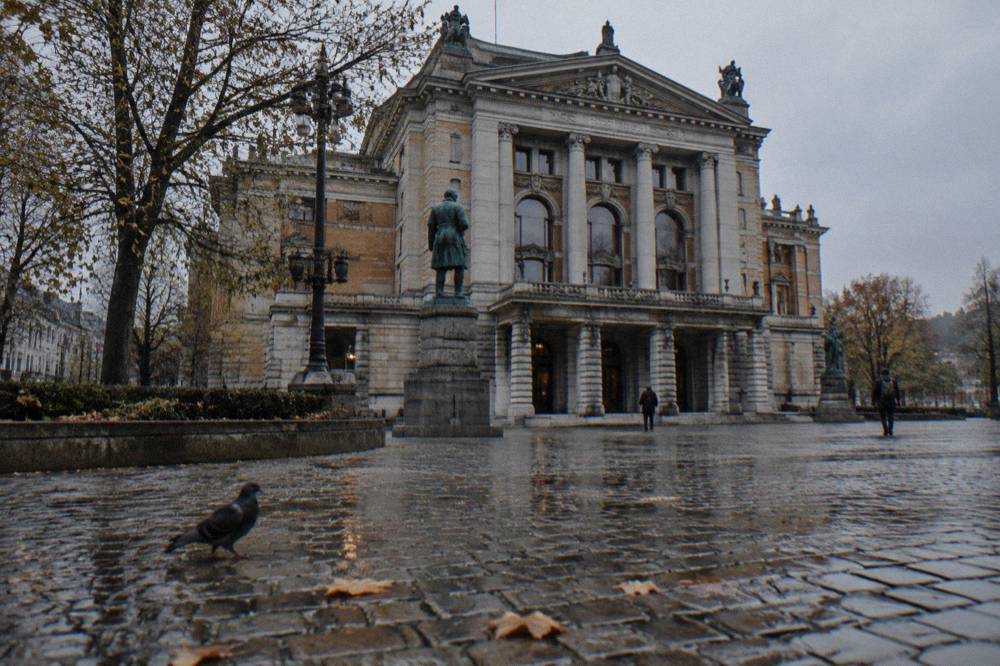
Halfway down the street sits the National Theatre, which is more than a landmark. Two of the featured walks meet within a minute of it, including the Hola Oslo City Walk, rated 4.69 across 42 GuruWalk reviews, which gathers at the theatre's main entrance. A bed anywhere in the grid of streets behind the theatre, around Grensen and Stortingsgata, puts that meeting point and the palace grounds both inside a ten minute walk.
The flagship introduction to the city also starts here. The Nordic Freedom Tours 2-hour walk, rated 4.76 across 2,192 GuruWalk reviews, meets outside Jernbanetorget metro station at the bronze Tiger sculpture, between the central station and Karl Johans gate. It runs in English and Norwegian and covers the historic core. For a fuller picture of how these tours work and what they cost, see the guide to Oslo's pay-what-you-want walking tours.
The budget sleep in Sentrum is mostly hostels and smaller hotels on the side streets rather than the big properties fronting the parade street itself. The practical filter when comparing rooms is simple: anything inside the rectangle bounded by the central station, the palace, City Hall and the Akershus grounds keeps every one of those free sights walkable, and anything outside it starts costing transit time. The fortress deserves its own warning, though, because the free part is the grounds. The castle interior and the Resistance Museum inside those grounds are each paid, at roughly 160 NOK apiece, so a Sentrum bed gets you the ramparts and harbour walls for nothing but not the museums within them.
The two page-only walks also meet in this district, the Turvei history walk next to the finger statue in Christiania square and the Monuments Walk at the water fountain behind the National Theatre. They are smaller operations, 9 and 8 GuruWalk reviews respectively, and they are not bookable through this site, but their meeting points sit within the same rectangle, which tells you how tightly the free-tour scene is packed into Sentrum.
What About Staying Near The National Theatre And The West End?
The blocks around the National Theatre and up toward the palace are the quietest corner of central Oslo, and they hold the meeting point of the Hola Oslo City Walk, the only featured tour that bundles a local secrets guide into the deal. Beds here trade nightlife for proximity to the palace park and the Frogner side of the city, which puts Vigeland Park within one short transit ride or a forty minute walk. This stop sits on a free walking route, City Walk, Secrets Guide Included.
This stretch is where Sentrum shades into the west end, and the free-sight payoff is the palace park on one side and the beginning of the route toward Frogner on the other. Vigeland Park itself, the outdoor sculpture park, is free and always open, while the indoor Vigeland Museum beside it is a separate paid institution at roughly 120 NOK, free only for under-18s and Oslo Pass holders. A visitor sleeping near the theatre can treat the park as a morning destination and skip the museum without losing anything from the free list.
The City Walk, Secrets Guide Included from Hola Oslo is the featured tour that fits this neighbourhood best. It runs two hours in English and Spanish, meets at the National Theatre's main entrance, and is rated 4.69 across 42 GuruWalk reviews. Its differentiator is the bundled local secrets guide, a resource that keeps working after the walk ends, which suits a traveller whose hotel is close enough to act on the recommendations the same evening.
Room stock here leans toward older, smaller hotels and apartment-style stays rather than hostels, so the true budget traveller may find better rates a few blocks east. What the district offers in exchange is walkability westward: Frogner Park, the larger green space containing the Vigeland installation, plus Frogner Stadium, all sit in a chain of free public ground that begins almost at the theatre's doorstep. Anyone whose priority is sculpture and parkland rather than harbour and fjord should weight this corner heavily.
For orientation on the wider free list, the theatre district also sits at the mid-point of the route described in what to see in Oslo in one day, which threads the palace, the harbour and the fortress into a single walkable day. Sleeping beside the National Theatre means starting that day from its middle rather than its end.
Is Bjorvika A Good Budget Base?
Bjorvika is the newest district on the list and the only one where the headline free sight is the building next door: the Opera House roof, walkable without a ticket, sits at the centre of the neighbourhood, with the free Deichman Bjørvika library beside it and the Contrasts Walk meeting point at the opera's main facade. Beds skew modern and mid-priced, but the free-sight density is the highest in the city.
The opera's marble roof is the district's signature, and the distinction that matters is between the roof and foyer, which are free and need no ticket, and a performance seat, which runs roughly 150 to 990 NOK. A visitor sleeping in Bjorvika gets the free half daily: the sloping roofline, the harbour views from the top, and the public foyer, all a few minutes from any bed in the district. The building's own site at operaen.no covers what is open to the public. A free walk covers this ground: Contrasts Walk, Opera District.
The Contrasts Walk, Opera District edition from LOCAL Walking Tours meets at that main facade. It runs two hours in English and Spanish, rated 4.67 across 311 GuruWalk reviews, and it uses the Bjorvika waterfront as its starting frame before branching into the city's contrasts. For a hotel guest in this district, that is the one featured walk that starts without crossing back into Sentrum.
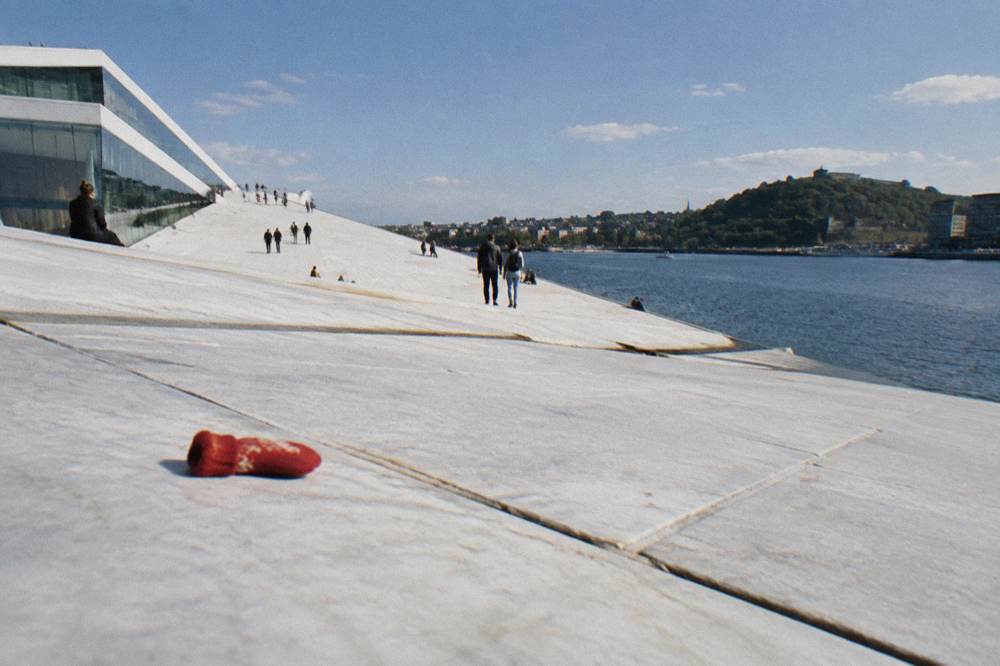
The neighbourhood's second free asset is the Deichman Bjørvika public library, a striking building beside the opera that is free to enter and use, and Sørenga seawater pool, a free harbour bath at the district's southern edge. Between them, the opera roof, the library and the pool, Bjorvika hands a hotel guest a full free day without leaving a half-kilometre radius. The Munch museum also stands here, but it is paid, free only for under-18s and during first-Wednesday-evening openings except in July, August and September, so treat it as a maybe rather than a plan.
| Bjorvika sight | Free status | The condition to remember |
|---|---|---|
| Opera House roof and foyer | Free, no ticket | Performance seats are paid, roughly 150-990 NOK |
| Deichman Bjørvika library | Free to enter and use | None |
| Sørenga seawater pool | Free | Seasonal, it is an outdoor harbour bath |
| Munch museum | Paid | Free under-18; free first-Wednesday evenings except July-September |
Is Grünerløkka Cheaper And Still Well Placed?
Grünerløkka usually offers the lowest room rates of the three districts, and its free payoff is the Akerselva river path, a walking and cycling corridor lined with waterfalls, old industrial buildings and street art running from the Maridalsvannet lake down to Grünerløkka itself. The cost is tour access: no featured walk starts in the district, so every walking tour morning begins with a 15 to 25 minute walk or one transit ride into Sentrum.
The river is the reason to choose this neighbourhood. The Akerselva path is public ground with no admission mechanism at all, and it connects the district to the Botanical Garden at Tøyen, whose grounds are free for everyone, though the Natural History Museum inside them is a separate paid attraction. A Grünerløkka bed therefore puts two of Oslo's best free outdoor experiences on the same walking line, at prices that undercut Sentrum for comparable rooms.
The district itself supplies the evening. Grünerløkka's streets hold the city's densest cluster of independent cafes, vintage shops and bars, and its walls carry a rolling gallery of street art, all free to wander. Mathallen, the indoor food hall in an old iron works by the river, costs nothing to enter even when the food inside does not. For travellers whose budget day ends with a cheap beer rather than a fjord sunset, this is the better trade.
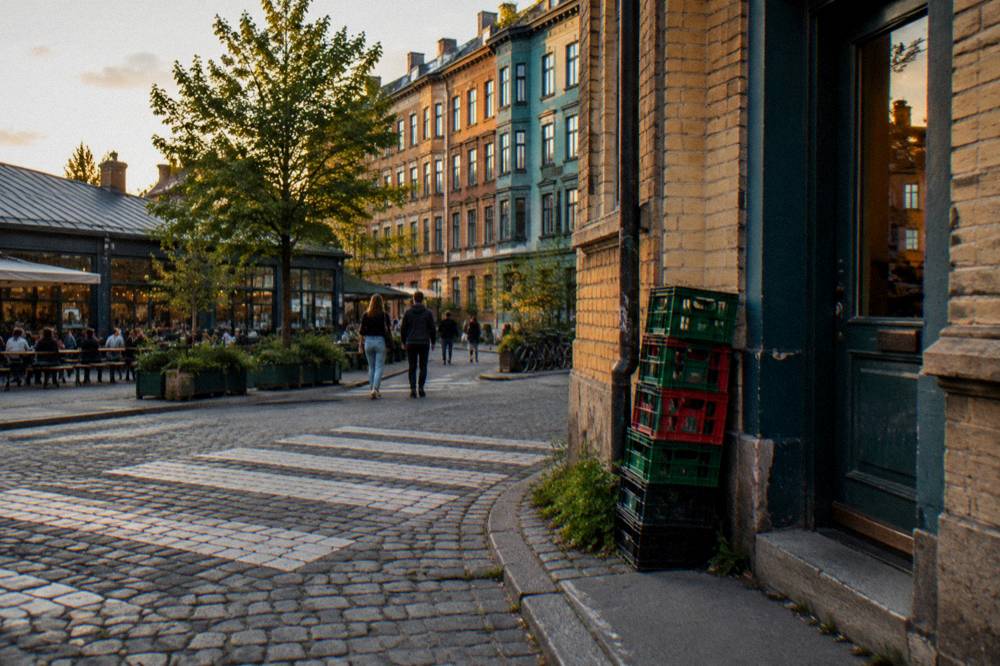
The walk into Sentrum is simple and safe at any reasonable hour: cross the river at Grünerbrua or Nybrua, continue down Storgata, and the central station and the Karl Johans gate rectangle arrive within about twenty minutes. The two freetour.com walks, the Short Walk meeting at the Tiger Statue outside the central station, rated 9.7 out of 10 across 332 freetour.com reviews, and the Perfect Introduction walk near the Royal Palace, rated 9.1 out of 10 across 191 freetour.com reviews, both start at the Sentrum end of that route.
| Featured walk | Meeting point | District of origin | Rating and scale |
|---|---|---|---|
| Nordic Freedom Tours, 2-Hour Walk | Outside Jernbanetorget station, at the bronze Tiger sculpture | Sentrum | 4.76 out of 5, 2,192 GuruWalk reviews |
| Short Walk, English Only | Tiger Statue, Oslo Central Station | Sentrum | 9.7 out of 10, 332 freetour.com reviews |
| Perfect Introduction, Longest Walk | Near the Royal Palace, statue of the glove | Sentrum west | 9.1 out of 10, 191 freetour.com reviews |
| City Walk, Secrets Guide Included | National Theatre main entrance | Sentrum west | 4.69 out of 5, 42 GuruWalk reviews |
| Contrasts Walk, Opera District | Opera House main facade | Bjorvika | 4.67 out of 5, 311 GuruWalk reviews |
How Far Are The Big Free Sights From Each District?
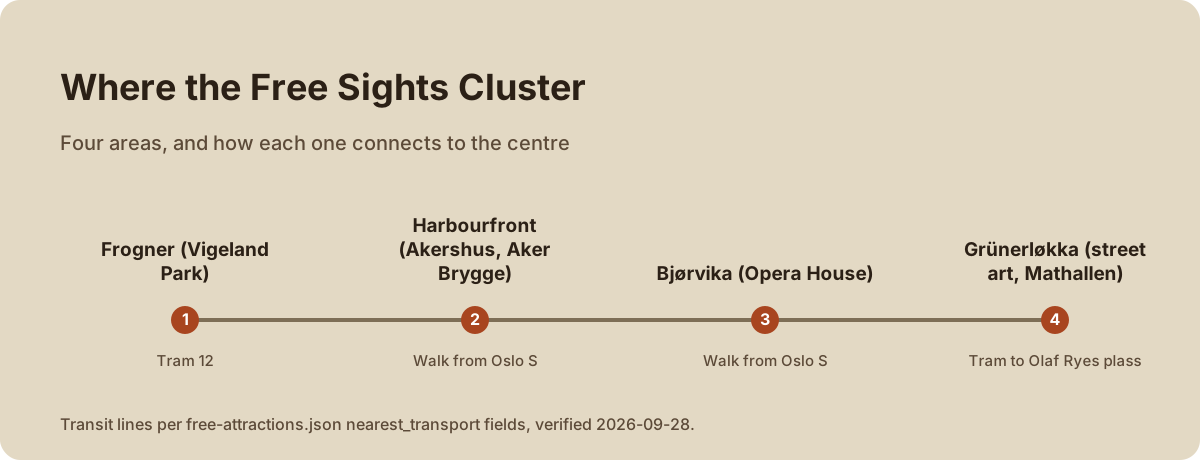
Vigeland Park is the outlier that no central bed solves on foot, sitting about three kilometres west of the palace, while everything else on the main free list clusters inside the Sentrum-Bjorvika rectangle. Akershus grounds, City Hall, the Opera roof, the Botanical Garden and the palace park are all reachable on foot from any of the three districts, with the fortress and the palace both under fifteen minutes from Sentrum beds.
The honest way to plan is to accept one transit journey for Vigeland and treat everything else as a walking matter. The park is free and always open, and the metro or tram ride out to it is a standard Ruter fare, the same paid transit that also carries visitors to the fjord islands, where the islands themselves are free land but the ferry never is. A visitor who sleeps centrally and buys one transit ticket for Frogner has effectively solved the whole free list.
Holmenkollen follows the same pattern. The hillside and forest around the ski jump are free public ground on the same metro line west, while the Ski Jump Tower and Ski Museum are a paid combined ticket at 200 NOK. A central bed makes Holmenkollen a half-day excursion rather than a base decision, and the free part, the Frognerseteren trail network, rewards the trip on its own.
| Free sight | From Sentrum | From Bjorvika | From Grünerløkka |
|---|---|---|---|
| Royal Palace park | 10-15 min walk | 25-30 min walk | 30-35 min walk |
| Akershus Fortress grounds | 10-15 min walk | 20-25 min walk | 30-35 min walk |
| Opera House roof | 15-20 min walk | 0-10 min walk | 30-35 min walk |
| Botanical Garden, Tøyen | 20-25 min walk | 25-30 min walk | 10-15 min walk |
| Vigeland Park | Metro/tram ride, then short walk | Transit ride, 2 legs possible | Transit ride, 2 legs possible |
| Akerselva river path | 15-20 min walk to the river | 25-30 min walk | At your door |
How Do You Pick A Bed Without Overspending?
Pick the district by evening personality rather than star ratings, then filter rooms by whether the Karl Johans gate rectangle, the opera or the river is within a fifteen minute walk, because that filter determines whether the rest of your free list costs transit money or nothing. Compare Sentrum hostels against Grünerløkka apartments on total cost including transit, since most free sights sit inside the Sentrum rectangle.
The arithmetic that usually decides it: a Grünerløkka room at a lower nightly rate saves money only if the visitor walks the twenty minutes into Sentrum rather than riding, and most people on a free-things itinerary are happy to walk. A Bjorvika room at a higher rate pays for itself in the opera roof and library being daily amenities rather than excursions. A Sentrum room is the neutral choice that never wins on price but never loses on access.
Booking behaviour matters as much as district choice in a high-demand city. Oslo's central room stock sells out around summer weekends and any festival period, and the budget end goes first, so the district decision is best made early rather than left to arrival week. The official tourism authority's accommodation pages at visitoslo.com are the honest reference for what is actually available, and this site's own overview of free places to visit in Oslo is the companion checklist to weigh against any room's location.
One structural point that makes Free Things To Do In Oslo a workable budget proposition at all: the city's most expensive mistakes are the paid halves of free things, the castle inside the free fortress grounds, the museum inside the free garden, the tower above the free hillside. A well-placed bed plus a clear sense of which half is free turns a notoriously costly city into one where the daily spend is almost entirely food and the bed itself.
Common Questions About Sleeping Near Oslo's Free Sights
Is Sentrum The Best District For Budget Accommodation?
For most travellers, yes. Sentrum hosts the meeting points of four of the five featured free walking tours and puts the palace park, the cathedral, City Hall and the Akershus grounds within one walk. Room rates run higher than Grünerløkka, but the transit savings and free-tour access usually offset that for a short stay.
Can You Walk Everywhere From A Central Oslo Hotel?
Almost. The Royal Palace park, Akershus grounds, City Hall, the Opera roof, the Botanical Garden and the Akerselva river path are all walkable from a Sentrum bed. Vigeland Park and Holmenkollen need a metro or tram ride at a standard fare, and the fjord islands need the paid Ruter ferry even though the islands themselves are free.
Which Free Walking Tours Start Near Central Hotels?
The Nordic Freedom Tours walk meets outside Jernbanetorget station at the bronze Tiger sculpture, the freetour.com Short Walk meets at the Tiger Statue outside the central station, the Perfect Introduction walk meets near the Royal Palace, the Hola Oslo City Walk meets at the National Theatre, and the Contrasts Walk meets at the Opera House facade. All five are pay what you want.
Is Grünerløkka Cheaper Than Staying In The Centre?
Generally yes, with room rates lower than Sentrum for comparable beds, plus the Akerselva river path and street art at the door. The trade-off is that no featured walking tour starts in the district, so each tour morning begins with a walk of roughly twenty minutes or one transit ride into Sentrum.
Do You Need A Car To Reach Oslo's Free Sights?
No. Every free sight on this site's list is reachable on foot or by standard Ruter transit from the three districts described here. A car adds parking costs that exceed most transit fares, and the fjord islands are served by ferry rather than road in any case.