Is The Oslo Opera House Free?
Yes, the Oslo Opera House roof and foyer cost nothing. Here is exactly what is free, what costs money, and how to see the Bjørvika district with a local guide.
Is The Oslo Opera House Free?
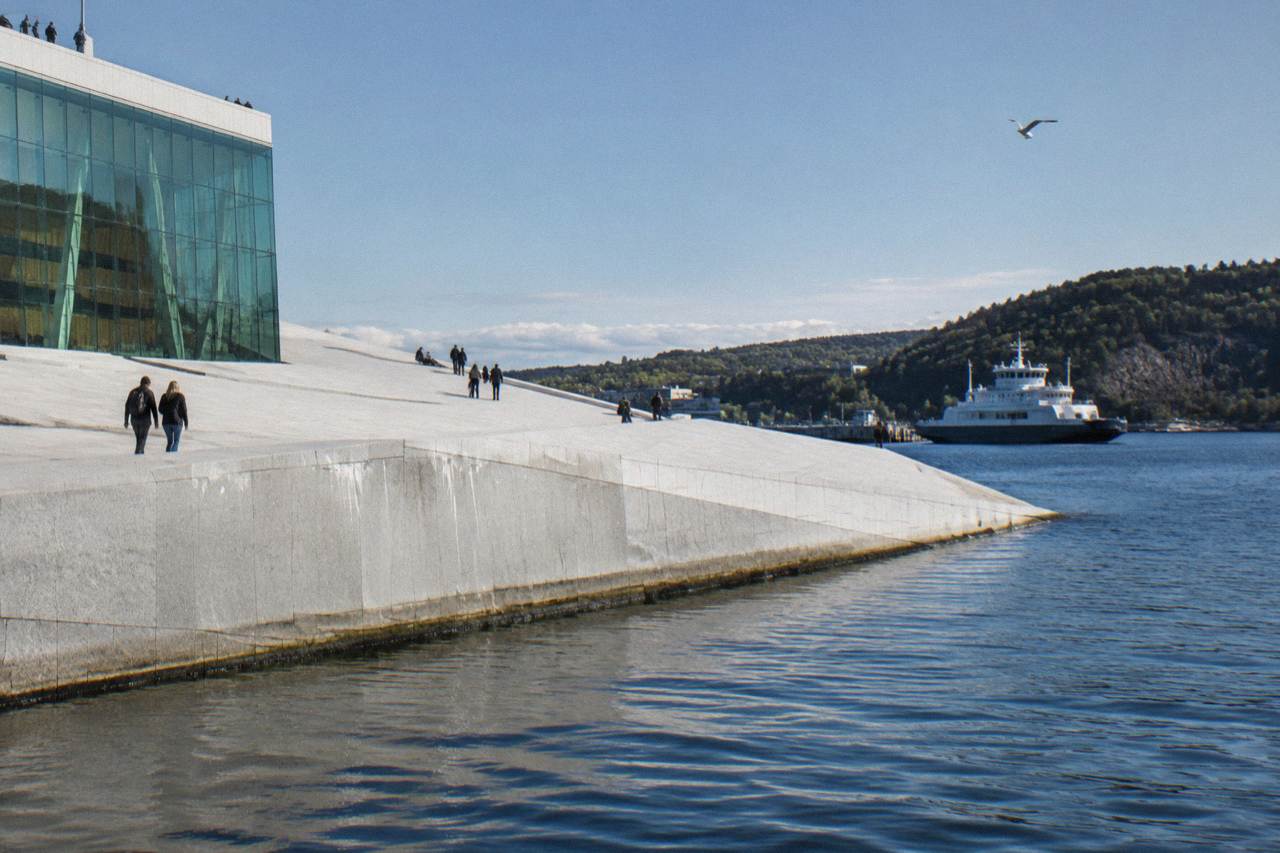
Yes, the parts most visitors come for are free. The sloping marble roof, the public foyer, the marble plaza on the water and the surrounding Bjørvika waterfront all cost nothing and need no ticket of any kind. Only the performances in the two auditoriums are paid, with tickets running roughly 150 to 990 NOK depending on the production and seat.
That split is the whole answer in miniature, and it is worth understanding why the building works this way. The Opera House was designed as a piece of public landscape as much as a venue: its architects intended the roof to be walked on, and the building's operator keeps the exterior and foyer open to the public as a matter of policy. You do not need to book anything, join anything, or show a ticket to walk up. One of the free walking routes passes through here: Contrasts Walk, Opera District.
This makes it one of the most generous landmark buildings in the Nordics. In most capitals, the famous building is a gatekeeper: you pay at the door or you photograph it from across the street. In Oslo the famous building is a hill you can climb at midnight in July, in daylight, for nothing. Locals use the roof as a sitting place, a viewpoint and a shortcut, which is exactly what the designers had in mind.
Because the Opera House anchors the Bjørvika district, it also sits at the start of one of the best free walking routes in the city. A guided pay-what-you-want walk can tie the building into the wider waterfront story better than a signpost can, and there are several to choose from.
What Can You See Without A Ticket?
Everything on the outside and the ground floor. The marble roof with its fjord views, the glass and oak foyer, the artwork on and around the building, the plaza, and the shoreline walkways are all free and open to everyone. The only areas a ticket unlocks are the auditoriums themselves, and even those are sometimes visible on guided tours that carry their own arrangements.
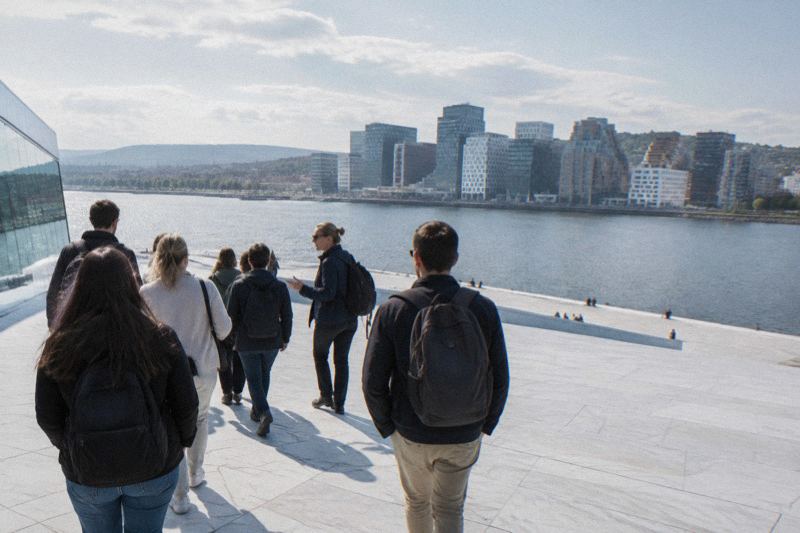
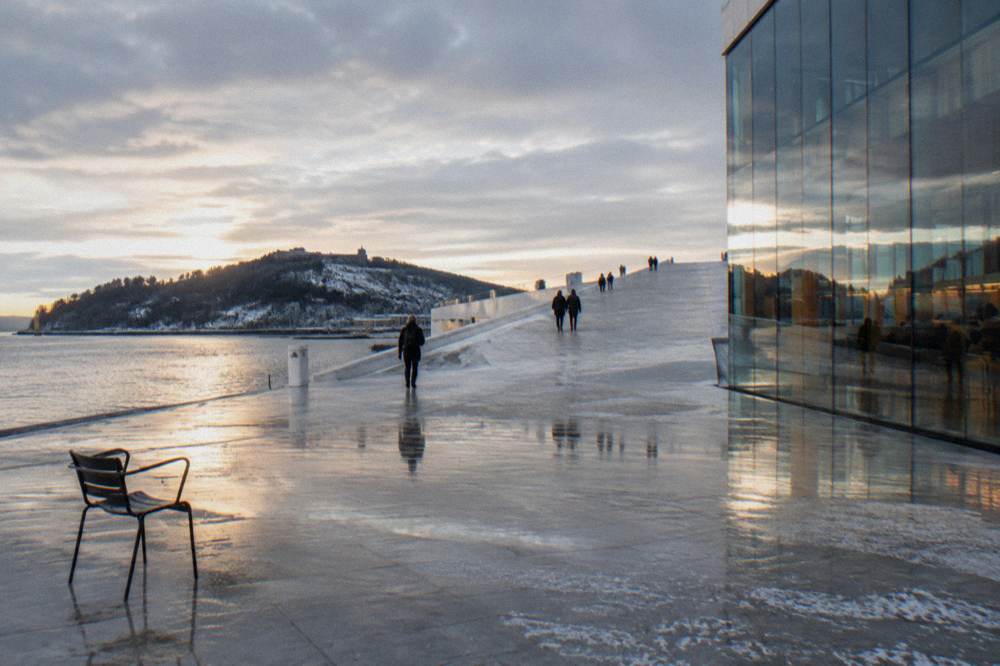
Start with the roof, because it is the reason people come. Broad marble slopes rise from the plaza all the way to the top, and you simply walk up. There is no gate, no queue and no fee. From the summit you look straight down the Oslofjord, with the ferries, the Akershus Fortress silhouette across the water, and the container terminals still working at the harbour mouth. The surface is real Carrara and La Fusa marble set on white granite, and it is walkable by design, though flat shoes help on a wet day.
The foyer is the second free space. It is a tall, light-filled hall of oak and glass facing the fjord, open during the building's public hours, and you can walk in off the plaza without a ticket. Exhibitions and installations in the public areas rotate through the year; whatever is on when you visit is viewable free. The official operaen.no site lists current opening hours and what is showing in the public spaces.
Around the building, the artwork is part of the architecture. Look for the sheared bronze knot near the water and the perforated steel panels that catch light differently through the day. None of it is ticketed. The building treats the whole exterior as a public artwork, which is unusual for an opera house and worth taking twenty minutes to absorb rather than photographing from one angle and leaving.
The best way to place the building in context is with a guide who starts right here. The Contrasts Walk, run by LOCAL Walking Tours on GuruWalk, meets on the Opera House's main facade and uses this district as its starting point: rated 4.67 out of 5 across 311 GuruWalk reviews, it runs about 2 hours in English and Spanish and costs nothing up front. A pay-what-you-want walk that begins at the Opera House and works outward through Bjørvika explains the transformation of this former harbour land in a way the building alone cannot.
If you would rather explore solo, the waterfront does the work for you. The promenade east of the Opera House runs toward Sørenga, and the seawater pool and boardwalk there are free public space. West, the walk along Akker Brygga's quays leads back toward the City Hall in about twenty minutes at a normal pace.
How Much Do Performance Tickets Cost?
Roughly 150 to 990 NOK, depending on the production, the auditorium and the seat. That is the only mandatory spend inside the Opera House, and it buys an actual opera or ballet performance, not access to the building. Nothing else in or on the structure requires payment.
The range is wide because the house stages everything from experimental works in the smaller auditorium to full ballet productions in the main hall. The lower end of the range covers restricted-view and upper-tier seats; the upper end covers premium stalls seats for major productions. Tickets go on sale through the opera house's own box office, and popular productions sell out weeks ahead, so if a specific performance is the point of your visit, book early.
Two practical notes for budget travellers. First, you never need a ticket to enjoy the building, so a visit with no performance is a complete visit. Second, if you do want to see something, checking the programme for the smaller auditorium can land you a genuinely affordable seat in a world-class venue, which is one of the better value nights out in an expensive city.
How Do You Get Onto The Roof?
You walk. The roof is a continuous public ramp, accessible from the plaza on the western and northern sides, and it requires no ticket, booking or guide. The climb takes about two minutes at a normal pace, the surface is walkable marble and granite, and the building is open to the public through its stated visiting hours.
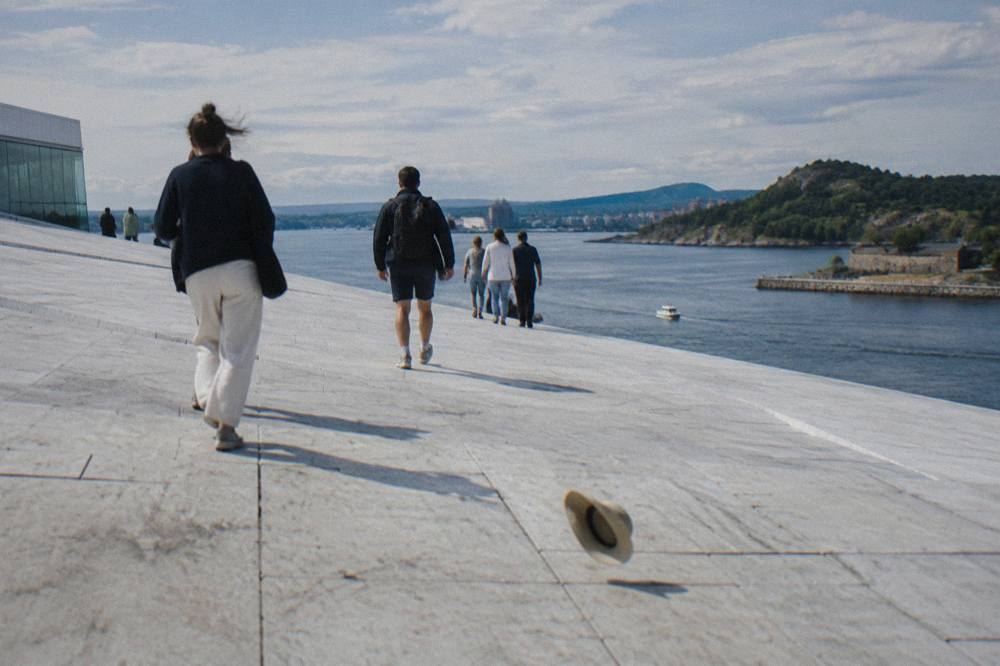
The entry points are obvious once you are standing on the plaza. The main slope begins at the northwestern corner, facing the water, and the path rises in a gentle diagonal. In practice, people simply head uphill from wherever they are standing, and the design allows it. There are no rails to climb and no staffed checkpoints; the roof is treated legally and practically as a public square that happens to be tilted.
A few practical points make the visit better. The marble can be slippery after rain and genuinely cold in winter, so footwear matters more than in a normal square. The best light for photographs is late afternoon, when the low sun comes across the fjord and warms the white stone. And the seaward edge gives the cleanest view of the ferries working the fjord islands, which is worth a few minutes of watching on its own.
The VisitOSLO official tourism site covers the Opera House among the city's landmark buildings and is a reliable cross-check for opening information before you travel.
What Else Is Free Near The Opera House?
A surprising amount of Bjørvika and the adjacent Sentrum core. Deichman Bjørvika, the main public library next door, is free to enter and has its own rooftop view. The Sørenga seawater pool and boardwalk are free public space. The promenade, the street art of Grünerløkka further north, and the grounds of Akershus Fortress across the water all cost nothing. One of the free walking routes passes through here: Contrasts Walk, Opera District.
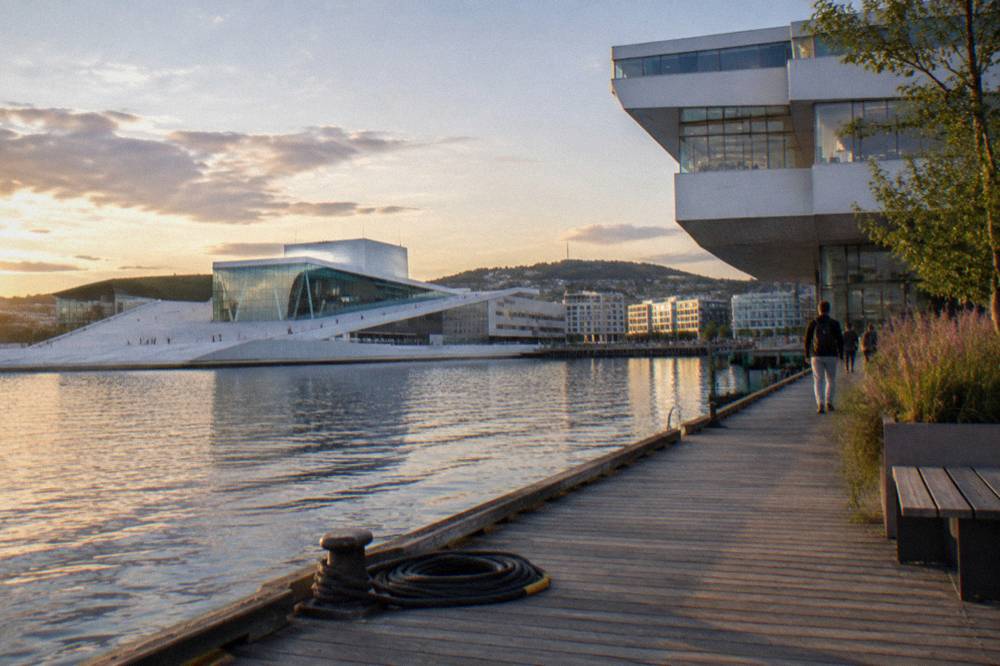
Start with the library, because it is the most overlooked free building in the district. Deichman Bjørvika sits a two minute walk from the Opera House, and its upper floors look straight back at the marble roof you have just climbed. It is a public library in the fullest sense: free entry, free seating, and a rooftop terrace that functions as a second, quieter viewpoint over the fjord. Between the two buildings you can spend half a day in world-class architecture without spending a krone.
Walk east along the water and you reach Sørenga in about ten minutes. The seawater pool there is one of Oslo's free harbour baths, with a boardwalk and a small beach area, and it is free public space at all hours. In summer it fills with swimmers; in winter it is a bracing walk with the container port for a backdrop. The contrast between the polished opera district and the working harbour is the whole character of this stretch of coast, and it costs nothing to see.
The free attractions of the wider city centre are all reachable on foot from here, and a good overview of them is in the guide to free places to visit in Oslo. If you are planning a single day that takes in the Opera House roof, the Vigeland sculptures and the fortress grounds, the walk route in what to see in Oslo in a day strings them together.
For context on the city centre side, the classic free introduction is the Nordic Freedom Tours walk, which meets outside Jernbanetorget metro station at the bronze Tiger sculpture, a ten minute walk from the Opera House. Rated 4.76 out of 5 across 2,192 GuruWalk reviews, it runs about 2 hours in English and Norwegian and covers the Sentrum and Karl Johan core, the historic spine that runs from the central station up to the Royal Palace park.
Should You Take A Free Walking Tour Of The Opera District?
Yes, if you want the district's story rather than just its views. The Contrasts Walk starts at the Opera House itself and is the natural fit for this neighbourhood, rated 4.67 out of 5 across 311 GuruWalk reviews on GuruWalk. Alternatives cover the city core, including a short English-only walk rated 9.7 out of 10 across 332 freetour.com reviews. All are pay what you want, with nothing owed up front.
The comparison below shows how the main options differ in meeting point, length and language. All of them are genuinely free to join, with payment handled as tips at the end. A free walk covers this ground: Contrasts Walk, Opera District.
| Walk | Platform | Rating and scale | Length | Languages | Meets at |
|---|---|---|---|---|---|
| Free Tour of the Contrasts of Oslo (LOCAL Walking Tours) | GuruWalk | 4.67 out of 5, 311 reviews | 2 hours | English, Spanish | Main facade of the Opera House |
| Nordic Freedom Tours free walking tour | GuruWalk | 4.76 out of 5, 2,192 reviews | 2 hours | English, Norwegian | Outside Jernbanetorget station, at the bronze Tiger sculpture |
| Free Tour in Oslo (Oslo Free City Walking Tour) | freetour.com | 9.7 out of 10, 332 reviews | 1 hour 30 minutes | English | Tiger Statue in front of Oslo Central Station |
| The Best of Oslo (Hola Oslo) | GuruWalk | 4.69 out of 5, 42 reviews | 2 hours | English, Spanish | Main entrance of the National Theatre |
The Contrasts Walk is the clear pick for this article's question because its ground is this ground. It begins at the building you are asking about and uses the Opera House, the library, the Barcode district and the harbour's working edges to explain what Bjørvika was and what it has become. A guide who starts on the marble can point across the water at the fortress and along the shore at the container terminals, and the pay-what-you-want structure means the walk costs nothing unless you decide it earned something.
If your day is bigger than one district, the city-core walks in the table above cover Karl Johan, the Parliament and the Royal Palace park instead. The short English-only freetour.com walk suits a tight schedule; the GuruWalk options suit a slower afternoon. This site, Free Things To Do In Oslo, exists because a city this expensive rewards knowing exactly where the free line sits, and the Opera House is the cleanest example of that line in the whole city.
Common Questions About The Oslo Opera House
Is The Oslo Opera House Free?
Yes. The marble roof, the public foyer, the plaza and the surrounding waterfront cost nothing and need no ticket. Only performances in the two auditoriums are paid, with tickets roughly 150 to 990 NOK depending on the production and seat.
Can You Walk On The Roof Of The Oslo Opera House?
Yes, and it is designed for exactly that. The roof is a continuous public ramp of marble and granite with no gate, checkpoint or fee. It is open during the building's public hours and takes about two minutes to climb.
Do You Need A Ticket To Enter The Oslo Opera House Foyer?
No. The foyer is a public space, open during the building's visiting hours, and you can walk in off the plaza. Exhibitions in the public areas are viewable free as well.
How Much Do Opera Tickets In Oslo Cost?
Roughly 150 to 990 NOK, depending on the production, the auditorium and the seat. The lower end covers restricted-view and upper-tier seats in smaller productions; the upper end covers premium seats for major stagings.
Is There A Free Walking Tour That Starts At The Oslo Opera House?
Yes. Free Tour of the Contrasts of Oslo, run by LOCAL Walking Tours on GuruWalk, meets on the Opera House's main facade. It is rated 4.67 out of 5 across 311 GuruWalk reviews, runs about 2 hours in English and Spanish, and is pay what you want.
What Else Is Free Near The Oslo Opera House?
Deichman Bjørvika, the main public library next door, is free to enter with its own rooftop view. The Sørenga seawater pool and boardwalk ten minutes east are free public space, and the grounds of Akershus Fortress across the water are free to walk, though the castle and Resistance Museum inside them are paid.