Free Places To Visit In Oslo: A Complete Guide To The City's No-Cost Sights
Oslo has a reputation for being expensive, and it is, but the city's most memorable sights are largely free: a sculpture park with more than 200 works, a fortress you can walk into without a ticket, an opera house roof built for the public, and a fjord you can look at from a dozen free vantage points. This guide separates what is genuinely free from what only looks free.
Short answer
The best free places to visit in Oslo are Vigeland Park, the Akershus Fortress grounds, the Opera House roof, the Royal Palace park, the Botanical Garden, and the waterfront from Aker Brygge to Sørenga. Several museums have free windows, including MUNCH on first-Wednesday evenings. Five pay-what-you-want walking tours cover the same ground.
Oslo is one of Europe's most expensive capitals, and the prices inside its museums reflect that. The good news is that the city's identity, its sculpture, its fortress, its fjord-facing architecture, is mostly on display outdoors, where nobody charges admission. The catch is that several famous sights are split in two: a free half and a paid half, sharing a name and a visitor page, which is where most visitors lose money without realising it.
This guide walks through the free places to visit in Oslo, neighbourhood by neighbourhood, and names the paid halves explicitly so nothing surprises you at a ticket desk. It also covers the pay-what-you-want walking tours, which are the cheapest way to turn a list of sights into a story, and the handful of genuinely free indoor options for a rainy day.
What Are The Best Free Places To Visit In Oslo?
The strongest free sights in Oslo are Vigeland Park's sculptures, the Akershus Fortress grounds, the walkable Opera House roof, the Royal Palace park, the Botanical Garden at Tøyen, and the Aker Brygge to Sørenga waterfront. Indoors, Oslo City Hall and the Deichman Bjørvika library are free, and MUNCH opens free on first-Wednesday evenings. All of these are free with no booking required, except MUNCH's monthly evening window.
That list is not a scraped roundup. Each entry traces to a verified record in the site's attraction dataset, checked against the institution's own pages, and the conditional cases are kept conditional throughout this guide. The pattern worth understanding before you plan anything: Oslo's operators are genuinely separate bodies. The city runs the parks, a foundation runs the Vigeland Museum beside the free sculpture park, the state runs the National Museum, and each has its own pricing logic. Generalising from one to another is how a free day becomes an unexpectedly expensive one.
The other structural fact: geography is on your side. Almost everything free sits on a line from the Royal Palace at one end of Karl Johans gate, down through the centre, to the Opera House and the fortress at the water. A visitor with decent shoes can see the majority of this guide in two days without paying for transport inside the city core.
Free Places In Central Oslo: Karl Johan, Sentrum And The National Theatre
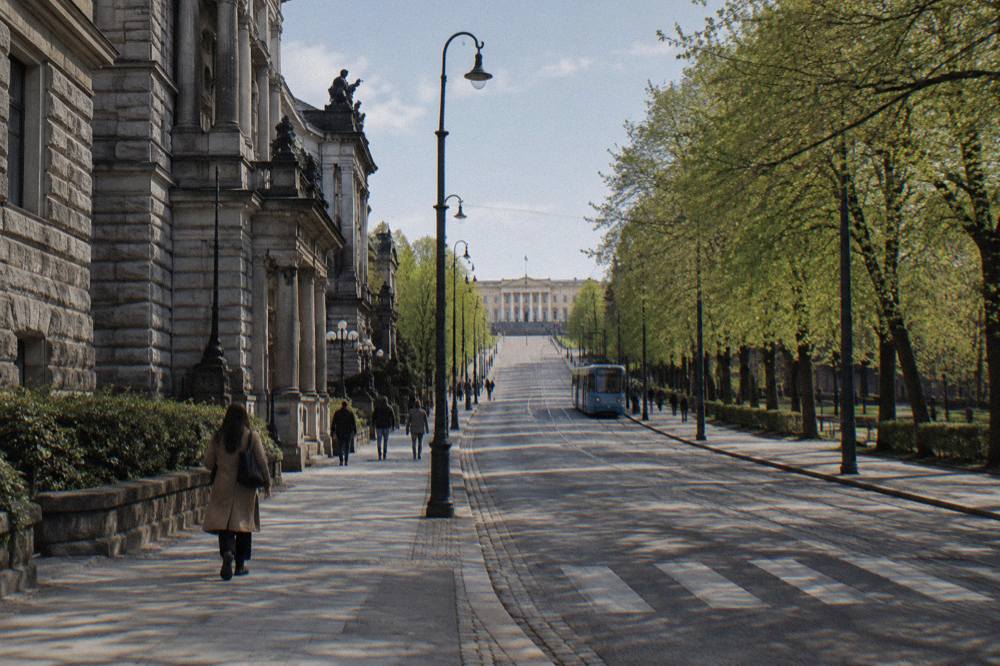
The free spine of central Oslo is Karl Johans gate and the buildings along it: the Royal Palace park at the top, the National Theatre, the Storting, and Oslo City Hall, whose interior is free to enter. The street itself is public space, and every landmark on it can be seen from outside without a ticket. The Royal Palace park is free year-round, while the indoor palace tour is a separate paid, summer-only product. This stop sits on a free walking route, City Walk, Secrets Guide Included.
Karl Johans gate is the city's ceremonial axis, running from Oslo Central Station uphill to the Royal Palace. It is the one street almost every visitor walks, and the free sights along it stack up quickly. The Royal Palace park at the top is open to everyone, year-round, with no gate and no ticket; the changing of the guard happens outside the palace as a public spectacle. The indoor palace tour is a different product entirely: seasonal, summer-only, paid at roughly 175-230 NOK, and it requires advance booking. The park costs nothing and needs nothing.
Halfway down, the National Theatre anchors the western end of the street's theatre district, and the Storting, Norway's parliament, offers free summer tours on a drop-in basis, with no advance booking. That drop-in detail matters: several Oslo institutions use booking systems that fill up, so a free sight that requires no reservation is worth more than its price suggests.
City Hall, down by the fjord, is the underrated one. The interior is free to enter, and in summer the city runs free guided tours on a drop-in basis, no booking. The building's murals and the Nobel Peace Prize ceremony hall are the payoff. The Nobel Peace Center across the harbour is the opposite case: paid, free only for under-18s and Oslo Pass holders.
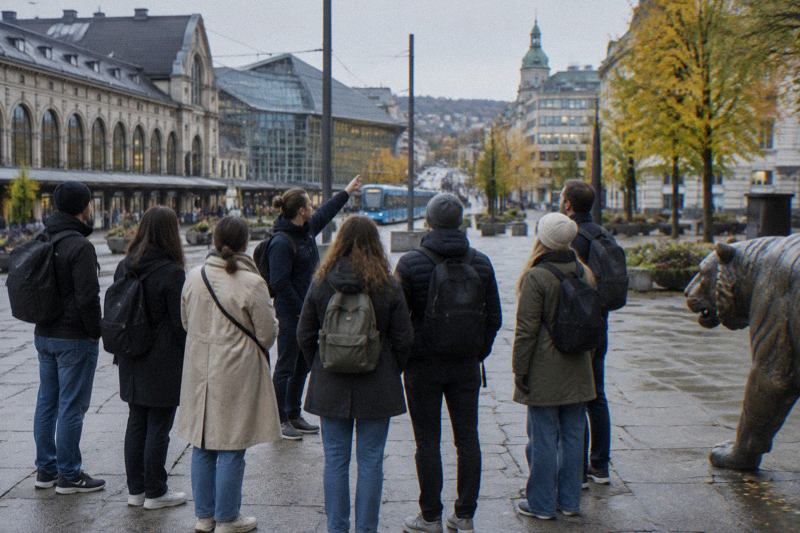
The cheapest way to get the story behind all of this is a pay-what-you-want walk. The flagship is the Nordic Freedom Tours 2-hour walk, rated 4.76 out of 5 across 2,192 GuruWalk reviews, running in English and Norwegian and meeting outside Jernbanetorget metro station at the bronze Tiger sculpture. It covers exactly this ground: the centre, Karl Johans gate, the fortress and the harbour.
All three walks above are free to book and pay-what-you-want, so the decision between them is about length, language and starting point rather than price. The Nordic Freedom Tours walk is the long-established option with the deepest review pool on GuruWalk.
A shorter alternative for the same neighbourhood is the Short Walk, English Only, a 1-hour-30-minute freetour.com listing rated 9.7 out of 10 across 332 freetour.com reviews, meeting at the Tiger Statue in front of Oslo Central Station. For a longer route that starts at the opposite end, the Perfect Introduction walk, rated 9.1 out of 10 across 191 freetour.com reviews, runs 2 hours 15 minutes and meets near the Royal Palace, by the statue of the glove where the guide holds a white umbrella.
One more central option deserves a name: the City Walk, Secrets Guide Included, a GuruWalk listing rated 4.69 out of 5 across 42 GuruWalk reviews, meeting at the main entrance of the National Theatre. Beyond the standard route, this walk hands you a local secrets guide, which is a genuinely useful artifact for a visitor who then wants to go find the free places on their own for the rest of the trip.
For visitors who prefer a route built around the theatre district and the western end of Karl Johans gate rather than the station end, the City Walk is the natural fit, and its secrets guide doubles as a self-directed plan for the days after the walk.
| Place | What is free | What is not |
|---|---|---|
| Karl Johans gate | Public street, free to walk end to end | Nothing, it is a street |
| Royal Palace park | Grounds free year-round, no booking | Indoor guided tour, paid, summer-only, advance booking |
| Storting (parliament) | Free summer tours, drop-in only | Tours outside the summer season do not run |
| Oslo City Hall | Interior free, free summer guided tours, drop-in | Nothing inside |
| National Theatre | Exterior and public foyer space | Performance tickets |
| Tiger statue and bronze Tiger sculpture | Public landmarks, free meeting points | Nothing |
The Waterfront: Opera House, Akershus Fortress And Aker Brygge
The Oslo Opera House roof and public foyer are free to walk with no ticket needed, the Akershus Fortress grounds are free to enter, and the Aker Brygge promenade is public space. The paid halves are separate: a performance ticket at the Opera runs roughly 150-990 NOK, and the Akershus Castle interior and the Resistance Museum inside the fortress grounds each charge around 160 NOK.
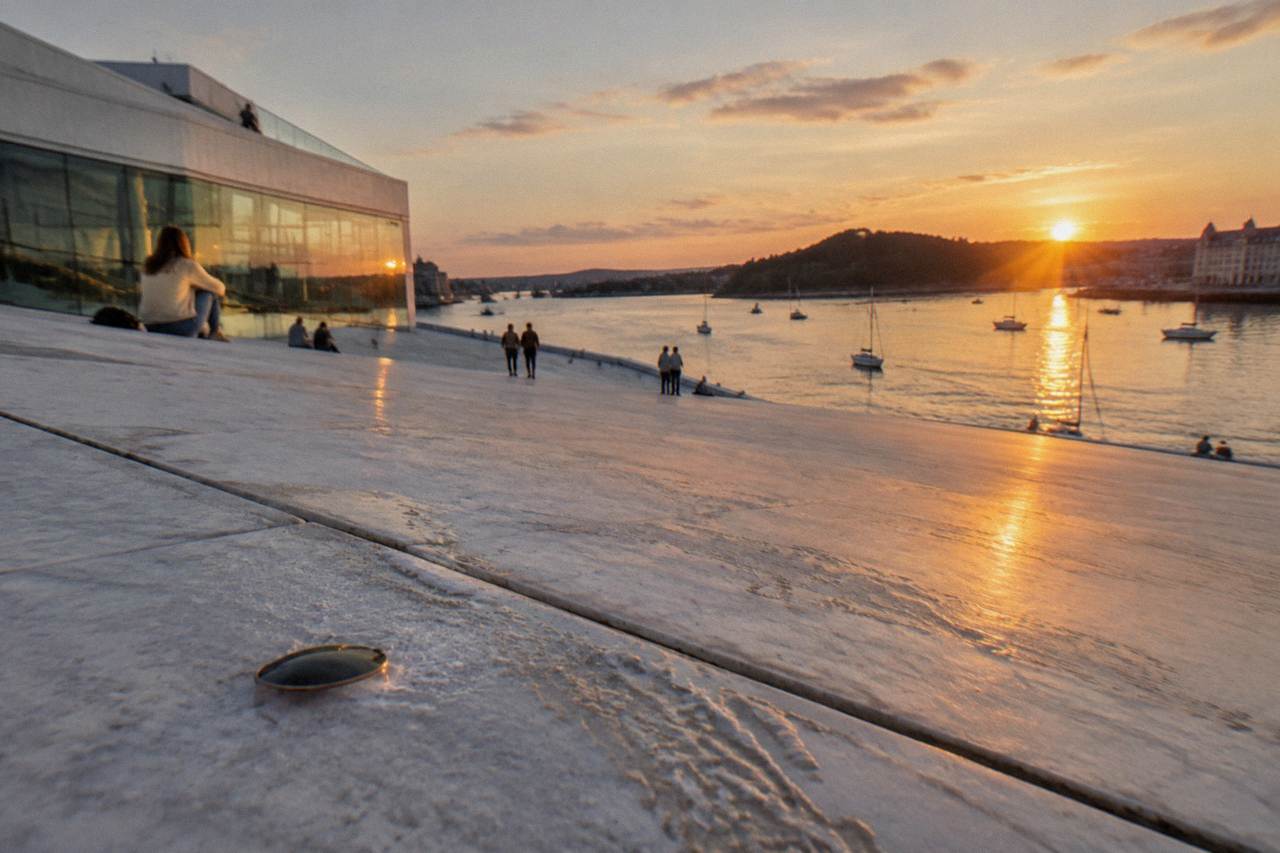
The Opera House is the single best free thing in Oslo, and it is not close. The building was designed so that the public could use it: the marble roof slopes from street level to the top of the building and anyone can walk up it, no ticket, no queue, at any hour the site is open. The foyer is public too. The view from the roof across the Bjøravika fjord basin, with the ferries and the peninsula beyond, is the city's signature panorama. An actual performance is a separate purchase, with tickets running roughly 150-990 NOK depending on seat and production, as the Opera's own site details at operaen.no.
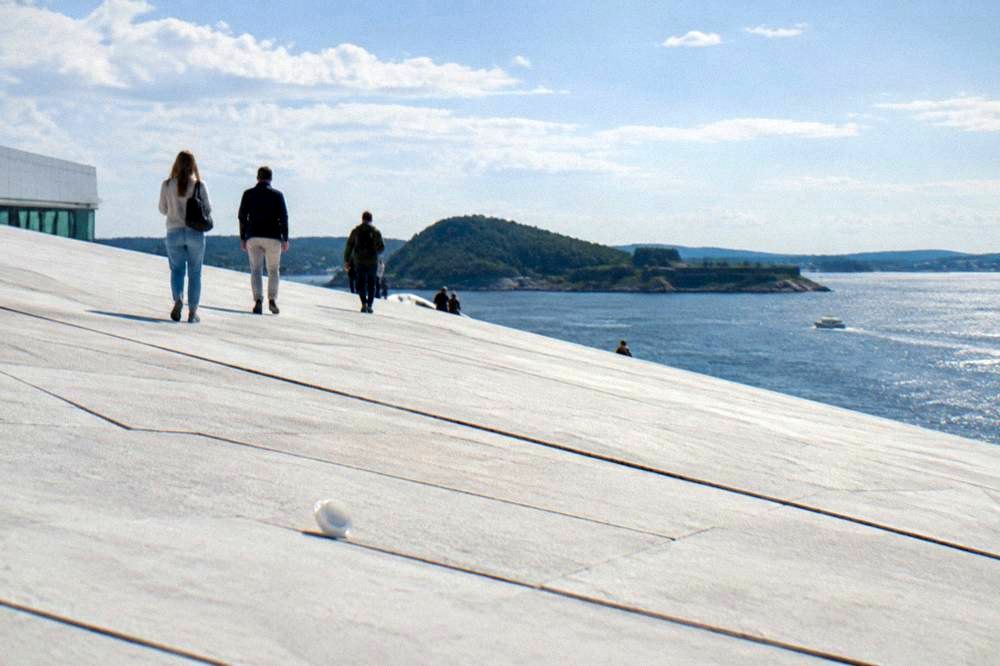
Across the water, Akershus is the fortress that guards the harbour, and the grounds are free to wander: the ramparts, the outer walls, the views back over the city. Two separate paid attractions sit inside those free grounds, and neither inherits the grounds' free status. The Akershus Castle interior charges around 160 NOK, and Norway's Resistance Museum, also inside the fortress, charges around 160 NOK as well. A visitor who walks in, sees the ramparts and the harbour view, and walks out pays nothing. If you want the deeper story of the place, the Contrasts Walk, Opera District, a GuruWalk listing rated 4.67 out of 5 across 311 GuruWalk reviews, meets at the main facade of the Opera House and covers this whole waterfront stretch, in English and Spanish.
The promenade from Aker Brygge to Tjuvholmen and on to Sørenga is public space the whole way. Sørenga has a seawater swimming area, one of the city's free harbour baths, and in summer the waterfront fills with locals using it exactly the way a free public asset gets used. None of this requires a ticket, a booking, or a time slot.
The Deichman Bjørvika library, next to the Opera House, is the free rainy-day stop in this district: a striking public building, free to enter, free to use, with reading rooms and viewing decks that most visitors never find. It sits directly beside the paid Munch Museum, which makes the contrast easy to see from one spot.
Parks And Sculpture: Vigeland Park, Ekebergparken And The Palace Grounds
Vigeland Park is free and always open, with more than 200 granite, bronze and iron sculptures across its bridges and monolith plateau. Ekebergparken, the sculpture forest on the hillside east of the centre, is also free. The Royal Palace park is free year-round. The one trap here is the Vigeland Museum, an indoor museum a short walk from the free park, which is paid at around 120 NOK and free only for under-18s and Oslo Pass holders.
Vigeland Park is the reason many people come to Oslo at all. Gustav Vigeland's life work is installed across the Frogner parkland: the bridge with its sinuous figures, the fountain, and the 14-metre Monolith carved from a single block of granite, surrounded by circular stairways of human figures. The park is free, always open, and needs no booking. It is also the site's most-asked single question, covered in detail in the guide to Vigeland Park and what is free there.
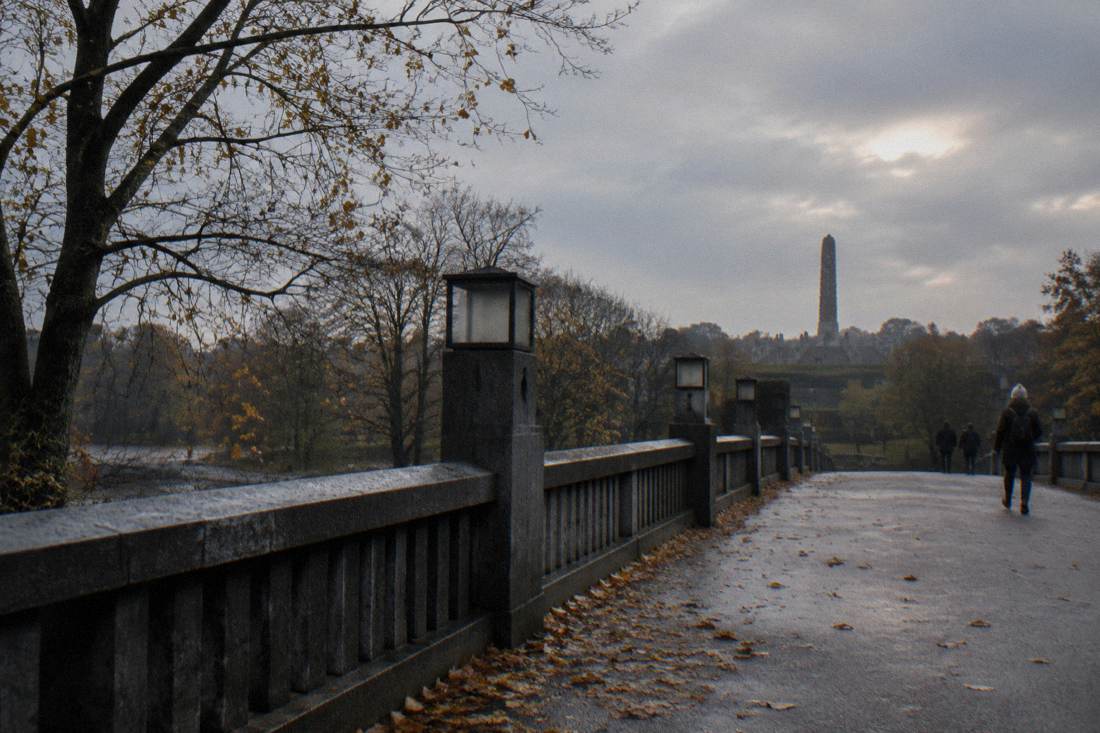
Ekebergparken is the quieter sibling: a forested hillside park dotted with international sculpture, free to enter, with views over the Oslo fjord and the city grid. Because it sits on a hill, it doubles as a viewpoint, and the walk up through the trees is part of the point. The park's status as free public land is unambiguous. Everything else covered here is indexed on Free Things To Do In Oslo.
The Royal Palace park deserves its second mention here because it belongs with parks, not palaces: the grounds, the paths and the view down Karl Johans gate are free year-round, and only the indoor guided tour, paid, summer-only, booking required, sits behind a price. That split is the single most common money mistake in Oslo, and it repeats across the city, as the table below shows.
| Sight | Free half | Paid half |
|---|---|---|
| Vigeland Park | Outdoor sculpture park, free, always open | Vigeland Museum, indoor, around 120 NOK, free under-18 and with Oslo Pass |
| Royal Palace | Park and grounds, free year-round | Indoor guided tour, around 175-230 NOK, summer-only, booking required |
| Akershus Fortress | Grounds, ramparts, harbour views | Castle interior and Resistance Museum, around 160 NOK each |
| Opera House | Roof and public foyer, no ticket | Performance tickets, roughly 150-990 NOK |
| Holmenkollen | Hillside and forest trails, free public land | Ski Jump Tower and Ski Museum, 200 NOK combined ticket |
Free Museums And Free Windows: What Is Actually Free Indoors?
Indoor Oslo is mostly paid, but there are real free options: Oslo City Hall's interior, the Deichman libraries, and MUNCH's first-Wednesday-evening window from 18:00 to 21:00, which excludes July, August and September. The National Museum is free only for under-18s, and no recurring adult free day was found at any Oslo museum. The Botanical Garden is free even though the Natural History Museum inside it is paid.
The honest summary first: Oslo does not have a recurring free-museum day for adults. That was specifically searched for and not found. What exists instead is a set of age-based and pass-based conditions, plus one confirmed recurring free window.
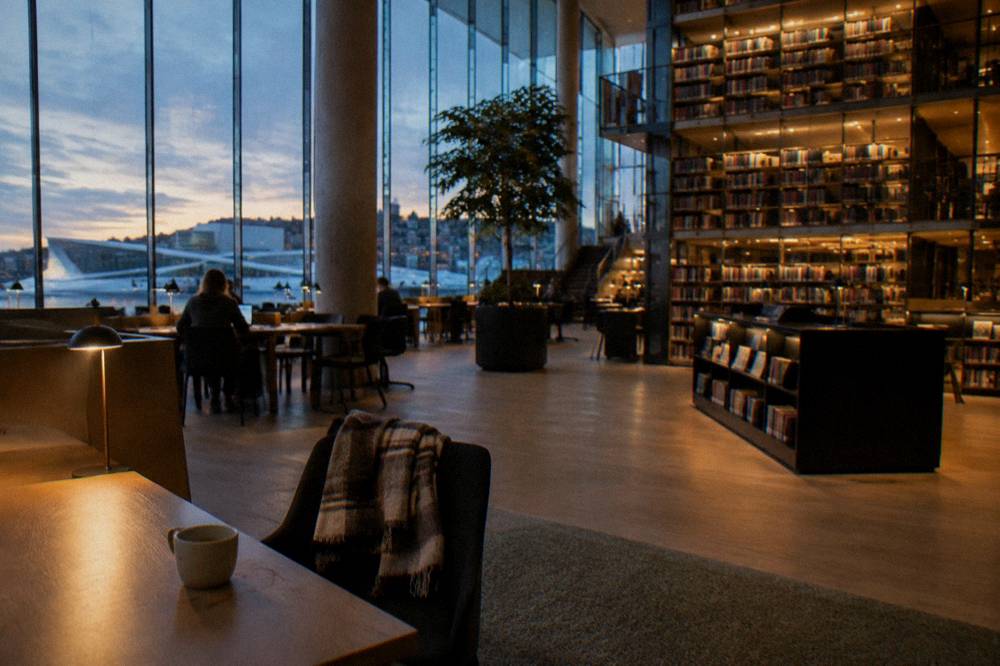
MUNCH's first-Wednesday-evening scheme is the standout: free entry from 18:00 to 21:00 on the first Wednesday of the month, except in July, August and September. The museum's own site at munch.no carries the current schedule. Under-18s are free at MUNCH year-round, a condition that repeats across most of the city's museums: the National Museum, the Nobel Peace Center, the Astrup Fearnley and the Ibsen Museum all admit children free, while charging adults.
The Botanical Garden at Tøyen is the cleanest free indoor-adjacent option in the city: free admission for everyone, no condition, run by the University of Oslo. The Natural History Museum beside it is paid, and its exact current adult price is not published here because it could not be pinned to a primary source, so check before you go. The garden itself needs no checking.
Deichman Bjørvika, covered above, is the other free indoor landmark, and the library network's other branches are equally free. For a full rundown of the age conditions and the MUNCH window, see the site's guide to free museums in Oslo.
| Museum or indoor sight | Free for adults? | Condition |
|---|---|---|
| Oslo City Hall | Yes | Interior free, free summer tours, drop-in |
| Deichman Bjørvika | Yes | Public library, free to use |
| MUNCH | First Wednesday evenings | 18:00-21:00, except July, August, September |
| Botanical Garden | Yes | Free for all visitors |
| National Museum | No | Free under-18 only, no adult free day found |
| Nobel Peace Center | No | Free under-18 and with Oslo Pass |
| Astrup Fearnley | No | Free under-20 and with Oslo Pass |
| Natural History Museum | No | Paid, price not published here, check the museum |
Coast, Islands And Hills: Free Nature Within Reach Of The Centre
The Oslo fjord islands, including Hovedøya, are free public land, but the Ruter ferry to reach them charges a standard transit fare and is never free transport. Sognsvann lake and the Nordmarka forest edge are free, Huk beach on the Bygdøy peninsula is free, and the Holmenkollen hillside and its trail network are free, while the Ski Jump Tower and Ski Museum charge 200 NOK on one combined ticket.
The islands are the best day out in Oslo and the one where the free claim needs the most care. Hovedøya and its neighbouring islands are public land: once you step off the ferry, everything, the beaches, the monastery ruins, the swimming rocks, is free. The ferry itself is a normal Ruter transit service at a normal transit fare. It is not free, and calling it free transport would be false. The full picture, including the ferry mechanics, is in the guide to the fjord islands and the ferries that reach them.
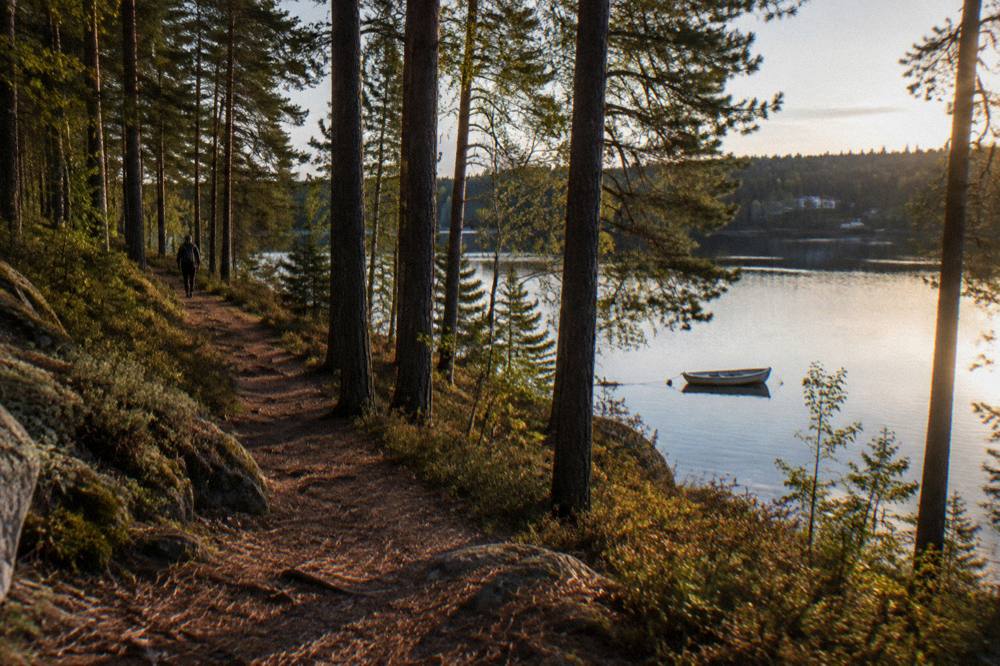
On the mainland, Sognsvann is the metro-end-of-the-line lake that locals treat as their default free outing: a flat shoreline path, swimming in summer, skiing in winter, all free. Huk, on the Bygdøy peninsula, is the city's classic beach, free, though the museum cluster that shares the peninsula, the Folkemuseum, the Maritime Museum, the Kon-Tiki and the Fram, is entirely paid. The Viking Ship Museum there is closed for rebuilding, with the new Museum of the Viking Age expected around 2027, so do not plan around it.
Holmenkollen needs its split stated plainly. The hillside, the forest and the Frognerseteren trail network are free public land with some of the best views over the fjord. The Ski Jump Tower and the Ski Museum are one combined paid ticket at 200 NOK, as the ski association's own site at holmenkollen.com sets out. Whether the immediate base of the jump hill can be viewed without a ticket is not something this site states either way, because no official page confirms it.
| Nature sight | Free? | The detail that matters |
|---|---|---|
| Hovedøya and the fjord islands | Free land | Ruter ferry to reach them is a paid standard fare |
| Sognsvann | Free | Metro to the trailhead is normal transit fare |
| Huk beach | Free | The Bygdøy museums on the same peninsula are all paid |
| Holmenkollen hillside and trails | Free | Ski Jump Tower and Ski Museum, 200 NOK combined |
| Sørenga seawater pool | Free | Harbour bath on the central waterfront |
| Ekebergparken | Free | Sculpture forest doubling as a viewpoint |
How To Fit The Free Places Into One Day
A realistic free day in Oslo starts at the Royal Palace park, walks Karl Johans gate with the Storting and City Hall, crosses to the Opera House roof, loops the Akershus Fortress grounds, and ends on the Aker Brygge promenade. That route costs nothing in admissions, works in any season, and pairs naturally with a pay-what-you-want walking tour in the morning for orientation.
The sequencing matters more than the list. The palace park, the Opera roof and the fortress grounds are all outdoor, so they absorb a good-weather day; City Hall, the Deichman library and, on the right Wednesday evening, MUNCH absorb a bad one. A visitor who spends one morning on the featured walks and then repeats the route alone in the afternoon will have seen the core of the city twice, once with a story and once at their own pace.
For a longer stay, the second day belongs to nature: Vigeland Park and Ekebergparken in one pair, or Sognsvann and the islands in another. Winter reshuffles the list rather than shrinking it, as the site's guide to Oslo in winter for free sets out, and the budget question, including what a day in Oslo realistically costs, is covered in the guide to seeing Oslo on a budget.
The official tourism authority's own pages, at visitoslo.com, are the right place to check opening details before any trip, and this site's figures are checked against those same primary sources.
Common Questions About Free Places To Visit In Oslo
Is Vigeland Park Free?
Yes. The outdoor sculpture park is free and always open, with no gate or ticket. The Vigeland Museum, an indoor museum a short walk away, is a separate paid attraction at around 120 NOK, free only for under-18s and Oslo Pass holders.
Can You Walk On The Oslo Opera House Roof For Free?
Yes. The marble roof is a public walkway, free to climb with no ticket, and the foyer is public as well. Only an actual performance ticket is paid, roughly 150-990 NOK depending on the seat.
Is Akershus Fortress Free To Enter?
The fortress grounds, ramparts and harbour views are free. The Akershus Castle interior and the Resistance Museum inside the grounds are each paid at around 160 NOK, and neither inherits the grounds' free status.
Are Any Museums In Oslo Free For Adults?
A few. Oslo City Hall's interior is free, the Deichman libraries are free, and MUNCH is free on first-Wednesday evenings from 18:00 to 21:00, except in July, August and September. No recurring adult free day was found at the major state museums.
Are The Oslo Fjord Islands Free?
The islands themselves are free public land, including the beaches and ruins on Hovedøya. The Ruter ferry that reaches them charges a standard transit fare, so the trip is never entirely free.
Are The Free Walking Tours In Oslo Actually Free?
They are pay-what-you-want: free to book, with the guide paid by tips at the end. The featured walks on this site run on GuruWalk and freetour.com, operated by independent local guides who set their own routes.