Is Vigeland Park Free?
Yes, Vigeland Park is free to enter and always open. Here is exactly what is free, what is not, and how to fit the park into a free day in Oslo.
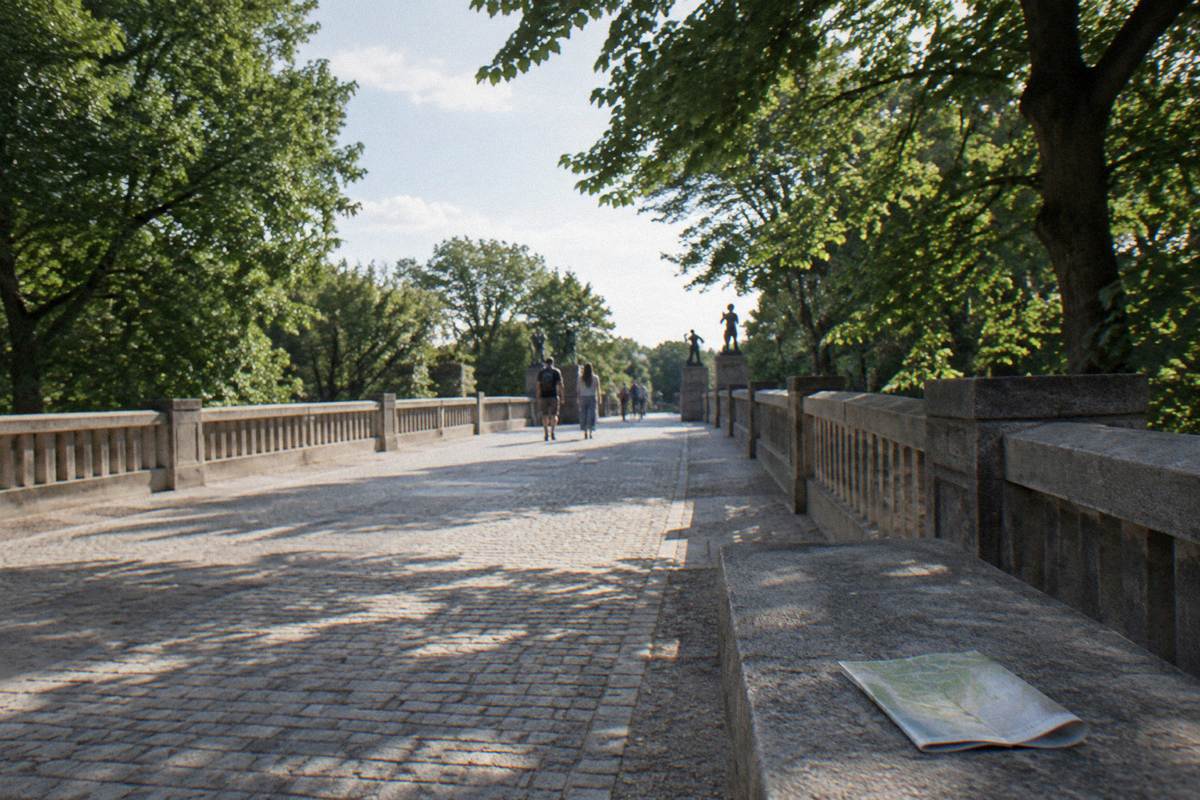
Vigeland Park is the single most-visited attraction in Norway, and unlike most of the things tourists queue for in Oslo, it costs nothing. That combination is rare enough in this city that the question deserves a precise answer rather than a shrug. The park is free, always open, and needs no ticket, no booking and no Oslo Pass. But the Vigeland name is attached to two separate institutions with two separate owners, and only one of them is free.
Is Vigeland Park Free?
Yes, Vigeland Park is completely free to enter. The outdoor sculpture park in the Frogner district is open around the clock, every day of the year, with no gate, no ticket booth and no admission mechanism of any kind. Gustav Vigeland's granite and bronze figures, including the 14-metre Monolith, stand on public parkland maintained by the city. You can walk in at midnight in January if you want to, and nobody will charge you a krone.
That answer is worth stating plainly because Oslo has a habit of hiding charges inside "free" attractions, and visitors who have just paid for a coffee are entitled to be suspicious. The Akershus Fortress grounds are free while the castle inside them is not. The Opera House roof is free while the performance inside is not. Vigeland Park is the clean version of that pattern: the thing people actually come to see, the sculptures, is outdoors on public land, and the paid part, the Vigeland Museum, is a separate building that many visitors never set foot in.
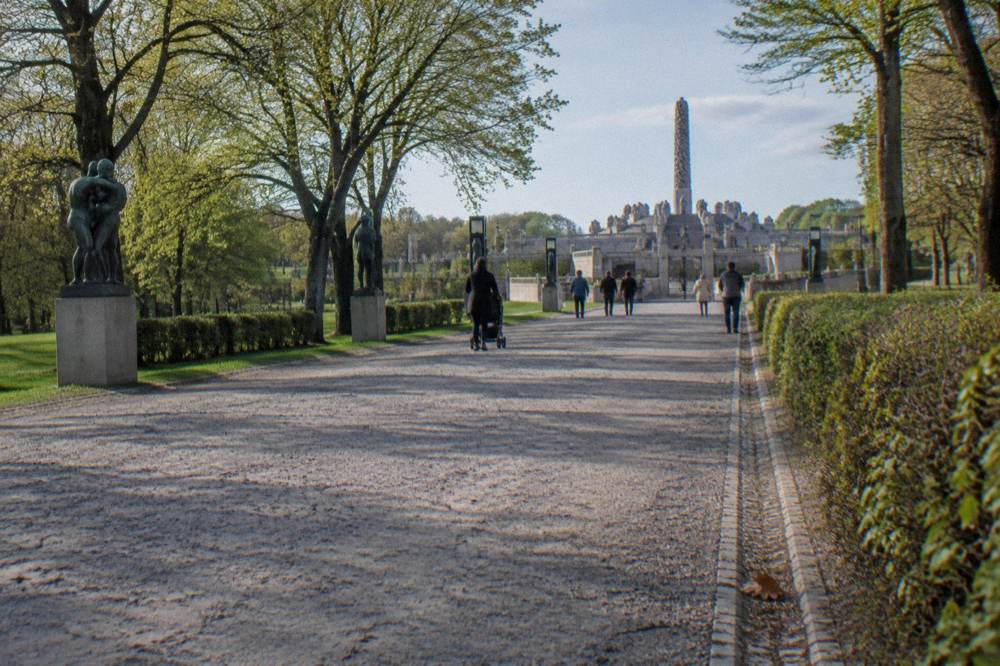
The park sits inside Frogner Park, the larger green space around it, which is also free. Locals use the whole area as an ordinary city park: jogging loops, picnics on the slopes in summer, sledging when it snows. The sculpture axis with the Main Gate, the Bridge, the Fountain, the Monolith plateau and the Wheel of Life runs the length of the park, and every metre of it is free to walk.
If the plan is to pair the park with a free introduction to central Oslo first, the free walking tour options in Oslo cover the city centre before you make your own way out to Frogner.
What Can You See At Vigeland Park Without Paying?
Every sculpture in the park is free to see: the bronze figures lining the Bridge, the angry boy at its centre, the granite columns around the Fountain, the bodies carved into the Monolith itself, and the Wheel of Life at the far end. There is no viewing fee, no roped-off premium zone and no timed entry. The only things that cost money inside the park boundaries are the café, the shop and the public toilets.
The layout rewards a slow walk rather than a checklist. Most people enter from the Main Gate on Kirkeveien, cross the Bridge with its railings of fighting, dancing, clinging figures, and pause at the Sinnataggen, the angry boy statue that has become the park's unofficial mascot. His left hand is polished bright by more than a century of visitors touching it, which is a small piece of evidence for how much foot traffic this place handles.
From the Fountain, the axis climbs to the Monolith plateau, where a crowd of stone figures is carved into a single column rising out of a circle of steps. The plateau is where the park's scale lands: granite human figures wrestle, embrace and pile upward on all sides, carved in place over decades by Vigeland and a team of stonemasons. The Wheel of Life, a bronze wreath of intertwined bodies at the western end, closes the axis.
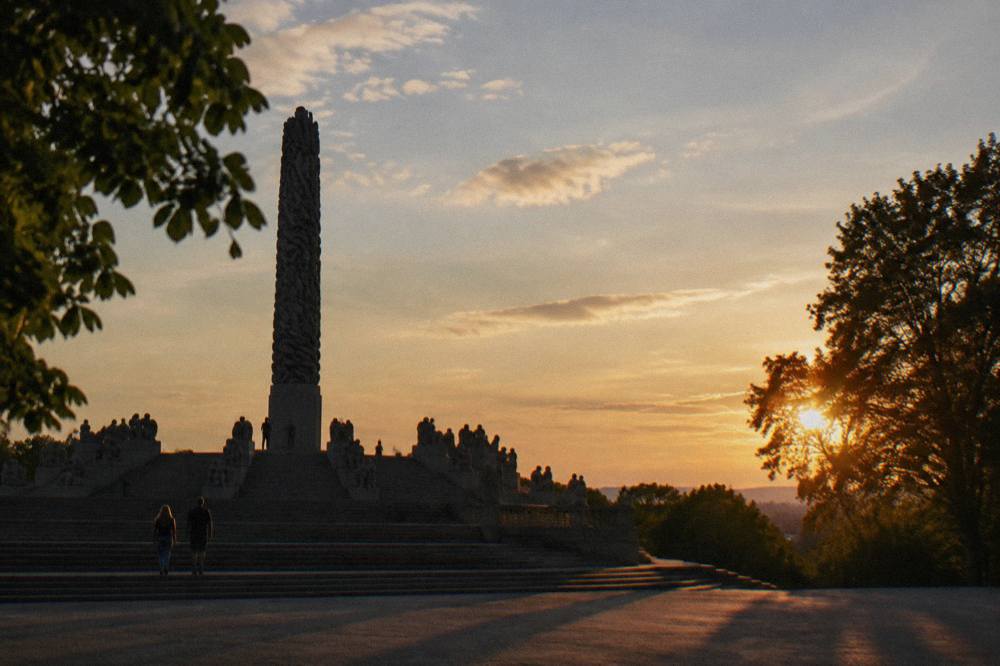
The park is also, simply, a park. Frogner Park around the sculptures holds open lawns, a pond area and some of the widest open sky in central Oslo. In summer the lawns fill with picnickers; in winter the slopes fill with sleds. None of that has a price on it either.
What Is Not Free: The Vigeland Museum
The Vigeland Museum, the indoor museum in the horseshoe-shaped building next to the park's main axis, is paid, at roughly 120 NOK for adults. It is free only for visitors aged 0 to 17 and for Oslo Pass holders. This is the one trap in the whole Vigeland story: the outdoor park and the indoor museum are separate institutions with separate owners, and a "free Vigeland" search result can easily land you on the museum's own page.
The museum was Gustav Vigeland's actual studio and residence, and it holds his plaster originals, early works and mausoleum. It is a genuinely interesting building, and the mausoleum with its ember-toned walls is one of the stranger rooms in Oslo. But it is not the sculpture park, and it is not part of the free offer. If the day's budget is zero, the honest position is that the museum is skippable: everything the park is famous for stands outdoors, in all weather, for nothing.
The two institutions are commonly conflated because they share a name and, in practice, a visitor experience. The museum's own site at vigeland.museum.no is the primary source for its admission rules, and it is worth checking there before a visit because exhibition schedules and concession categories can change. What does not change is the split itself: park free, museum paid.
For the full breakdown of how the free park and the paid museum divide their ground, the guide to Vigeland Park and what is actually free there covers the same split in more detail, and the companion post on whether the Vigeland Museum is free too answers the follow-up question directly.
How Do You Get To Vigeland Park, And Does That Cost Money?
The park itself is free, but getting there is a standard Ruter transit fare, because Vigeland Park sits in Frogner, about 3 kilometres west of the city centre, and there is no free shuttle of any kind. The nearest metro stop is Majorstuen on lines 1 to 5, a roughly 10-minute walk from the Main Gate. Walking the whole way from the centre takes about 40 minutes and costs nothing, through the west-end streets of Frogner.
For a city whose headline attraction is free, the transport is the part that catches people out. The Ruter fare is the ordinary zone-1 ticket, the same one used for trams, buses, the metro and the fjord ferries, so anyone already holding a day pass or an Oslo Pass is covered. Anyone on a strict zero budget can walk: the route from the Royal Palace park up through Frogner's villa streets is a pleasant walk in its own right, and it strings together two free green spaces in one go.
Cycling is another honest option. Oslo's city-bike scheme has stations through Frogner, and the park's main axis is flat and walkable from end to end. Arriving by bike or on foot also removes the only queue the park ever has, which is the small crowd around the angry boy at midday in summer.
A practical way to plan the whole day around transport costs is laid out in the guide to free places to visit in Oslo, which groups the free sights by district so the walking between them does the work of a transit pass.
Can A Free Walking Tour Include Vigeland Park?
The free, pay-what-you-want walking tours in Oslo are concentrated in the city centre, on the Sentrum and Karl Johan ground and in the Bjorvika Opera district, so none of them covers Vigeland Park itself. The park is best treated as a self-guided visit: it needs no guide, since the sculptures are the explanation. But a free city walk pairs well with it, and the two together make a full free day.
The strongest pairing is the Nordic Freedom Tours 2-hour walk, rated 4.76 out of 5 across 2,192 GuruWalk reviews, which meets outside Jernbanetorget metro station at the bronze Tiger sculpture and runs in English and Norwegian. It covers the central stretch of Karl Johans gate, the Cathedral, the Storting and City Hall ground, all of which sits on the same westward line that ends at Frogner. Doing the walk first gives the city's spine, and the park then gives the city's biggest single free sight.
For a shorter, English-only option, the freetour.com short walk, rated 9.7 out of 10 across 332 reviews, runs an hour and a half from the tiger statue in front of Oslo Central Station, which leaves even more of the day for Frogner. The GuruWalk roster also includes a city walk with a local secrets guide included, rated 4.69 out of 5 across 42 GuruWalk reviews, which meets at the main entrance of the National Theatre, a stop that is itself on the way toward the palace park and the walking route west.
None of these walks will hand you Vigeland Park on a plate, and that is fine. The park is one of the few major sights in Oslo where a guide adds the least: the sculptures are figurative, the axis is visible, and the emotional content of the place is available to anyone who walks it slowly. Save the guided attention for the city centre, where the history is invisible without someone pointing at it.
When Is The Best Time To Visit Vigeland Park For Free?
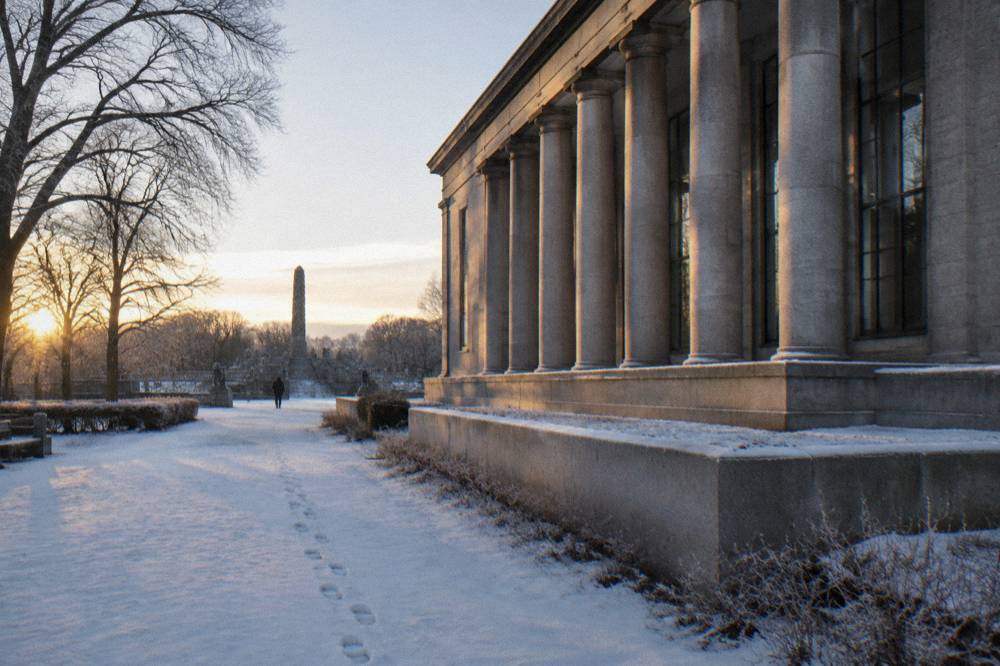
Any time, in the literal sense: the park never closes and never charges. The practical answer is early morning or late evening in summer, when the low sun rakes across the granite and the tour groups are absent, and mid-morning in winter, when the snow on the sculptures and the near-empty lawns make the park feel like a different place. There is no off-season pricing to dodge because there is no pricing at all.
The summer peak is real. On a warm July afternoon the Bridge can have a small crowd around the angry boy, and the Monolith plateau fills with photo groups. Arriving before 10:00 or after 18:00 changes the experience completely, and costs the same nothing. The park's 24-hour access also makes it one of the few world-class sights that works for a jet-lagged first evening: a midnight walk along the lit axis in June, with the Norwegian summer light still in the sky, is free in every sense.
Winter is the underrated season. Snow sits on the heads of the Bridge figures and in the folds of the Monolith's climbing bodies, and the low angle of the light gives the granite a warmth it does not have under a noon sun. The café beside the park is a paid refuge if the cold bites, but the art itself is as free at minus ten as at plus twenty. More on the cold-season angle is in the guide to Oslo in winter for free.
The one planning note that matters: check the museum's hours on its own site if the indoor half is on the list, because the park's always-open status does not transfer. The outdoor half needs no planning at all.
How Does Vigeland Park Fit Into A Free Day In Oslo?
Vigeland Park anchors a fully free Oslo day: a free walking tour of the centre in the morning, the Royal Palace park and a walk through Frogner at midday, then an hour among the sculptures, with the Opera House roof as an evening finish. Every one of those sights is free to enter; the only unavoidable cost is transit if you skip walking.
A sample shape for that day, with the honest costs marked:
| Stop | What you see | Entry cost | Honest note |
|---|---|---|---|
| Free walking tour, Jernbanetorget | Karl Johans gate, Cathedral, Storting ground | Free, pay what you want | Tip in cash or by app if the guide earns it |
| Royal Palace park | Palace grounds, view of the facade | Free year-round | The indoor tour is paid and summer-only |
| Walk west through Frogner | Villa streets, embassies, quiet blocks | Free | About 30 to 40 minutes on foot |
| Vigeland Park | Bridge, angry boy, Fountain, Monolith | Free, always open | Museum beside it is paid, roughly 120 NOK |
| Opera House roof, Bjorvika | Roof walk, fjord view | Free | Performance tickets inside are paid |
The pattern to notice is that Oslo's free layer is mostly outdoors, and Vigeland Park is the largest single piece of it. The city's paid layer, its museums, is genuinely good, and the free museums in Oslo guide covers the honest exceptions, including the MUNCH free Wednesday evenings that exclude July, August and September. But a visitor can spend two full days in this city on the free layer alone, and the park is the reason that sentence is true.
For anyone asking whether the whole city can be done this way, the budget guide at Oslo on a budget does the arithmetic, and the answer on this site, whose whole purpose is laid out on the Free Things To Do In Oslo homepage, is that the free layer is not a consolation prize. It is the main event.
Common Questions About Vigeland Park
Is Vigeland Park Free?
Yes. The outdoor sculpture park in Frogner is free to enter, open around the clock all year, with no ticket, gate or booking. The only paid elements inside the park are the café, shop and toilets.
Is The Vigeland Museum Free Too?
No. The indoor Vigeland Museum beside the park is paid, at roughly 120 NOK for adults, and free only for visitors aged 0 to 17 and Oslo Pass holders. It is a separate institution from the free park.
Do You Need A Ticket For The Monolith?
No. The Monolith, the Bridge, the Fountain and every other sculpture stand outdoors on free public parkland. There is no viewing fee for any of them.
How Much Time Should You Spend At Vigeland Park?
About an hour covers the full sculpture axis at a walking pace. Visitors who want to linger on the lawns or photograph the figures in changing light routinely stay longer, and the always-open access means there is no closing time to work around.
How Do You Get To Vigeland Park Without A Transit Fare?
Walk. The park is roughly 3 kilometres from the city centre, about 40 minutes on foot through Frogner, or reachable via the Royal Palace park on the way west. The metro to Majorstuen is the paid alternative.
Is Vigeland Park Worth Visiting If You Only Have One Day In Oslo?
Yes, and it is one of the few headline sights that costs nothing. A one-day plan can pair a free walking tour of the centre with an afternoon at the park and still finish on the Opera House roof, all without an admission fee.