Unusual Free Things To Do In Oslo: The Sights Most Visitors Walk Past
Oslo's best-known free sights, the sculpture park and the fortress grounds, fill every itinerary. This page collects the unusual ones: the marble roof you are allowed to climb, the library that costs nothing to enter, the river valley hiding between apartment blocks, and the pay-what-you-want walks that thread them together.
Short answer
Oslo's unusual free sights include the walkable Opera House roof, the Deichman Bjørvika library, the Akerselva river walk, the Ekebergparken sculpture park, street art in Grünerløkka, and the seawater pool at Sørenga. Five pay-what-you-want walking tours cover the city centre, including a 2-hour walk rated 4.76 across 2,192 GuruWalk reviews.
Oslo rewards the visitor who looks sideways. The city that invented the modern ski jump also built an opera house you are supposed to walk on, put a river through the middle of its trendiest district, and scattered a sculpture park across a hillside where almost nobody checks a map. The famous free sights, Vigeland Park and the Akershus Fortress grounds, are covered in their own guides elsewhere on Free Things To Do In Oslo. This page is for the entries further down the list: the strange ones, the ones locals use daily and visitors usually walk straight past.
Everything below traces to verified attraction records, and the pay-what-you-want walks are real listings on GuruWalk and freetour.com, run by independent local guides. Nothing here costs a krone unless a condition is stated in the same breath.
What Counts As Unusual When Everything Free Gets The Same List?
The most unusual free things to do in Oslo are walking on the Opera House roof, visiting the Deichman Bjørvika library, following the Akerselva river through Grünerløkka, exploring the Ekebergparken sculpture park, swimming at the Sørenga seawater pool, and hunting street art in the city's east. All six cost nothing, need no ticket and no booking, and sit within easy reach of the city centre.
That list is deliberately odd. It contains no museum, no castle and no viewpoint with a queue, because Oslo's conventional free sights are already well documented on this site's guide to free places to visit in oslo. What the list does contain is the city's own daily life: a roof that doubles as a plaza, a library that doubles as a fjord viewpoint, and a river valley that most visitors never realise exists a ten-minute walk from Karl Johan.
The distinction matters because Oslo has an unusually generous supply of "public space with a twist". The Opera House, designed so that the public could climb it, is the clearest example. The Deichman library, free to use like every branch of the city's public library system, is another. Neither involves a turnstile, a ticket desk or a schedule, which is exactly what makes them easy to miss and easy to enjoy.
Free Oddities Around Sentrum And Karl Johan
Around Sentrum and Karl Johan the unusual free sights are the Tiger Statue outside Oslo Central Station, the Damstredat street of preserved wooden houses, the National Theatre's public surrounds, and the City Hall interior with its vast free murals. City Hall is free to enter, though its free guided tours run in summer only, drop-in. This stop sits on a free walking route, Nordic Freedom Tours, 2-Hour Walk.
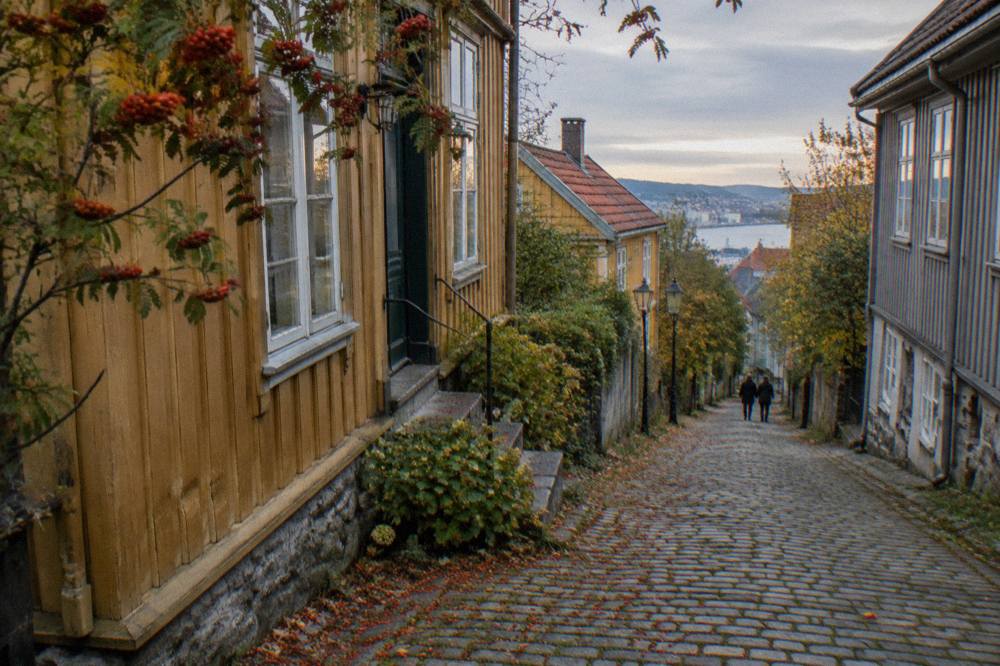
The city centre's strangest free sight is also its most overlooked. Damstredat, a short street of well-preserved wooden houses, sits minutes from the station yet feels like a different century, and it is a public street: no admission mechanism exists at all. The Tiger Statue in front of Oslo Central Station, cast in bronze and permanently surrounded by people taking photographs, is the other zero-cost landmark in the immediate station quarter, and it doubles as the meeting point for one of the city's pay-what-you-want walks.
City Hall is the centre's big free interior. The building is open to visitors at no charge, its ceremonial hall lined with enormous murals, and its free guided tours are a summer-only, drop-in arrangement, so outside the summer season you simply walk through under your own steam. The Royal Palace park, free year-round, sits at the top of Karl Johan; the indoor guided tour of the palace itself is paid, seasonal and needs advance booking, so the park and the changing of the guard are the free halves of that sight.
The centre's oddities stack up into a short walking circuit of their own, and the table below shows how each one is free and what, if anything, to watch for.
| Sight | What makes it unusual | Free status |
|---|---|---|
| Tiger Statue | A bronze tiger that has become the city's unofficial mascot, permanently busy with cameras | Free public artwork, no conditions |
| Damstredat | A street of preserved wooden houses minutes from the station | Public street, no admission mechanism |
| Oslo City Hall interior | Vast ceremonial murals inside a working civic building | Free to enter; free guided tours summer only, drop-in |
| Royal Palace park | The grounds and the changing of the guard | Park free year-round; indoor tour paid and seasonal |
| National Theatre surrounds | The meeting point for two of the city's pay-what-you-want walks | Public square, always free |
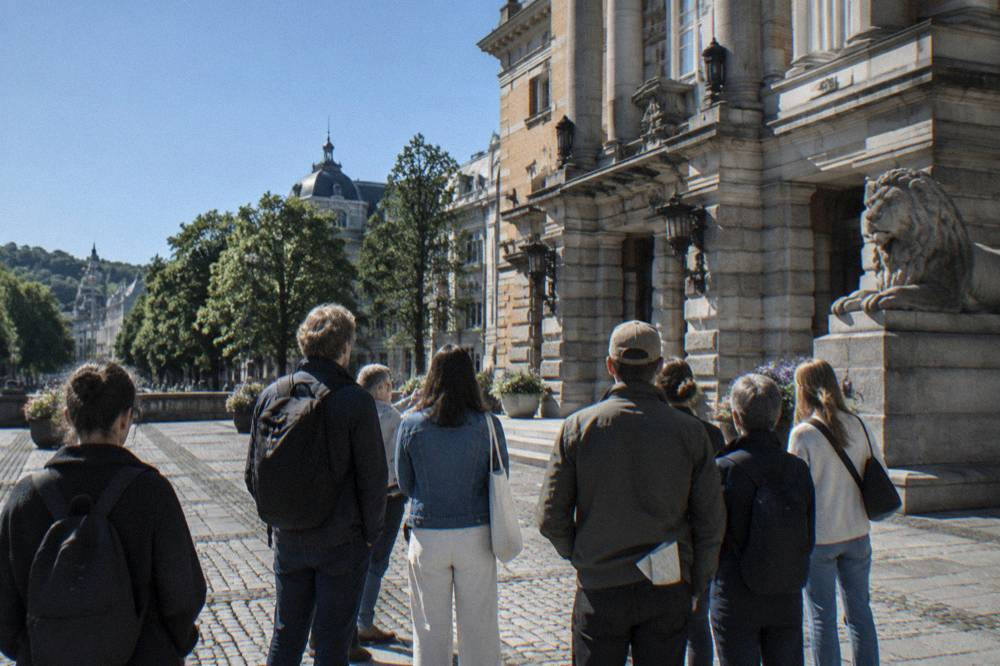
This is also the ground covered by the city's main pay-what-you-want walks. Nordic Freedom Tours runs a 2-hour walk rated 4.76 across 2,192 GuruWalk reviews, meeting outside Jernbanetorget metro station at the bronze Tiger sculpture, running in English and Norwegian. A shorter option on freetour.com, rated 9.7 out of 10 across 332 freetour.com reviews, runs 1 hour 30 minutes in English only and meets at the Tiger Statue. Both are free in the pay-what-you-want sense: you tip the guide at the end, and reserving a place costs nothing.
The trio above spans the three formats a visitor to the centre can choose: the 2-hour GuruWalk standard, the 1 hour 30-minute freetour.com short walk, and the 2 hour 15-minute freetour.com introduction that meets near the Royal Palace by the statue of the glove, where the guide carries a white umbrella. Each is a real listing on its own platform, each is pay what you want, and none requires payment to book a place.
Which Free Walks Show You Oslo's Hidden Corners?
Two pay-what-you-want walks go beyond the standard sightseeing script: the City Walk with a Secrets Guide included, rated 4.69 across 42 GuruWalk reviews, and the Contrasts Walk of the Opera district, rated 4.67 across 311 GuruWalk reviews. Both run about 2 hours, both are free to book, and both cover ground the big-name sights do not.
The City Walk run under the Hola Oslo banner is the one that matches this page's theme most closely. It meets at the main entrance of the National Theatre and comes with a local secrets guide, which is the closest thing Oslo's free-walk scene has to an official "unusual things" tour. It runs in English and Spanish, lasts 2 hours, and is rated 4.69 across 42 GuruWalk reviews, a smaller review pool than the centre's flagship walk but a genuinely different route.
The Contrasts Walk, run by LOCAL Walking Tours on GuruWalk, starts at the main facade of the Opera House and works the Bjorvika district, where the city's newest architecture meets its industrial past. Rated 4.67 across 311 GuruWalk reviews and running 2 hours in English and Spanish, it is the natural companion to the Opera House section below: the walk explains the district you are about to climb over.
A fair question, whether these walks are worth the time at all, is answered in detail in the site's piece on whether free walking tours are worth it. The short version: the guides are independent locals paid only by tips, the routes are real, and the commitment is a couple of hours rather than a ticket price.
Can You Really Walk On The Oslo Opera House Roof?
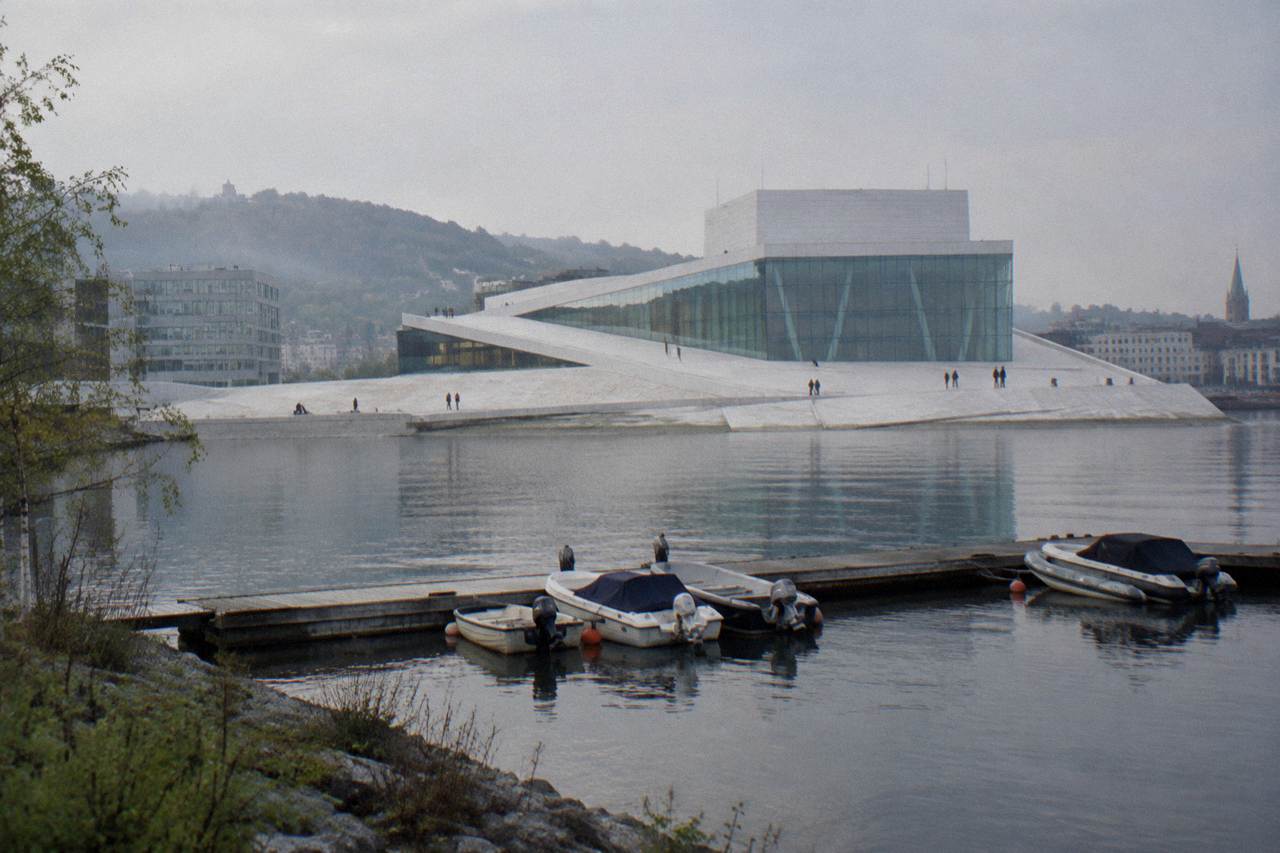
Yes, the Oslo Opera House roof is free and open to walk on, no ticket required. The sloping marble roof and the public foyer inside cost nothing; only a performance ticket is paid, roughly 150 to 990 NOK depending on the seat and the show. The building was designed so the public could climb it.
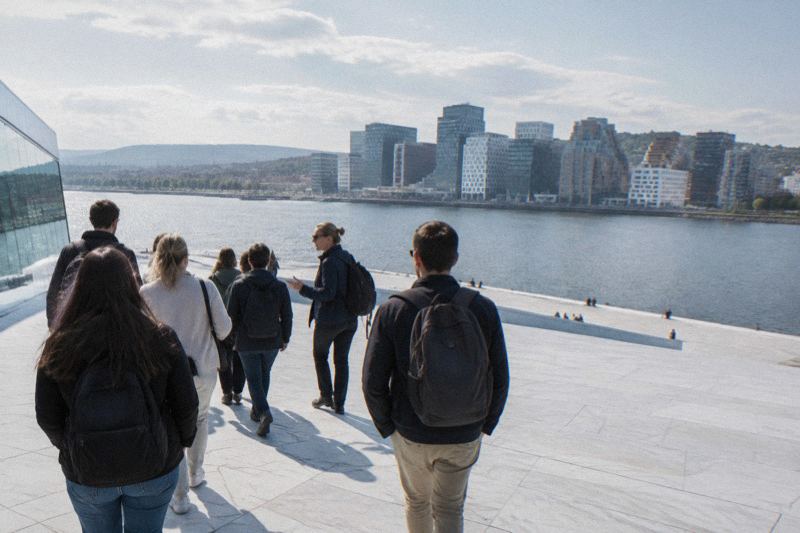
This is Oslo's single strangest free experience and its most famous architectural gesture. The roof is a public plaza in the literal sense: you walk up an angled marble surface to the top and look back over the Bjorvika fjord inlet. The foyer is likewise open, free to enter, and worth a few minutes for its timber interior. The operator's own site at operaen.no describes the building as open to the public outside performance times, and the distinction is clean: the roof and foyer are free, the performances are not.
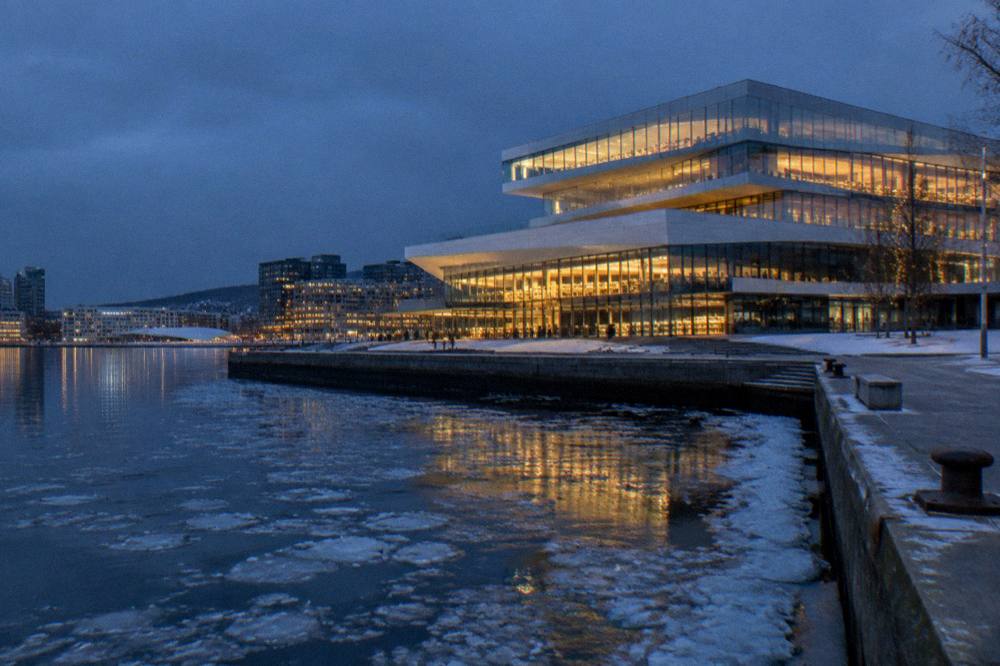
The Opera House anchors the Bjorvika district, which has quietly become the city's densest cluster of free public design. Next door sits the Deichman Bjørvika library, the striking angular building beside the water, free to use like every branch of the city's public library system. You can walk in, read, and look out at the fjord from a building that cost you nothing to enter. The Munch Museum stands nearby; that one is paid, free only for under-18s and during its first-Wednesday-evening window from 18:00 to 21:00, which excludes July, August and September.
The box above points to the centre's flagship pay-what-you-want walk, the 2-hour Nordic Freedom Tours route on GuruWalk, which starts at the bronze Tiger sculpture outside Jernbanetorget and ends within walking distance of the Opera House. Pairing the walk with a self-guided roof climb afterwards is the most efficient free afternoon in the district.
What Is The Akerselva River Walk And Why Is It Free?
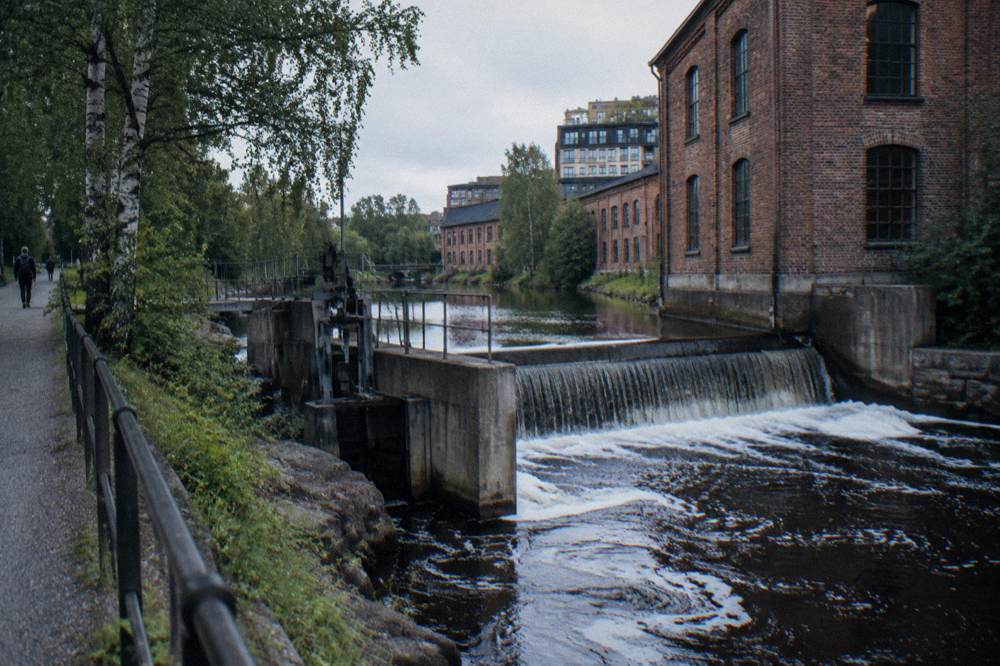
The Akerselva river walk is a free public trail following the river from the Maridalsvannet lake down through Grünerløkka to the city centre, passing waterfalls, old industrial buildings and street art. It is a public path with no admission mechanism at all, and it slices through the part of Oslo where the city's alternative culture actually lives.
The river is Oslo's hidden spine. It runs through a green valley that the city grew up around, and the trail beside it connects a chain of former factories, now studios, cafes and cultural venues, punctuated by small waterfalls in the middle of a capital city. Because it is simply a public path, the only cost is the transport to reach a starting point, and even that is optional if you walk from the centre.
Grünerløkka, the district the river runs through, is also the city's best free gallery of street art, painted on walls, shutters and bridge underpasses. The neighbourhood's other free landmark is the Mathallen food hall, free to enter though its food is paid, and the whole area is a public-space district: nothing to book, nothing to queue for.
The river walk connects naturally to the wider question of what to see in Oslo in one day, because it offers a car-free corridor from the Grünerløkka side back toward the centre, ending within sight of the Opera House district described above.
Which Famous Oslo Sights Are Only Half Free?
Several famous Oslo sights are split between a free outdoor half and a paid indoor half: Akershus Fortress grounds are free while the Castle and Resistance Museum inside are paid, Vigeland Park is free while the Vigeland Museum is paid, and the Holmenkollen hillside is free while the Ski Jump Tower and Ski Museum need a combined ticket. The free half never covers the paid half.
This split is Oslo's most reliable trap, and it is worth a table because the pattern repeats across the city. Each row below is a single attraction whose two halves are run by different operators with different rules, which is why a blanket "the fortress is free" is false as stated.
| Attraction | Free half | Paid half | The condition to remember |
|---|---|---|---|
| Akershus Fortress | Grounds, walls, views | Castle interior and Resistance Museum, about 160 NOK each | Walking the grounds costs nothing; entering the buildings does not |
| Vigeland Park | Outdoor sculpture park, always open | Vigeland Museum, about 120 NOK, free for ages 0-17 and Oslo Pass holders | The park and the museum share a name but separate finances |
| Royal Palace | Park and grounds, year-round | Indoor guided tour, summer only, advance booking required | The tour is seasonal, the park is not |
| Opera House | Roof and public foyer | Performance tickets, roughly 150 to 990 NOK | Climbing the roof is the free act |
| Holmenkollen | Hillside and forest trails | Ski Jump Tower and Ski Museum, one combined 200 NOK ticket | The forest is public land; the tower is not |
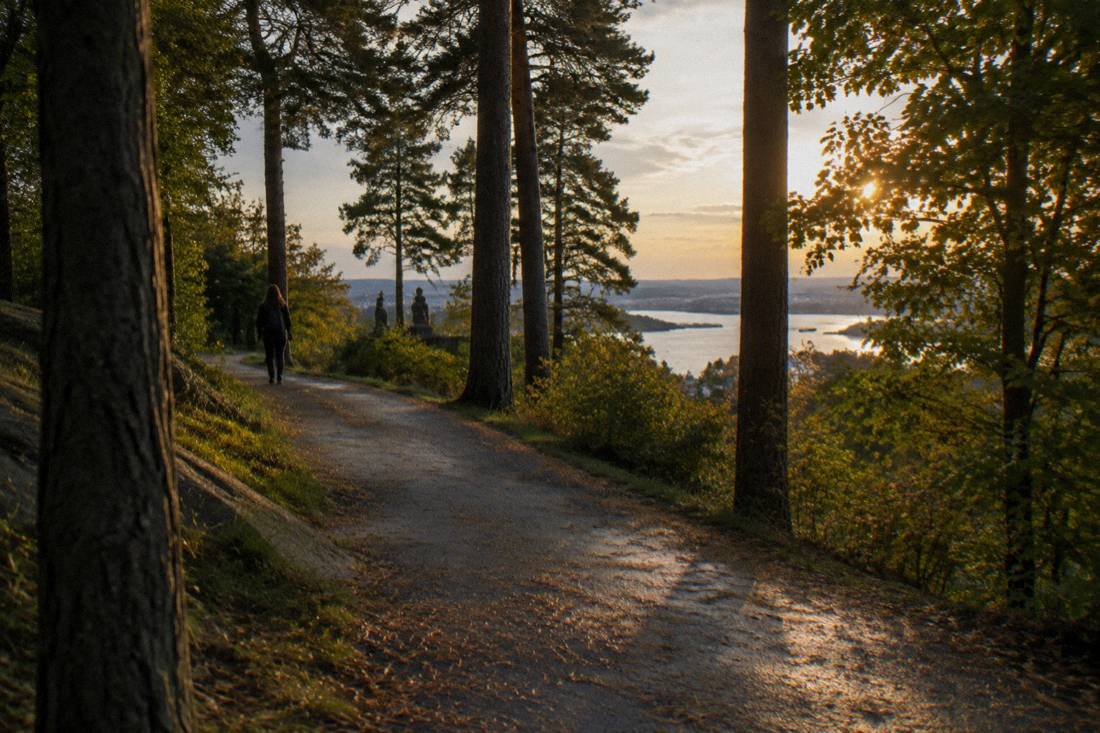
The Holmenkollen row deserves a note, because the hill is one of the city's genuinely unusual free outings: the Frognerseteren trail network above the ski jump is public forest, free to walk, with the fjord visible below. The site's dedicated piece on whether Holmenkollen is free to visit covers the split in full, and the same pattern is unpacked for the fortress in is Akershus Fortress free.
What Unusual Free Spots Sit Outside The Centre?
Outside the centre, the unusual free spots are the Ekebergparken sculpture park on its forested hill, the Sørenga seawater pool, the Botanical Garden at Tøyen, the Sognsvann lake, and the fjord islands such as Hovedøya. All are free to enter; the fjord islands need a paid Ruter ferry to reach, which is a standard transit fare and never free transport.
Ekebergparken is the quiet star of this list: a sculpture park scattered through woodland on a hill southeast of the centre, free to enter, with works placed along forest paths and viewpoints over the city. It has the scale of Vigeland Park with a fraction of the visitors, and the combination of art and forest makes it the most unusual single free attraction in Oslo's records.
The water-based entries are equally local in flavour. Sørenga, the seawater pool by the Bjorvika shoreline, is run by the city and free, as is the beach at Huk on the Bygdøy peninsula. Sognsvann, the lake at the end of a metro line, is a public bathing and walking spot with no admission mechanism at all. The Botanical Garden at Tøyen is free for all visitors, though the Natural History Museum beside it is paid, and no reliable current adult price for that museum is published on this site because it could not be verified against a primary source.
The fjord islands are the one entry with a transport condition. Hovedøya and its neighbours are free public land, with ruins, beaches and forest, but the Ruter ferry that reaches them charges a standard transit fare. The islands and the ferry rules are covered in the site's guide to the free fjord islands and Oslo ferries.
How Do You Plan An Unusual Free Day In Oslo?
Plan an unusual free day in Oslo by pairing one walkable landmark with one district: the Opera House roof with the Deichman library in Bjorvika, the Akerselva trail with street art in Grünerløkka, or a pay-what-you-want walk with Damstredat and City Hall in the centre. Budget nothing for entry, and set aside the ferry fare only if the islands are on the list.
The practical pattern is that Oslo's unusual free sights cluster, so a day built from them needs almost no planning beyond choosing a cluster. The table below lays out three realistic combinations, each built entirely from verified free records, with the only conditional costs stated where they apply.
| Day plan | Morning | Afternoon | Only possible cost |
|---|---|---|---|
| Centre and rooftops | Pay-what-you-want walk from Jernbanetorget | Opera House roof, Deichman Bjørvika library, Sørenga pool | The tip for your guide |
| River and street art | Akerselva trail from Grünerløkka | Mathallen (free entry), street art hunt, Ekebergparken | Food, if you buy any |
| Fjord and forest | Ruter ferry to Hovedøya | Sognsvann lake walk | The standard transit ferry fare |
Two timing notes make these plans work better. The Munch Museum's first-Wednesday-evening free window, 18:00 to 21:00 excluding July, August and September, slots neatly onto the end of the Bjorvika day, and the details are on the museum's own pages at munch.no. For anything involving opening hours, the official tourism authority's site at visitoslo.com is the source to check before setting out, since seasonal hours at City Hall and the Parliament tours change with the year.
A final planning thought: winter changes this list less than you might expect. The Opera House roof is climbable in snow, the library is indoors, and the free-walk scene keeps running; the site's guide to Oslo in winter for free covers the cold-weather versions in detail.
The five walks that anchor the centre and the Opera district are all pay what you want, all run by independent local guides, and all bookable without payment: three on GuruWalk and two on freetour.com. Between them and the free attractions above, an entire unusual week in Oslo can be built without an entrance fee.
Common Questions About Unusual Free Things In Oslo
Is The Opera House Roof Really Free To Walk On?
Yes. The roof and the public foyer are free and open, no ticket needed, and the building was designed with public access in mind. Only performance tickets are paid, roughly 150 to 990 NOK depending on the seat and show.
What Is The Strangest Free Attraction In Oslo?
Ekebergparken is the strongest candidate: a sculpture park scattered through forest on a hill above the city, free to enter, with far fewer visitors than Vigeland Park. The Deichman Bjørvika library, free to use with fjord views, runs it close.
Are The Fjord Islands Free To Visit?
The islands themselves are free public land, with ruins, beaches and forest on Hovedøya and its neighbours. The Ruter ferry that reaches them charges a standard transit fare, which is never described as free transport.
Is The Munch Museum Ever Free?
For adults, only during its first-Wednesday-evening window, 18:00 to 21:00, which excludes July, August and September. Entry is free for under-18s at all times. Otherwise the museum is paid.
Do The Free Walking Tours Cover The Unusual Sights?
Partly. The 2-hour Nordic Freedom Tours walk on GuruWalk covers the centre; the Contrasts Walk covers the Opera district; and the City Walk with the secrets guide, rated 4.69 across 42 GuruWalk reviews, is the one most explicitly aimed at hidden corners. All are pay what you want.
Is The Akerselva River Walk Free?
Yes, it is a public path with no admission mechanism at all, running from the Maridalsvannet lake through Grünerløkka to the centre, past waterfalls and former industrial buildings now used as studios and cultural venues.